CHEMONICS
Visitor Management and Community Engagement Plan for National Park Kozara
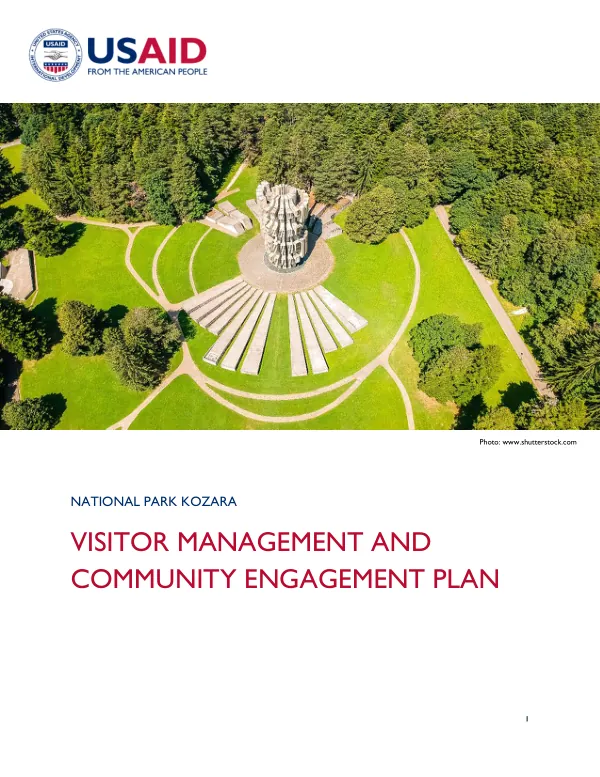
National Park Kozara is a protected area located in Bosnia and Herzegovina, with a rich cultural and historical heritage and diverse natural features.
2024 · 85 pages
Sign in to readA free account is required to download.
Abstract
The park's terrain is characterized by a mix of geological formations, including limestone, dolomite, and sandstone, which have been shaped by millions of years of erosion. The park's water resources are comprised of several rivers, streams, and lakes, which support a variety of aquatic life. The park's flora and fauna are equally diverse, with over 1,000 plant species and 200 bird species documented. The park's protection zones are designed to safeguard these natural resources, including the Kozara Mountain, which is a key habitat for several endangered species. The park's public institution, Public Institution Kozara National Park, is responsible for managing the park's resources and ensuring the protection of its natural and cultural heritage. The park's visitor infrastructure includes several entrance points, entrance points with information centers and bungalows, hiking and trekking trails, climbing infrastructure, and biking trails, as well as picnic sites, water sources, and viewpoints. The park's visitor satisfaction survey revealed a high level of satisfaction among visitors, with 85% of respondents indicating that they were satisfied with their visit. The park's visitor programs include guided tours, educational programs, and recreational activities, such as hiking, biking, and biking. The park's local community engagement plan aims to promote the park's natural and cultural heritage and to involve local communities in the park's management and conservation. The plan includes a communication framework, an action plan, and a monitoring and evaluation plan. The park's visitor management plan aims to ensure the sustainable management of the park's resources and to minimize the impact of tourism on the park's natural and cultural heritage. The plan includes measures to regulate visitor activities, to monitor the impact of tourism, and to provide visitor services and programming. The plan also includes a local community engagement and stakeholder cooperation component, which aims to promote the park's natural and cultural heritage and to involve local communities in the park's management and conservation. The park's visitor communication plan aims to inform visitors about the park's natural and cultural heritage and to promote the park's visitor programs and services. The plan includes a range of communication channels, including signage, brochures, and media campaigns, as well as a website and social media platforms. The park's bibliography includes a range of sources, including scientific articles, books, and reports, and reports from international organizations, such as the International Union for Conservation of Nature (IUCN). The bibliography is organized by topic, with sources listed under headings such as "Protected Areas," "Biodiversity," and "Tourism." The park's annexes include a range of supporting documents, including maps, tables, and tables, and reports from international organizations, such as the IUCN. The annexes are organized by topic, with documents listed under headings such as "Protected Areas," "Biodiversity," and "Tourism."