ACDI/VOCA
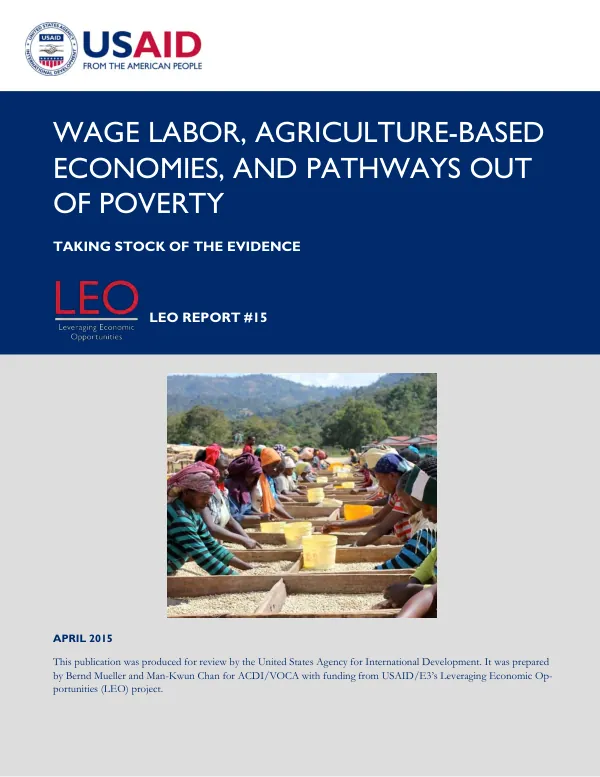
WAGE LABOR, AGRICULTURE-BASED ECONOMIES, AND PATHWAYS OUT OF POVERTY
Rural wage labor plays a crucial role in the livelihoods of the poor in developing countries.
2015 · 97 pages
Sign in to readA free account is required to download.
Abstract
The current state of labor market data in these countries is limited, with many surveys and studies relying on incomplete or inaccurate information. The quality of available data on rural wage labor is often compromised by issues such as sampling biases, measurement errors, and lack of standardization. The diversity of rural wage employment and poverty is complex, with various forms of employment relevant to the rural poor. These include casual labor, seasonal work, and self-employment, which are often characterized by low wages, limited job security, and poor working conditions. The rural labor market dynamics during economic transformation are also influenced by factors such as urbanization, migration, and changes in agricultural production. Labor plays a critical role in the process of poverty reduction, with rural wage labor being a key pathway out of poverty. The characteristics of labor markets that enable rural workers to become less poor include access to decent work, higher wages, and improved working conditions. Determinants of poor people's access to "good" jobs include education, skills, and social connections. The effects of improved working conditions and worker agency on growth are also significant. Research has shown that better working conditions and increased worker agency can lead to improved productivity, higher wages, and increased economic growth. Key variables on the relationship between working conditions and economic performance include labor standards, occupational health and safety, and freedom of association and collective bargaining. In conclusion, the integration of labor into market systems development is critical for poverty reduction and economic growth. This report highlights the importance of labor in agriculture-based economies and proposes practical recommendations for programmers and implementers. These include improving labor market data, promoting decent work, and enhancing worker agency. By addressing these issues, USAID and other donors can improve the poverty-reducing impact of their market systems development work. The report also emphasizes the need for a new way forward in addressing labor issues in agriculture-based economies. This includes a focus on the diversity of rural wage employment and poverty, the importance of labor in poverty reduction, and the need for improved working conditions and worker agency. By taking a more nuanced and comprehensive approach to labor issues, programmers and implementers can better support the needs of the rural poor and promote more inclusive and sustainable economic growth. The report highlights the importance of evidence-based decision-making in addressing labor issues in agriculture-based economies. This includes the need for high-quality data, rigorous research, and effective monitoring and evaluation. By leveraging economic opportunities and promoting decent work, USAID and other donors can improve the lives of the rural poor and promote more sustainable and equitable economic growth. The authors of the report, Bernd Mueller and Man-Kwun Chan, are experts in labor economics and rural employment. Bernd Mueller is a labor economist and rural employment expert at the FAO's Decent Rural Employment team, while Man-Kwun Chan is an independent consultant specializing in improving labor, gender, and social conditions in global supply chains. The report was produced with funding from USAID/E3's Leveraging Economic Opportunities (LEO) project and aims to support the capacity of USAID staff and its development partners to design and implement programming that fosters inclusive growth through markets.