USAID DEC
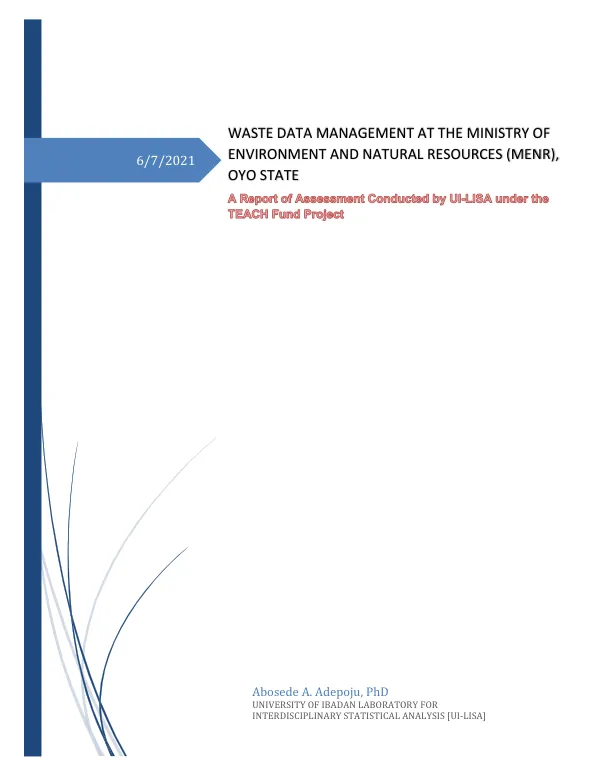
Waste Data Management at the Ministry of Environment and Natural Resources (MENR), Oyo State
Sign inUSAID DEC
Waste Data Management at the Ministry of Environment and Natural Resources (MENR), Oyo State
The Environment and Natural Resources (MENR) in Oyo State is responsible for managing the state's environmental resources.
2021 · 14 pages
Sign in to readA free account is required to download.
Abstract
The MENR is a key institution in the state's development plans and programs, with a mandate to promote sustainable development and protect the environment. The ministry's vision is to create a clean and healthy environment that supports the state's economic growth and development. The MENR has several operational departments, including the Planning, Research, and Statistics Department (PRSD). The PRSD is responsible for collecting and analyzing data on the state's environmental resources, including waste management. The department's statutory functions include conducting research on environmental issues, collecting and analyzing data on environmental indicators, and providing technical assistance to other departments and agencies. The MENR's data management system is critical to its operations, as it provides the necessary information for decision-making and policy formulation. However, the ministry faces several challenges in managing its data, including inadequate data collection and analysis tools, limited resources, and inadequate training for staff. These challenges hinder the ministry's ability to effectively manage waste and other environmental resources. Waste management is a critical component of environmental management, and the MENR has a key role to play in this area. Waste is defined as any substance or object that is discarded or intended to be discarded. The MENR classifies waste into several categories, including household waste, commercial and industrial waste, construction and demolition waste, and agricultural waste. The ministry's waste management activities include analysis, dumping, filling, transfer, treatment, incineration, and recycling. The MENR's waste management strategy focuses on reducing waste generation, increasing waste recycling, and promoting sustainable waste management practices. The ministry has implemented several initiatives to achieve these goals, including the establishment of waste management facilities and the promotion of waste reduction and recycling practices among households and businesses. However, the ministry faces several challenges in implementing its waste management strategy, including inadequate funding, limited resources, and inadequate public awareness and participation. The MENR's waste management efforts are critical to achieving the state's development goals and protecting the environment. The ministry's data management system is essential to its operations, and improving its data collection and analysis capabilities will be critical to effective waste management. The MENR's waste management strategy focuses on reducing waste generation, increasing waste recycling, and promoting sustainable waste management practices.
Related documents