USAID
Climate Change Adaptation in WESTERN AFRICA
Climate variability and change pose significant threats to Western Africa's socio-economic development and environment.
2011 · 4 pages
Sign in to readA free account is required to download.
Abstract
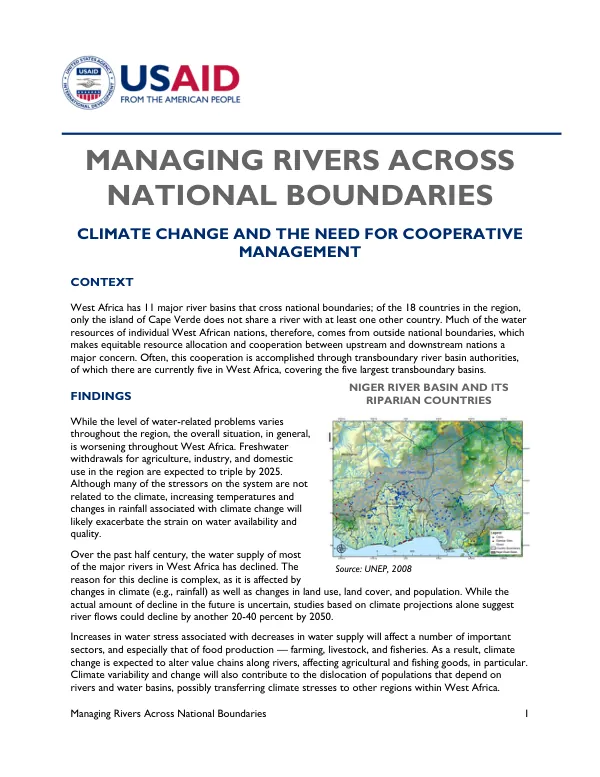
Since the 1970s, the region has experienced significant changes in climate, particularly in relation to temperature and precipitation. Western African communities and sectors are highly dependent on natural resources, making them vulnerable to climate change impacts such as rises in temperature, changes in annual rainfall, more frequent and intense rainfall events, and sea level rise. Observations indicate a general warming trend across Western Africa, with an increase in the incidence of warm spells and a decrease in the incidence of cold days. There has been an overall decrease in annual rainfall since the late 1960s, ranging from 20-40 percent, depending on the area. Arid zones have experienced more prolonged and frequent droughts since the 1970s, while tropical and coastal zones have seen an increase in the occurrence and frequency of extreme weather events such as storms and severe flooding over the past two decades. Projected weather and climate models predict an overall warming trend throughout the region, with an average temperature increase of up to 0.5° C per decade. The models also predict an overall decline in precipitation across the region of 0.5-40 percent by 2025, with an average decrease of 10-20 percent. Additionally, a rise in sea level of, on average, 0.5-1 m over the next century is anticipated. The agriculture sector is particularly vulnerable to climate change, with dry spells and droughts leading to increased evaporation, reduced water resources, and diminished soil moisture and fertility. In tropical and coastal zones, heavy rainfall events, flooding, and reduced overall annual rainfall threaten agricultural production, leading to soil degradation, reduced rice, plantain, and cassava production, and increased food prices and food insecurity. Non-climate stressors such as increased demand for food, over-exploitation of natural resources, and extended use of chemical pesticides exacerbate these impacts. The health sector is also vulnerable to climate change, with inadequate health infrastructure, services, and access to healthcare making public health susceptible to extreme rainfall and temperature events. Meningitis, malaria, and acute respiratory infections are especially sensitive to changes in temperature and precipitation, while increased heavy rainfall and flooding events can accelerate breeding rates and the spread of vector-borne diseases such as malaria. Non-climate stressors can exacerbate the impacts of climate change on health, resulting in major economic and social impacts. Water resources are essential to communities, ecosystems, and various economic sectors in Western Africa, but are declining due to climate change and increased human demands for water. Declines in rainfall, increases in temperature, and more frequent droughts contribute to the decline in surface and groundwater availability and accessibility. By 2025, several countries in the region are expected to experience water scarcity, while flooding can exacerbate health and sanitation problems. Western Africa's forests and grasslands are valuable ecosystems, providing food, herbal medicines, energy, and tourism for various communities. Warmer temperatures, droughts, and declines in precipitation can lead to loss of vegetation and deterioration of land cover, while increased frequency of drought events can dry out water sources vital to the survival of plant and animal species. Non-climate stressors can further exacerbate the impacts of climate change, including civil war, population growth, rapid urbanization, poaching, pollution, the introduction of exotic species, and increased demands on forest land for agricultural expansion. Wetlands in Western Africa are high in plant and animal species diversity, particularly bird and fish populations, and provide resources such as fisheries, shellfish, fuelwood, medicine, and agricultural products. They also protect human settlements, infrastructure, and various other coastal activities from the impacts of heavy rainfall, storms, and sea level rise. However, wetlands are vulnerable to climate change, with rising temperatures, sea level rise, and changes in precipitation patterns threatening their existence and the services they provide.