INTERNATIONAL INSTITUTE OF TROPICAL AGRICULTURE (IITA)
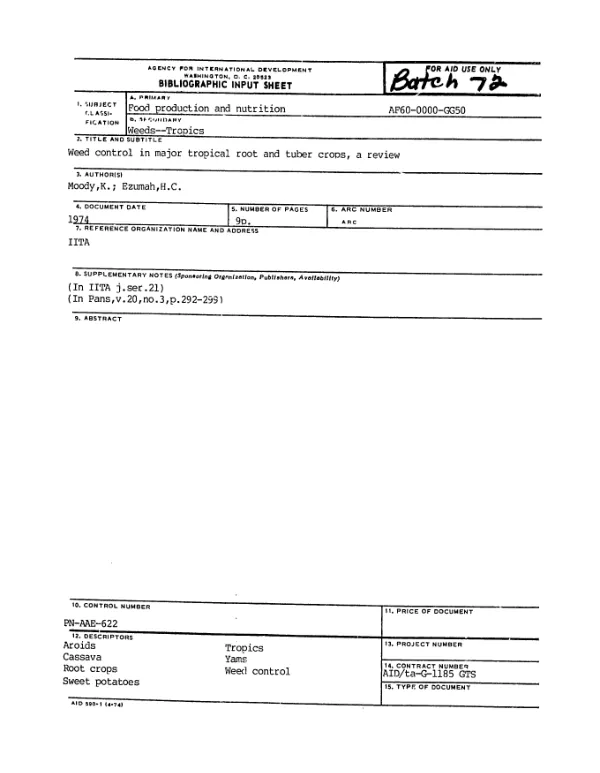
Weed control in major tropical root and tuber crops, a review
Reviews the present status of weed control in the major tropical root and tuber crops: yams, cassava, sweet potatoes and aroids.
Moody, K.; Ezumah, Humphrey C. · 1970
Sign in to readA free account is required to download.
Abstract
The production of tropical root and tuber crops as a whole is hindered by a lack of research in weed control. Crop losses are two to three times greater than in the temperate zones. More than two-thirds of the world"s yam crop is produced in the eastern part of West Africa; Nigeria produces almost half the global figures. Yams are generally interplanted with crops such as maize, cowpeas, upland rice, and vegetables on newly cleared land. About 30% of the total labor expended in farm operation, including land clearing, was devoted to weeding on well-run farms in Ghana and West Nigeria. Frequent and effective weeding is one of the first essentials of successful yam cultivation. Herbicides found effective for yams include atrazine, diuron, simazine, nomuron, and ametryne. Cassava, which is replacing yams and cocoyams, is usually the last crop to be planted in a rotation before the land is left to fallow. Labor requirements are less because it is not clean cultivated. Cassava which is kept free of weeds by mechanical means yielded about 10% less than a crop kept weed free by chemicals. Recommended herbicides include fluometuron, alachlor, paraquat, and chloramben plus diphenamid. With sweet potatoes, four to eight weeks of weed control with herbicides is usually sufficient for the vines to cover the soil and to provide adequate weed control through shading. Diphenamid, noruron, and specialized mixtures are recommended. Cocoyams and taro are the most common aroids grown. Herbicides must be employed for upland taro weed control, and flooding is used successfully in lowland plots. Linuron or simazine are suggested for use with this crop.