INTERNATIONAL INSTITUTE OF TROPICAL AGRICULTURE (IITA)
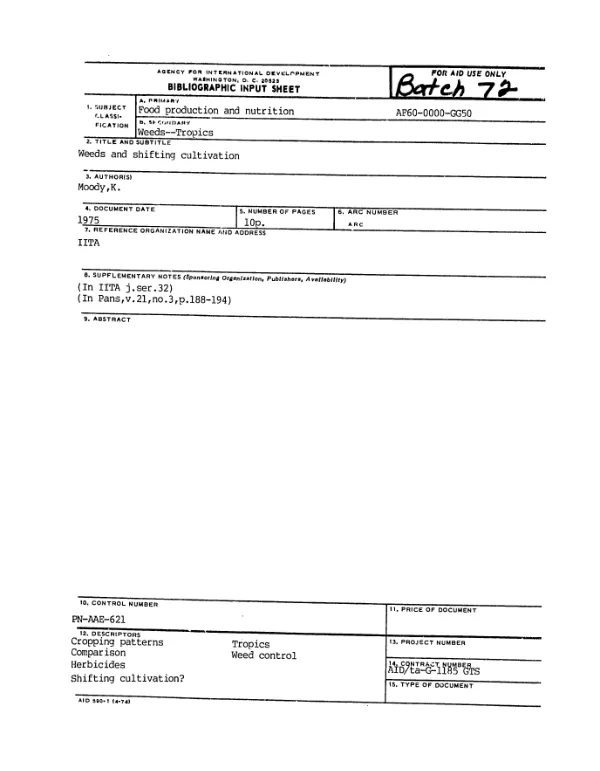
Weeds and shifting cultivation
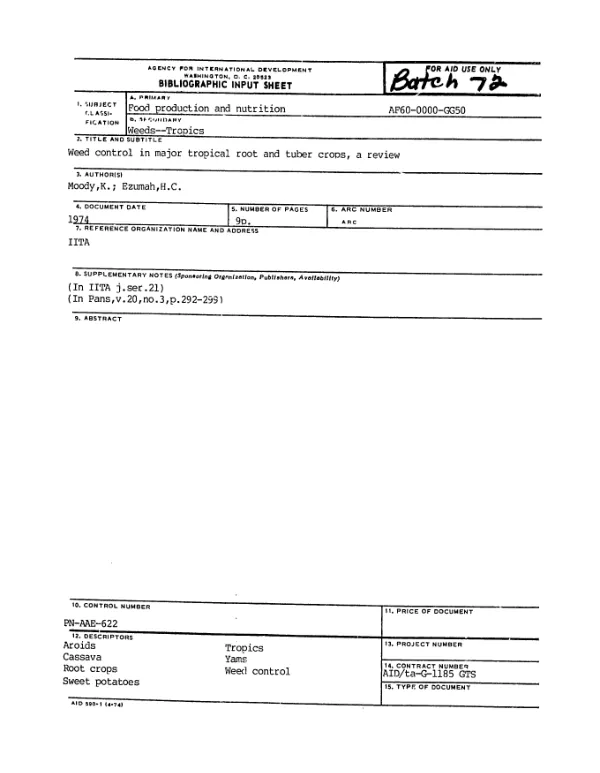
Evaluates traditional labor-intensive methods of weed control which are normally associated with shifting cultivation; these methods are compared with the use of herbicides and improved cultural practices.
Moody, K. · 1970
Sign in to readA free account is required to download.
Abstract
Shifting agriculture and related bush-fallow cropping systems are the predominant practices on large areas of the potential arable and grazing land of the tropics in Africa and Southeast Asia. Land is farmed for a short period after clearing until declining yields force the farmer to abandon the land to fallow; the land is generally fallow longer than it is cropped. The length of fallow depends on the amount of land available, population pressure, fertility level, the rapidity of regeneration of the fallow, and other factors. Luxuriant weed growth is a major problem of this kind of agriculture. Most tropical farmers use simple tools to control weeds. They are forced to abandon the land when they can no longer control weeds or when clearing new land will give greater return than extra weedings on the old. Because weeds cannot be successfully controlled with present practices, alternative methods are being examined. The answer to many tropical weed problems may be in use of herbicides which can be more selective and thorough than cultural methods. Chemical weed control could be the most profitable line of investigation into the intensification of peasant agriculture. In many parts of the world, increasing labor costs and the unavailability of labor at critical times are rapidly causing herbicides to become more economical than hand labor. However, it is impossible to introduce herbicides into the multicrop associations presently used by many shifting cultivators. A monocrop or simple crop association will have to accompany the introduction of herbicides. In areas of scarce or inaccessible water, low volume applications or granules should be considered.
Related documents