USAID DEC
WHAM ANNUAL PROGRAM PERFORMANCE REPORT, OCT 1, 2019 - SEP 30, 2020, FISCAL YEAR 2020
Sign inTHE INTERNATIONAL EXECUTIVE SERVICE CORPS
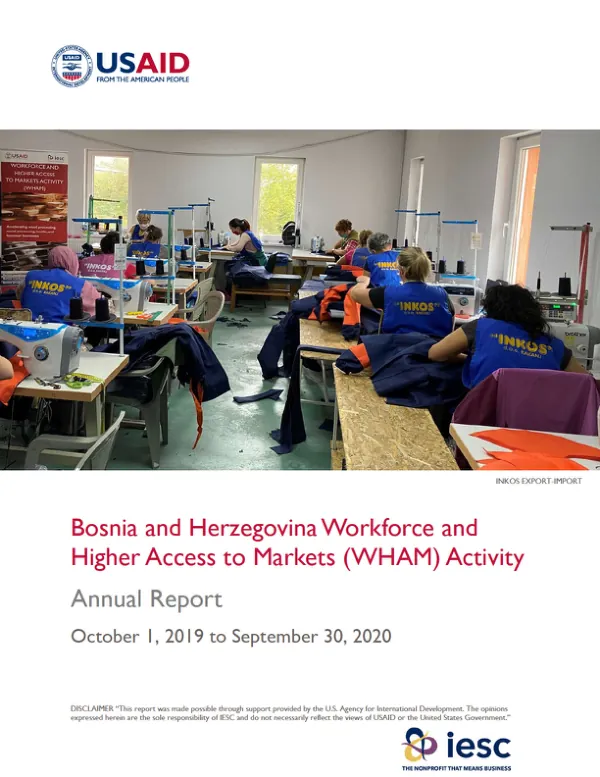
WHAM ANNUAL PROGRAM PERFORMANCE REPORT, OCT 1, 2019 - SEP 30, 2020, FISCAL YEAR 2020
The WHAM Activity is a USAID-funded initiative implemented by the International Executive Service Corps (IESC) in conjunction with local sub-recipient ENOVA.
2020 · 30 pages
Sign in to readA free account is required to download.
Abstract
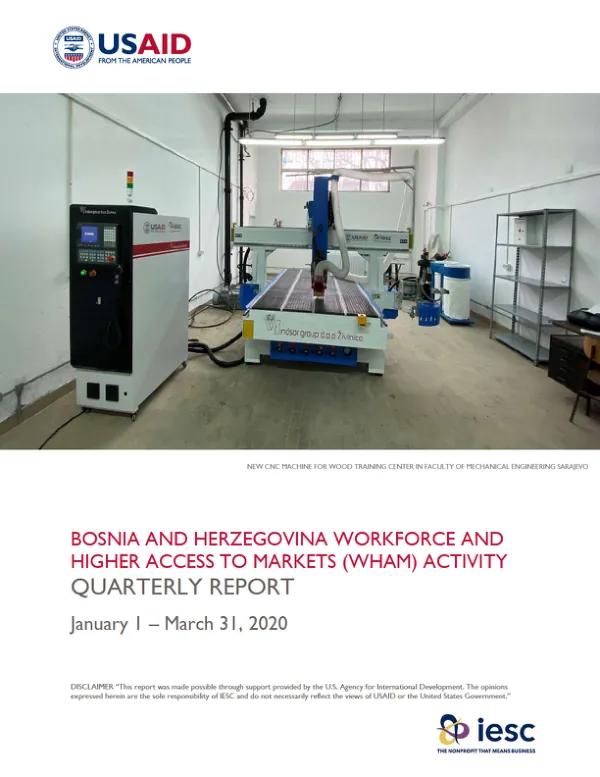
The Activity's primary objective is to stimulate job creation by advancing Bosnia and Herzegovina's (BiH) trade integration with the European Union (EU) and regional markets. The WHAM Activity focuses on four main sectors: wood processing, metal processing, textile/apparel, and information and communications technology (ICT). The Activity includes smaller high-growth enterprises by ensuring qualifying participation criteria can be measured as a percent of growth, not just the overall value of growth. The WHAM Activity achieved peak performance during the third year of operation, with 43 active grants and the effective awarding of Phase I funds to grantees. The Activity managed to publish and award initial grants from Phase II extension funding. WHAM awarded and spent by the end of year three. WHAM grants resulted in increased employment, market-demanded certifications, and new technologies, as well as export-led sales increases. During this year, the WHAM team received over 160 applications and concept notes, signed 24 grants, and created 732 new jobs. The total funding for these 24 grants is around . By the end of this year, WHAM had 56 total grants and worked with 167 companies. The WHAM Activity achieved excellent results that exceeded most indicator targets. For example, for the indicator 'Number of new full-time jobs created," the Activity achieved 1792 jobs, or 116 percent of the indicator target results. Other indicators such as the "Number of WHAM-assisted SME's certified," "Number of SMEs with new or updated technology," and "Number of individuals who complete WHAM-assisted workforce development programs," the indicator results are each significantly above indicator targets. However, sales and export results are still below year three WHAM activity targets. In year three, the planned volunteer engagements were canceled due to COVID-19 pandemic travel restrictions and international cancellations of in-person conferences and events. During this period, the WHAM team published three RFAs and approved one unsolicited application. By the end of year three, WHAM supported the development of two new training centers (the Faculty of Mechanical Engineering Sarajevo and Milinković Banja Luka) as well as upgrades for two more training centers (Dizart Sarajevo and MBT Tuzla). The WHAM team added another team member, an additional Business Facilitator to support the Northern region of BiH. Mr. Koprena works from Banja Luka, covering grants across the region. Due to COVID-19, in March 2020, the WHAM team moved to a temporary work-from-home measure for staff safety and in accordance with governmental guidelines and IESC COVID-19 safety practices. Grantee activity implementation was disrupted, and in some cases, activities were postponed for several months before they were rescheduled with COVID-19 safety measures in place. Ultimately, WHAM received more than 60 requests for extension from 30 grantees as most of them could not complete the procurement of needed goods from abroad or conduct planned in-person trainings. In the end, almost all grantees completed planned activities, but COVID-19 posed a significant challenge for the WHAM staff as they worked with and supported a record number of active grantees. The WHAM Activity's geographic focus is on Bosnia and Herzegovina, with a specific emphasis on the four main sectors: wood processing, metal processing, textile/apparel, and information and communications technology (ICT). The Activity's timeframes are from June 9, 2017, to June 8, 2022, with a two-year extension approved by USAID on October 24, 2019. The WHAM Activity's recommendations for future implementation include continued support for workforce development, access to markets, and product quality and capacity building.
Related documents