USAID. BUR. FOR PROGRAM AND POLICY COORDINATION. OFC. OF WOMEN IN DEVELOPMENT
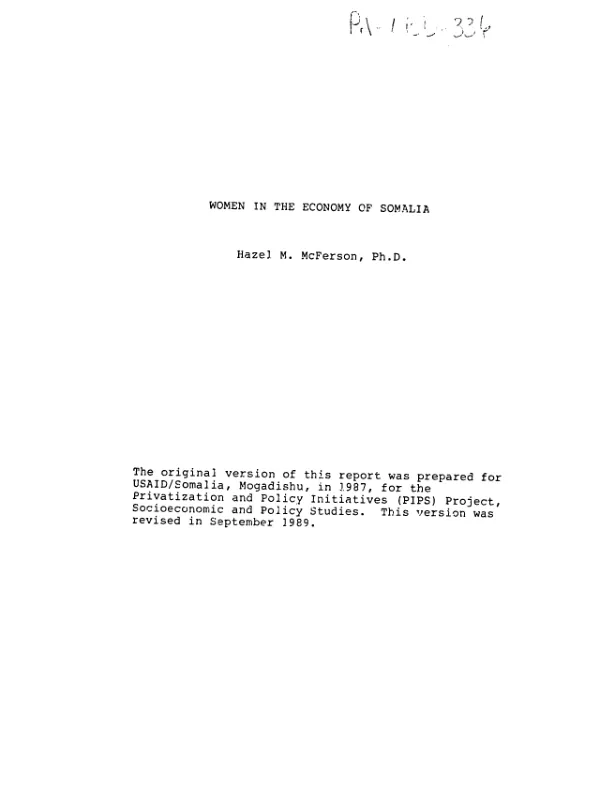
Women in the economy of Somalia
Women in Somalia are freer and have greater opportunities to get into business than most other African women.
McFerson, Hazel M. · 1989
Sign in to readA free account is required to download.
Abstract
This report analyzes the changing role of women in the Somalian economy, with special emphasis on the economic liberalization period of 1984-1987. Part I assesses societal influences on Somali women, including male migration, marriage, polygamy, and female circumcision. Part II examines women in the agricultural sector, analyzing land tenure, production, and special problems faced by female farmers and female-headed households. Part III discusses women in primary, secondary, vocational, higher, and nonformal education and identifies sociocultural and economic barriers to their full participation. Part IV summarizes a first-ever comprehensive survey of the role of Somali women entrepreneurs and also examines the role of women in government. The report includes several key findings. (1) Female-headed households, caused by increasing male migration, should be studied in order to develop strategies which lessen the pressures placed on them. (2) Due to its harmful personal and socioeconomic effects on women, female circumcision should receive greater attention by donor agencies. (3) Land tenure systems should be studied and codified to allow women, who account for 86% of subsistence farmers, increased opportunity to own land. (4) While women are active in business, they are still "invisible" to policymakers and donor agencies. These groups should recognize the economic contributions made by Somali women in both the rural and urban sectors and should incorporate women"s concerns (e.g., child daycare) into their policies.
Related documents