U.S. DEPT. OF AGRICULTURE. ECONOMIC RESEARCH SERVICE. INTERNATIONAL ECONOMICS DIV.
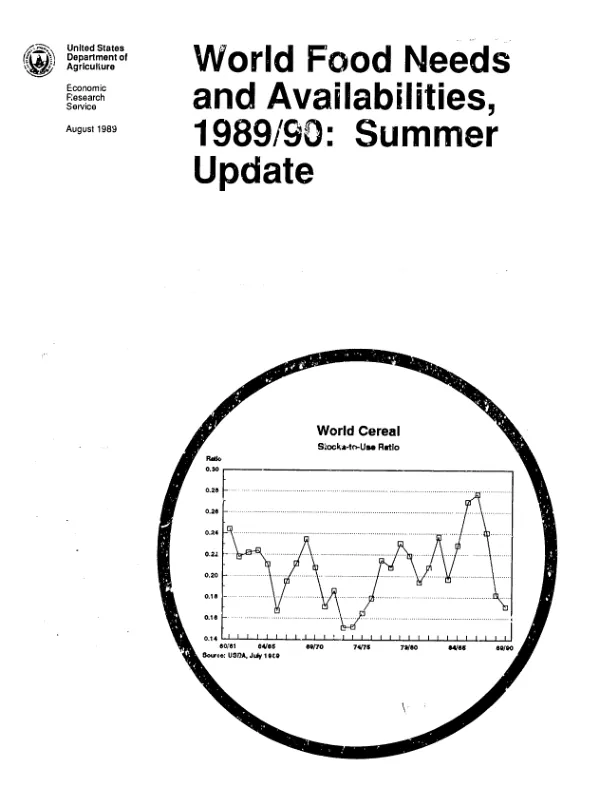
World food needs and availabilities, 1989/90 : winter
Global cereal aid needs remain high, despite a continuance of relatively favorable weather in food-deficit countries.
1989
Sign in to readA free account is required to download.
Abstract
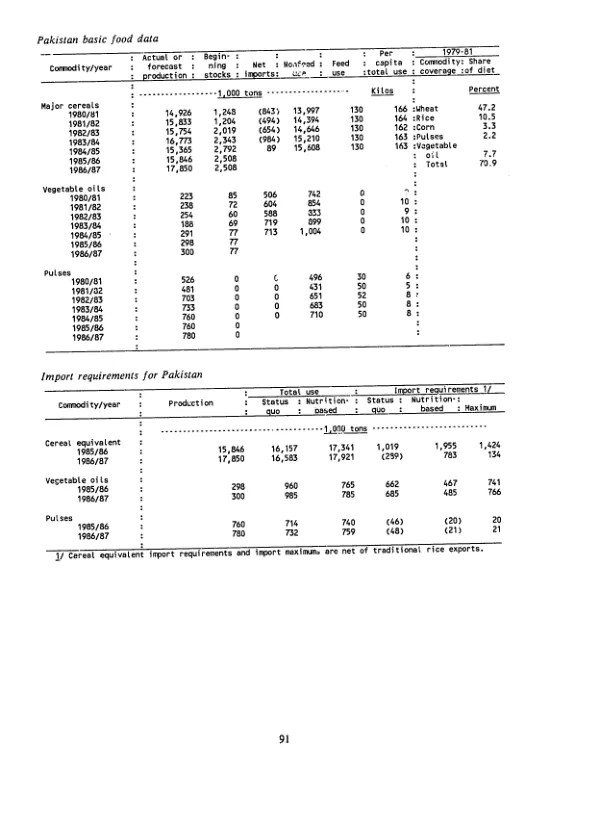
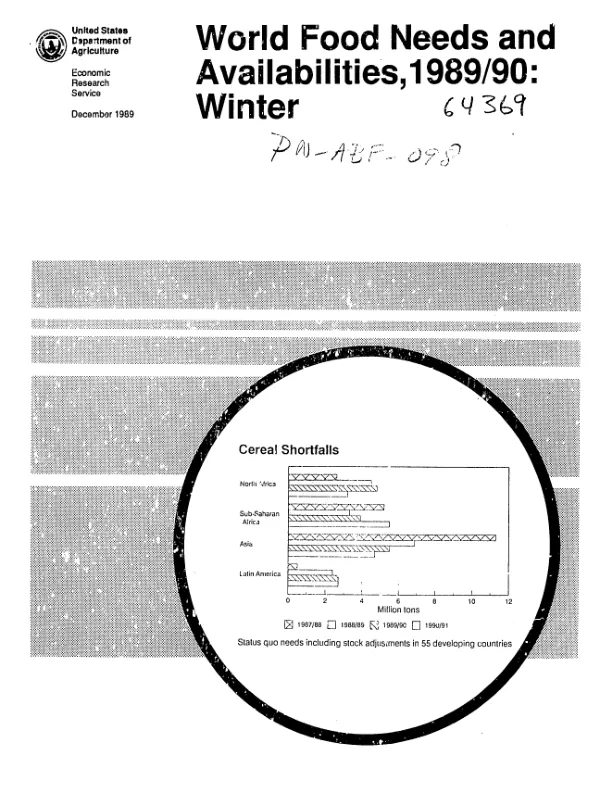
This report, the last in the series, provides an estimate of food import and food aid needs in the 1989/90 and 1990/91 trade years for 55 countries, including a detailed analysis for 32 of them. Two alternative measures of food needs are used - status quo assessment (the additional food needed to maintain recent levels of food consumption) and nutrition-based assessment (the additional food required to meet minumum daily requirements). The maxiumum amount of food aid which can be absorbed by the country"s delivery system is also assessed. Estimated 1989/90 status quo needs of 17.0 million tons are about the same as for 1988/89. Needs for sub-Saharan Africa are 3.9 million tons, up nearly 580,000 from 1988/89. North African and Latin American needs also increased, by 340,000 and 350,000, respectively, while Asian needs decreased 1.4 million tons. Nutrition-based needs are down sharply in Asia as well, led by India and the Philippines. But these declines are offset by increases in Africa, particularly Egypt, Sudan, and Ethiopia. Needs in Latin America jumped by nearly 400,000, led by Bolivia and Guatemala. The report also finds that rising cereal prices on world markets, poor export earnings, and continued debt service requirements limit the ability of developing countries to pay for food imports.
Connected topics