THE RESEARCH TRIANGLE INTERNATIONAL INSTITUTE
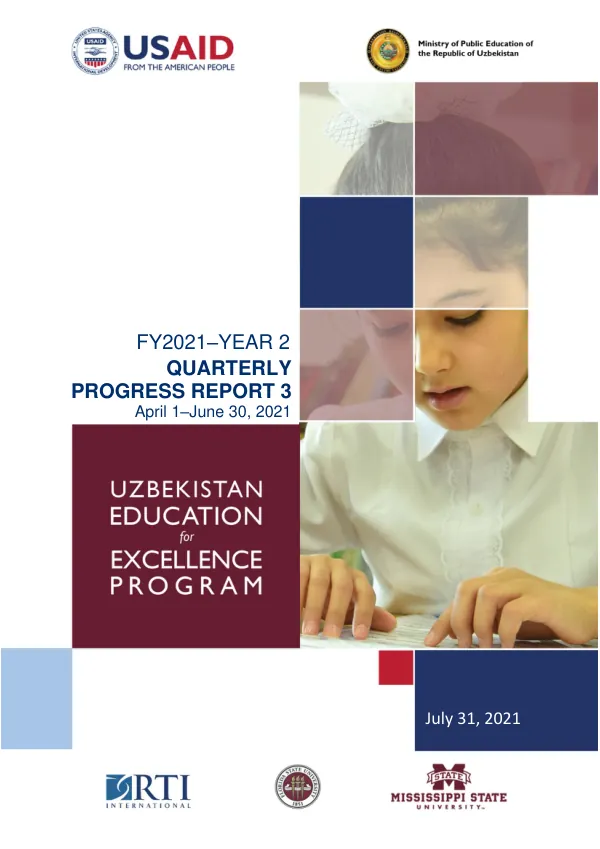
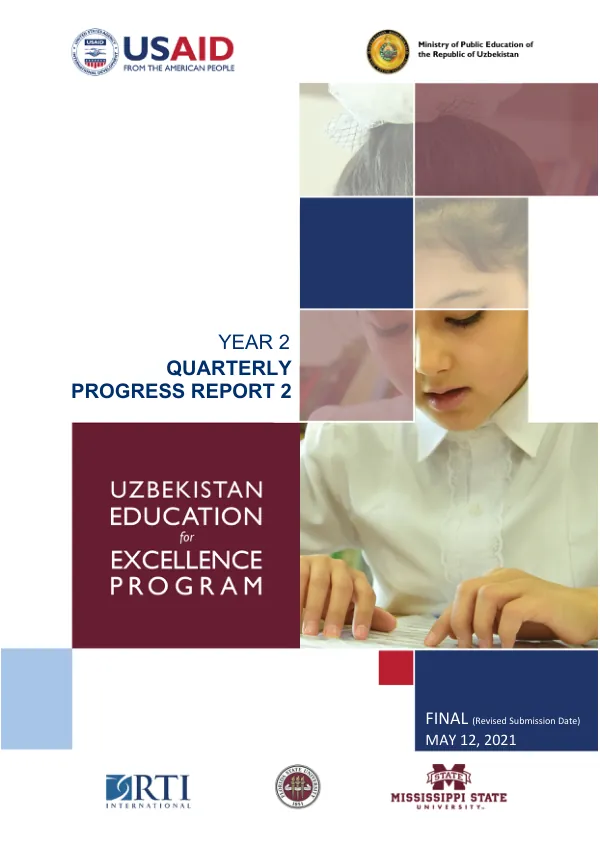
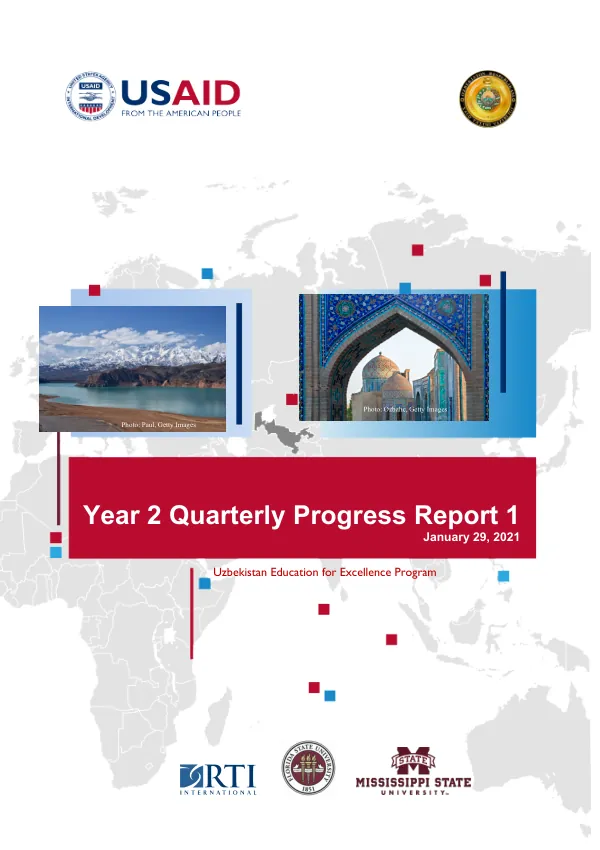
Year 2 Quarterly Progress Report 1: Uzbekistan Education for Excellence Program
The Uzbekistan Education for Excellence Program is a cooperative agreement between the United States Agency for International Development (USAID) and RTI International.
2021 · 32 pages
Sign in to readA free account is required to download.
Abstract
The program aims to improve education outcomes in Uzbekistan, with a focus on literacy, mathematics, and English language instruction. The program's overall goal is to enhance the quality of education in Uzbekistan, particularly in the areas of reading, mathematics, and English language skills. The program is divided into three components: Improved ULA and Mathematics Outcomes in Grades 1-4, Enhanced ICT Instruction in Grades 1-11, and Improved English Language Instruction in Grades 1-11. Each component has specific objectives and activities designed to achieve the program's overall goal. For example, Component 1 aims to improve literacy and mathematics outcomes in grades 1-4 through the development of student learning standards, subject scopes and sequences, and teacher training programs. The program's implementation is overseen by a team of experts from RTI International, who work closely with the Ministry of Public Education in Uzbekistan. The team conducts regular monitoring and evaluation activities to assess the program's progress and identify areas for improvement. The program also engages with various stakeholders, including government officials, donors, and implementing partners, to ensure that the program's activities are aligned with the needs and priorities of the education sector in Uzbekistan. One of the key challenges faced by the program during the first quarter of Year 2 was the COVID-19 pandemic, which had a significant impact on education systems around the world. The program's team had to adapt to the new circumstances and adjust its implementation plan accordingly. Despite these challenges, the program made significant progress during the first quarter, including the development of student learning standards, subject scopes and sequences, and teacher training programs. The program's progress is tracked through a set of indicators, which are used to measure the program's impact and effectiveness. The indicators include measures of student learning outcomes, teacher training and capacity building, and program implementation progress. The program's team also conducts regular monitoring and evaluation activities to assess the program's progress and identify areas for improvement. The program's financial summary for the first quarter of Fiscal Year 2021 shows that the program spent a total of $X million on various activities, including program implementation, staff salaries, and travel expenses. The program's travel summary for the same period shows that the program's team traveled to various locations in Uzbekistan to conduct program implementation activities and meet with stakeholders. The program's glossary defines various acronyms and abbreviations used throughout the report, including ABC+, ACR Asia, AO, AOR, CCSSO, COVID-19, DepEd, DPAG, DPI, EFL, EGMA, EGRA, and others. The glossary provides a clear understanding of the terminology used in the report and helps readers to navigate the content more easily. Overall, the Uzbekistan Education for Excellence Program is making significant progress in improving education outcomes in Uzbekistan. The program's team is working closely with the Ministry of Public Education and other stakeholders to achieve the program's overall goal of enhancing the quality of education in Uzbekistan.