FHI360
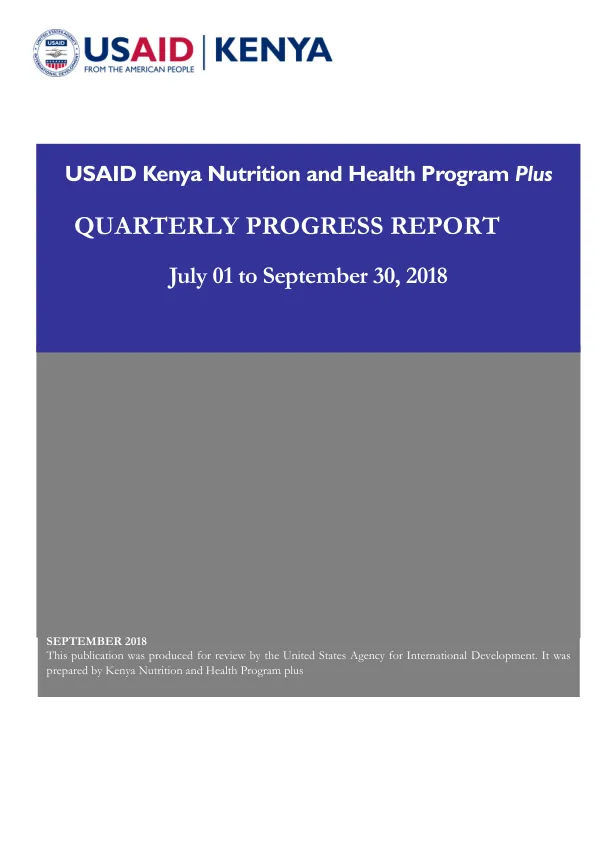
Year 4 Quarter 4 Progress Report: Kenya Nutrition and Health Program Plus
The Kenya Nutrition and Health Program Plus is a USAID-funded initiative aimed at improving nutrition outcomes in Kenya.
2018 · 107 pages
Sign in to readA free account is required to download.
Abstract
The program began in 2015 and is implemented by FHI360. The program's primary goal is to strengthen the capacity of the government of Kenya and other stakeholders to direct, manage, and finance Kenya's nutrition programs. The program focuses on four key areas: improved access and demand for quality nutrition interventions at community and facility levels, strengthened nutrition commodity management, improved food and nutrition security, and monitoring and evaluation. The program has made significant progress in these areas, with notable achievements including the strengthening of long-term capacity of the government of Kenya and other stakeholders to direct, manage, and finance Kenya's nutrition programs. The program has also improved nutrition service delivery management, coordination, and implementation, with increased coverage of quality nutrition services at facility and community levels. Additionally, the program has strengthened capacity at community, dispensary, and health center levels for targeted interventions as dictated by local nutrition needs and context. In terms of nutrition commodity management, the program has improved production, supply, and distribution of nutrition commodities, as well as improved quality and safety of food commodities and agricultural products. The program has also strengthened sustainability and innovation in nutrition commodity development and management. The program has also made significant progress in improving food and nutrition security, with increased market access and consumption of diverse and quality foods, as well as increased resilience of vulnerable households and communities. The program has also implemented various monitoring and evaluation activities, including facility reporting, electronic nutrition reporting, nutrition portal, supportive supervision, and household monitoring. In terms of quantitative impact, the program has reported significant achievements, including a 27% increase in the number of children under 5 who received vitamin A from USG-supported programs, and a 25% increase in the number of people trained in child health and nutrition through USG-supported programs. The program has also faced implementation challenges, including delays in the procurement of commodities and equipment, as well as challenges in engaging with local communities. However, the program has also learned valuable lessons, including the importance of engaging with local stakeholders and the need for more effective communication and coordination among program staff. The program has also reported several success stories, including the introduction of new high-value DTC groundnuts in ASAL counties, and the transfer of vertical bag technology through the church in Samburu County. These success stories demonstrate the program's ability to make a positive impact on nutrition outcomes in Kenya.