ACTED
Yemen Complex Emergency FS#5 02-23-2012
The humanitarian situation in Yemen has been marked by ongoing conflict and displacement since 2004.
2012 · 4 pages
Sign in to readA free account is required to download.
Abstract
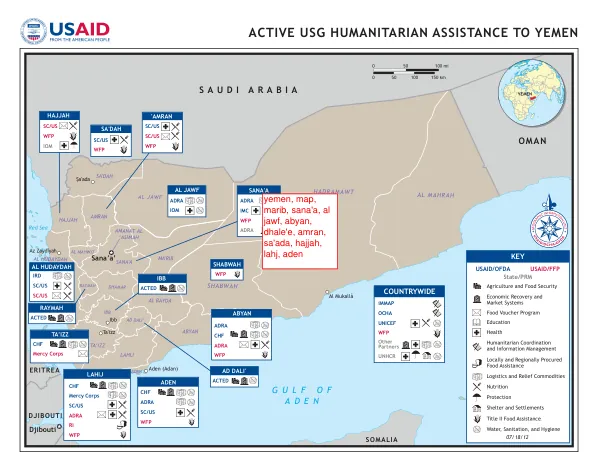
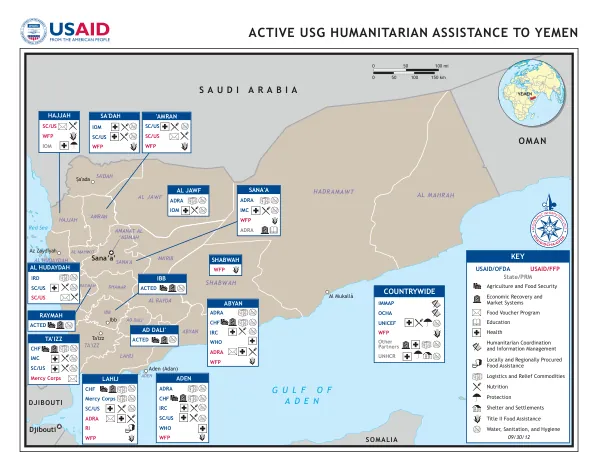
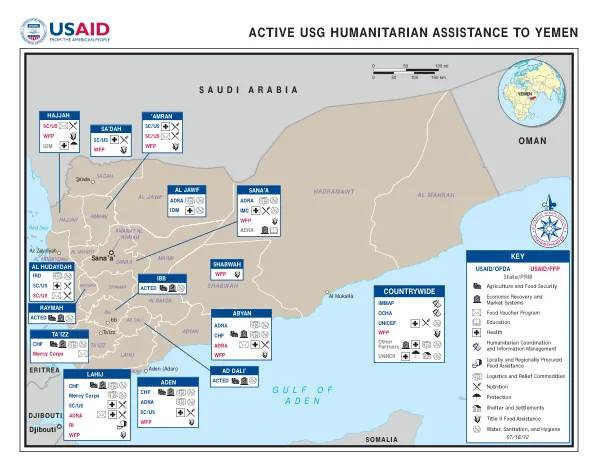
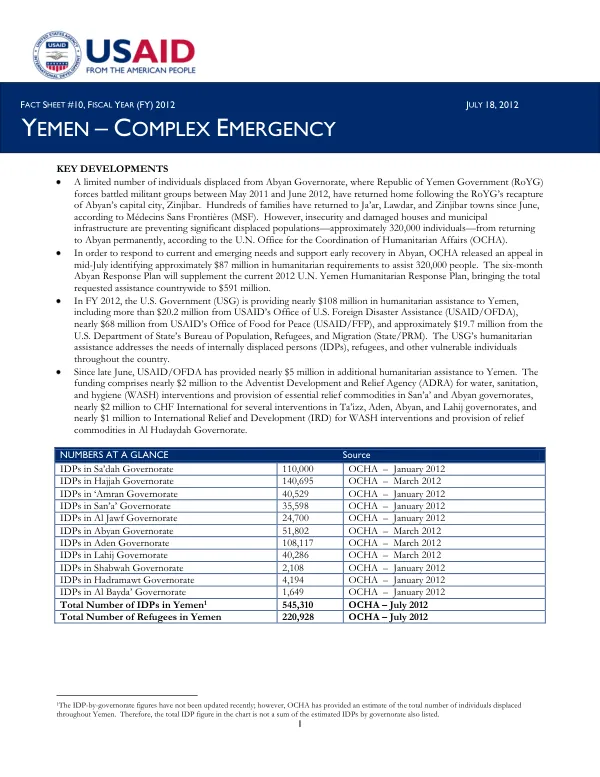
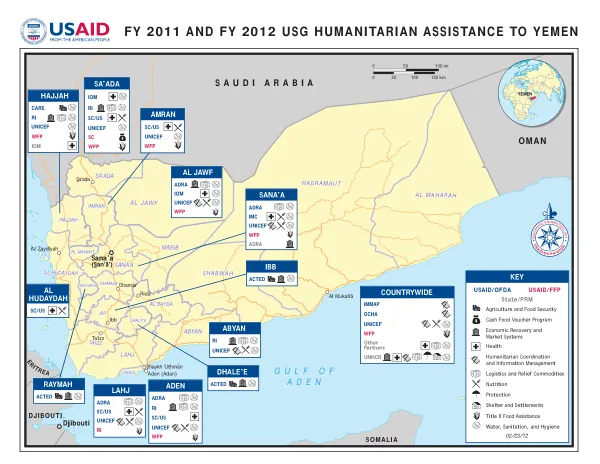
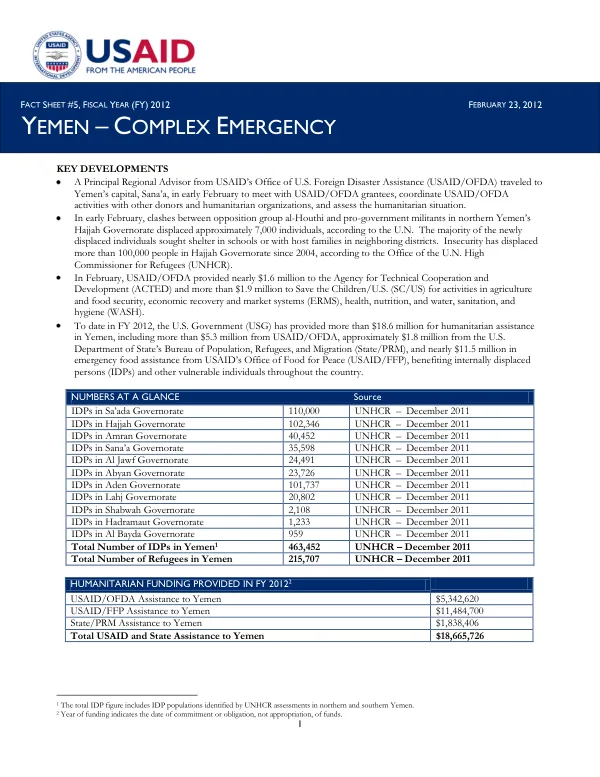
The conflict between the Republic of Yemen Government and al-Houthi opposition forces has resulted in the need for humanitarian assistance, affecting more than 1 million people. The fragile February 2010 ceasefire collapsed in April 2011, leading to sporadic clashes and isolated violent incidents that have hindered large-scale population returns to Sa'ada and Al Jawf governorates. The conflict has also led to increased humanitarian needs among vulnerable populations, including internally displaced persons (IDPs) and refugees. According to the U.N. High Commissioner for Refugees (UNHCR), more than 463,000 IDPs are in need of assistance in Yemen, with the majority residing in northern governorates. The total number of refugees in Yemen is estimated to be over 215,000. The U.S. Government has provided significant humanitarian assistance to Yemen, with a total of over $18.6 million committed in FY 2012. This assistance includes funding from USAID's Office of U.S. Foreign Disaster Assistance (USAID/OFDA), the U.S. Department of State's Bureau of Population, Refugees, and Migration (State/PRM), and USAID's Office of Food for Peace (USAID/FFP). The assistance has focused on providing emergency food assistance, health interventions, nutrition programs, and water, sanitation, and hygiene (WASH) services to vulnerable populations. In terms of health, ongoing insecurity and uneven humanitarian access have contributed to limited health care availability across Yemen. Relief agencies are particularly concerned about the spread of communicable disease. USAID/OFDA has provided over $1.7 million for health interventions throughout the country, including funding for reproductive health services and the prevention and control of communicable disease. Nutrition is also a significant concern in Yemen, with over 6 million children chronically malnourished. USAID/OFDA has provided over $1.9 million for nutrition activities in Yemen, including funding for the treatment of acute malnutrition in children under five years of age and pregnant and lactating women. Agriculture and food security are also critical issues in Yemen, with continued insecurity and prolonged displacement limiting income-generating opportunities for vulnerable individuals. USAID/OFDA has committed over $490,000 to ACTED to improve food security among rural individuals by distributing farming inputs and conducting farming and livestock training. Additionally, USAID/OFDA has provided over $500,000 to ACTED to increase livelihoods opportunities and access to cash for rural families in central Yemen. In terms of WASH, frequent electricity outages have continued in Sana'a due to ongoing fuel shortages and damaged power infrastructure. Households are purchasing water or receiving donated water from mosques and neighbors, with some households spending up to 40 percent of their income buying safe drinking water. USAID/OFDA partner UNICEF continues to respond to the WASH needs of IDPs and other vulnerable individuals countrywide, including distributing hygiene kits and providing emergency WASH services.