FAO
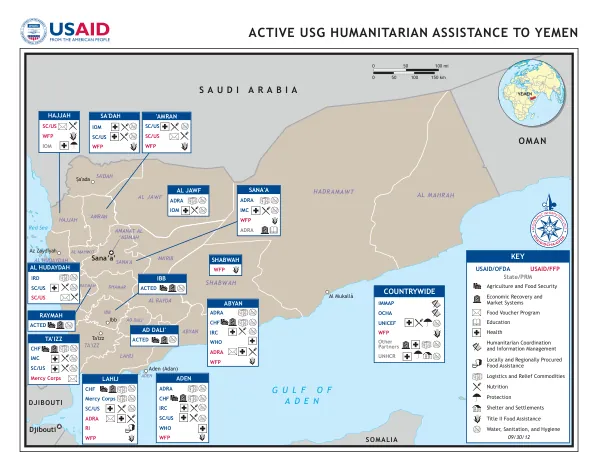
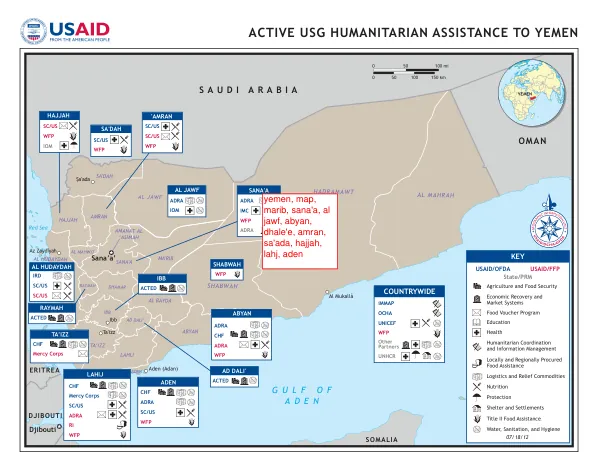
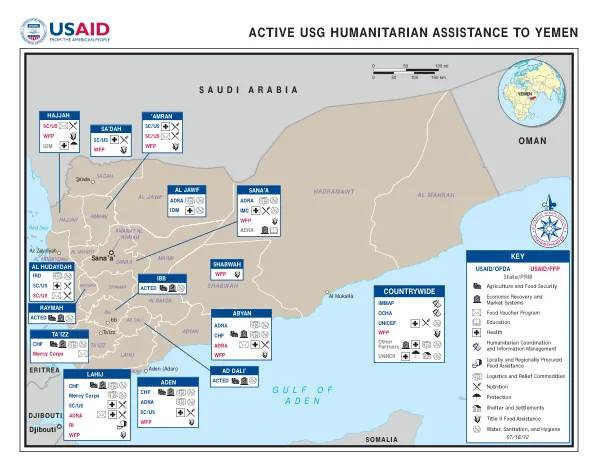
Active USG Programs for the Yemen Response
Yemen's humanitarian situation is characterized by widespread food insecurity, with an estimated 17 million people in need of assistance.
2018 · 1 pages
Sign in to readA free account is required to download.
Abstract
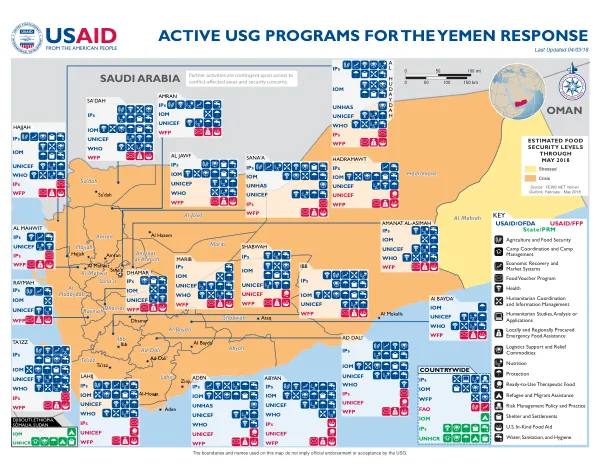
The country's 22 governorates are affected, with varying levels of severity. Hadramawt, Al Jawf, Al Mahrah, Shabwah, Lahij, Marib, Abyan, Ta'izz, Sa'dah, Sana'a, Ibb, Hajjah, Amran, Al Bayda', Al Hudaydah, Dhamar, Ad Dali', Raymah, Al Mahwit, Amanat al-Asimah, and Aden are among the governorates experiencing significant humanitarian needs. The United Nations and its partners, including the International Organization for Migration (IOM), the United Nations Children's Fund (UNICEF), the World Health Organization (WHO), and the World Food Programme (WFP), are actively engaged in responding to the crisis. These organizations are providing assistance in various sectors, including agriculture and food security, camp coordination and management, economic recovery and market systems, and shelter and settlements. The Food and Agriculture Organization (FAO) is also involved in the response, providing emergency food assistance and logistics support. The US Government, through USAID/OFDA and USAID/FFP, is supporting humanitarian activities, including food voucher programs, nutrition, and protection. The State Department's Bureau of Population, Refugees, and Migration (PRM) is also providing funding for humanitarian programs. The humanitarian situation in Yemen is complex, with multiple factors contributing to the crisis. The conflict has resulted in significant displacement, with over 3 million people internally displaced. The country's infrastructure, including roads and bridges, has been severely damaged, making it difficult to access affected areas. The conflict has also disrupted agricultural production, leading to food shortages and price increases. The estimated food security levels through May 2018 are as follows: Al Bayda' is classified as stressed, while Al Jawf, Al Mahrah, and Shabwah are classified as crisis. The remaining governorates are also experiencing significant food insecurity, with an estimated 17 million people in need of assistance. The humanitarian response is ongoing, with partners working to provide assistance to those in need.