ACTED
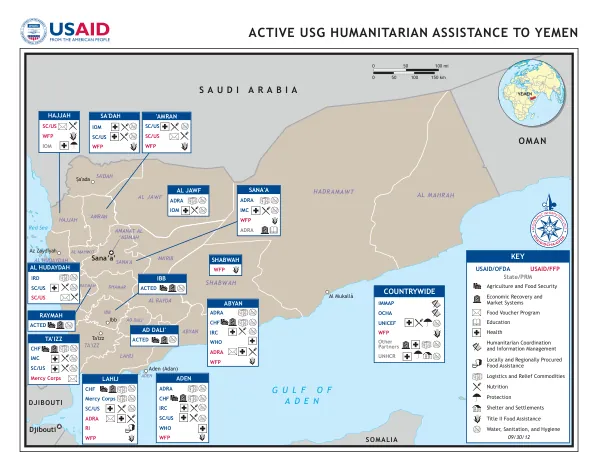
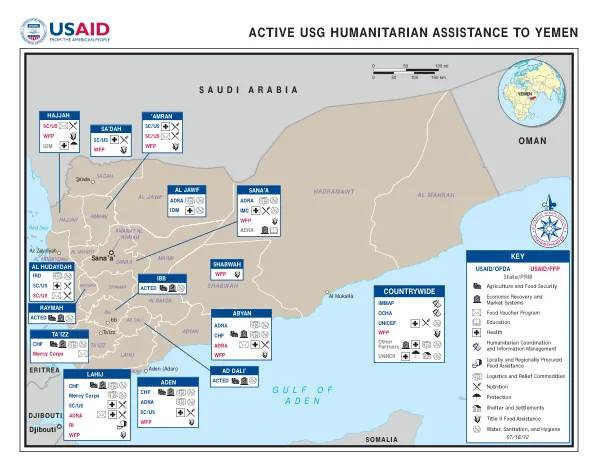
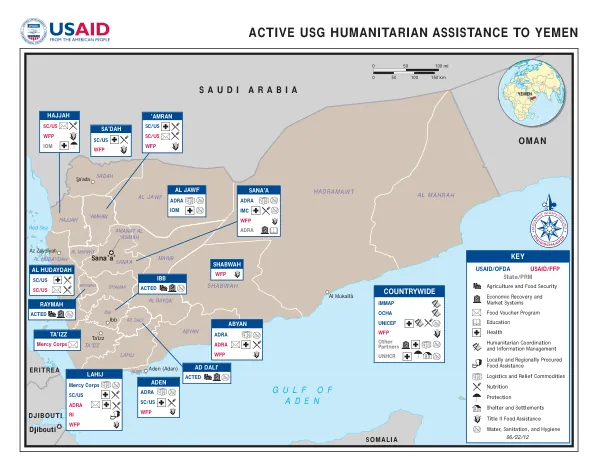
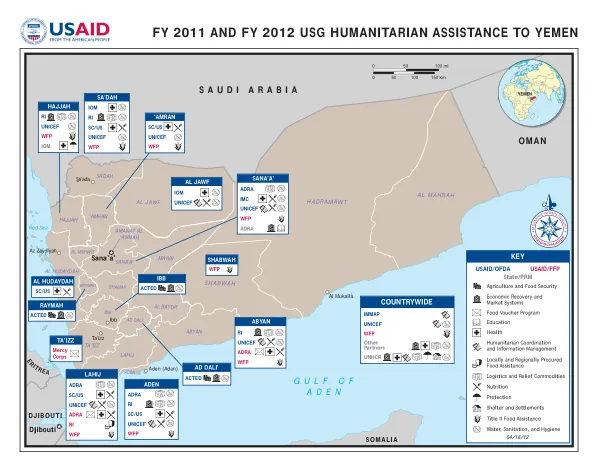
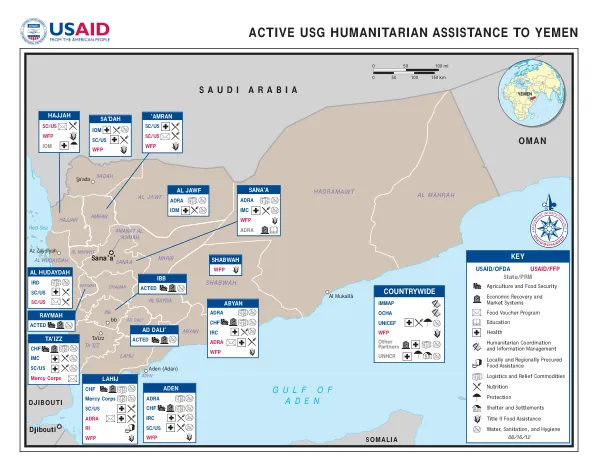
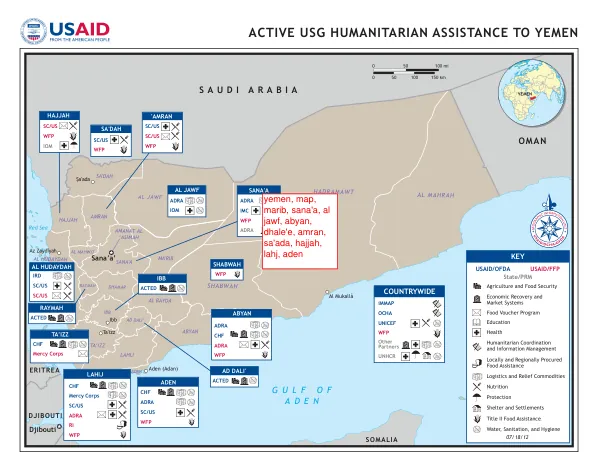
ACTIVE USG HUMANITARIAN ASSISTANCE TO YEMEN
Yemen's agricultural sector faces significant challenges, including soil degradation, limited market access, and inadequate irrigation systems.
2012 · 1 pages
Sign in to readA free account is required to download.
Abstract
The country's geography, with its arid and semi-arid regions, exacerbates these issues. The Red Sea and the Gulf of Aden, which border Yemen, provide opportunities for trade and economic growth but also pose challenges for the country's agricultural sector. The USAID/OFDA and USAID/FFP programs have been instrumental in addressing Yemen's humanitarian needs, including food security and economic recovery. The programs have focused on key areas such as agriculture, education, health, and humanitarian coordination. Locally and regionally procured food assistance has been a critical component of these efforts, with organizations such as UNHCR, WFP, and IOM playing significant roles. The Food Voucher Program, implemented in various governorates including Sana'a, Al Jawf, Hajjah, and Abyan, has shown promising results in improving food security and promoting economic recovery. The program has enabled beneficiaries to purchase essential goods and services, including food, from local markets. This approach has not only improved food security but also supported local economies and promoted market systems. Implementation of the program has involved partnerships with various organizations, including ADRA, IMC, and OCHA. These partnerships have facilitated the delivery of assistance to vulnerable populations, including women-headed households and internally displaced persons. The program's success has been attributed to the effective coordination and collaboration among implementing partners, which has ensured the efficient and effective delivery of assistance. The program's geographic focus has been on governorates with high levels of humanitarian need, including Ta'izz, Ibb, Aden, Al Mukalla, Sa'ada, and Az Zaydiyah. The program's timeframes have been aligned with the humanitarian response in Yemen, with a focus on addressing the immediate needs of vulnerable populations. Recommendations for future programming have emphasized the need for continued support to Yemen's agricultural sector, as well as the importance of promoting economic recovery and market systems.