USAID DEC
Yemen Livelihood Zones
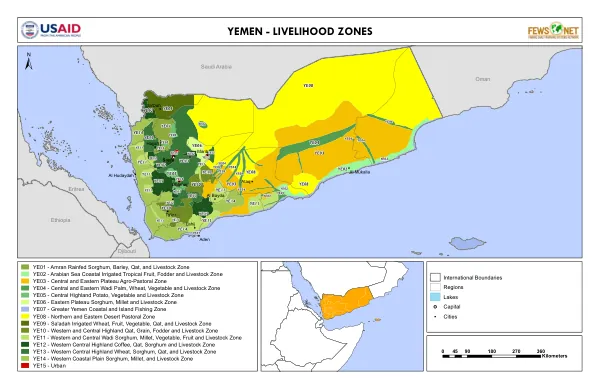
Yemen's Livelihood Zones are a classification system used to categorize the country's diverse geographic regions based on their agricultural and pastoral potential.
1 pages
Sign in to readA free account is required to download.
Abstract
The zones are designated by a two-letter code, with the first letter representing the region and the second letter representing the specific livelihood zone. The regions include Saudi Arabia, Oman, Eritrea, Ethiopia, and Djibouti, as well as various provinces within Yemen. The livelihood zones are further divided into 15 distinct categories, each with its unique set of crops, livestock, and agricultural practices. For example, the YE01 - Amran Rainfed Sorghum, Barley, Qat, and Livestock Zone is characterized by rainfed agriculture, with crops such as sorghum and barley being grown in the region. In contrast, the YE02 - Arabian Sea Coastal Irrigated Tropical Fruit, Fodder and Livestock Zone is characterized by irrigated agriculture, with crops such as tropical fruits and fodder being grown in the region. The livelihood zones are also distinguished by their geographic features, including mountains, plateaus, and deserts. For instance, the YE03 - Central and Eastern Plateau Agro-Pastoral Zone is characterized by a plateau region, with a mix of arable land and pastoral areas. Similarly, the YE08 - Northern and Eastern Desert Pastoral Zone is characterized by a desert region, with a focus on pastoral activities. The livelihood zones are used to inform agricultural development and food security initiatives in Yemen. By understanding the unique characteristics of each zone, policymakers and practitioners can develop targeted interventions to support the livelihoods of rural communities. For example, the YE09 - Sa'adah Irrigated Wheat, Fruit, Vegetable, Qat, and Livestock Zone has been identified as a priority area for agricultural development, with a focus on improving irrigation infrastructure and supporting the growth of high-value crops. The livelihood zones are also used to inform natural resource management and conservation efforts in Yemen. By understanding the unique environmental characteristics of each zone, policymakers and practitioners can develop targeted conservation strategies to protect the country's natural resources. For instance, the YE07 - Greater Yemen Coastal and Island Fishing Zone has been identified as a priority area for marine conservation, with a focus on protecting the country's coral reefs and marine biodiversity. Overall, the livelihood zones provide a critical framework for understanding the diverse geographic and agricultural characteristics of Yemen. By using this framework, policymakers and practitioners can develop targeted interventions to support the livelihoods of rural communities and protect the country's natural resources.