FLORIDA INTERNATIONAL UNIVERSITY
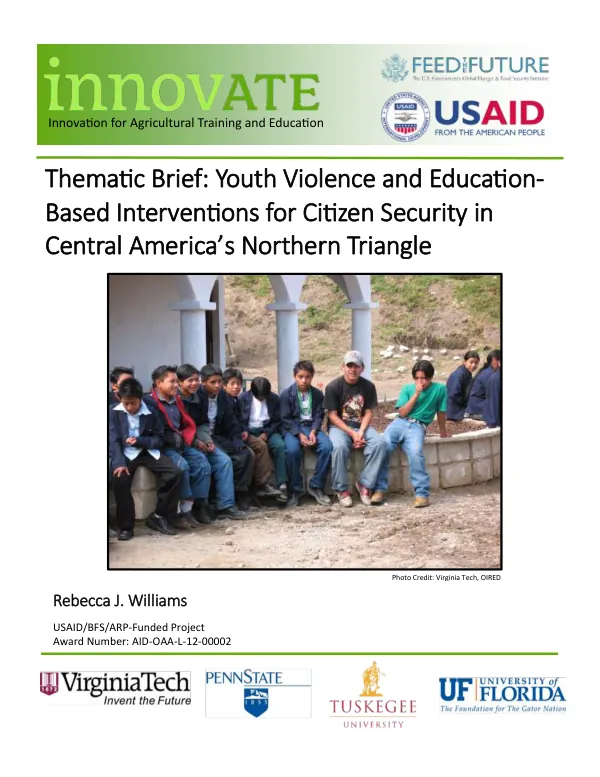
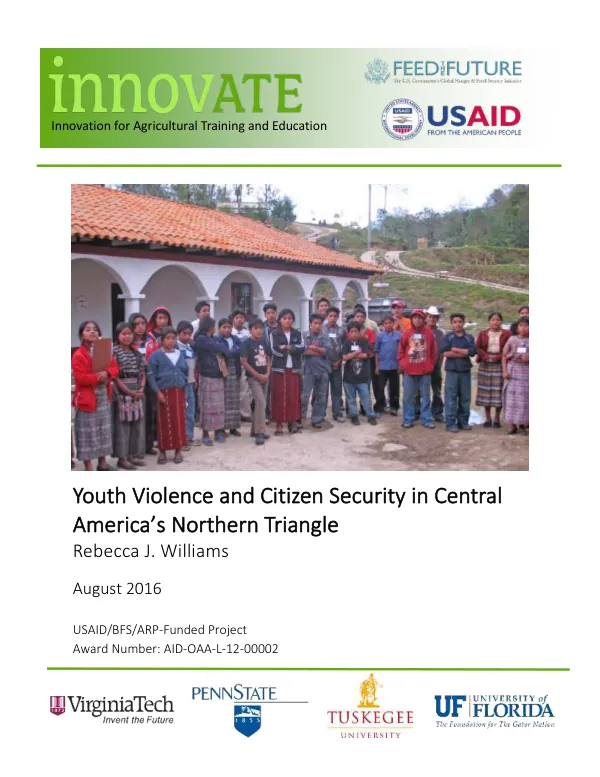
Youth Violence and Citizen Security in Central America’s Northern Triangle
Youth violence and citizen security are critical issues in the Northern Triangle of Central America, comprising El Salvador, Guatemala, and Honduras.
2016 · 58 pages
Sign in to readA free account is required to download.
Abstract
These countries have consistently ranked among the most violent in the world, with Honduras holding the top spot since 2008. The homicide rate in the region has been increasing since 2004, with significant negative impacts on development, poverty reduction efforts, economic development, governance, health, and social and human capital. The drivers of violence in the Northern Triangle are complex and interwoven, involving gangs, organized crime, and narcotrafficking. Weak judicial, penal, and policing systems result in relative impunity for committing crimes, and in many cases, these systems are directly or indirectly involved in violence. Rapid urbanization, high unemployment, high levels of school dropout or non-participation, inequalities in social and economic opportunities, social exclusion of youth and marginalized peoples, and an acceptance of violence as "macho" are also contributing factors. The impact of violence on development in the Northern Triangle is substantial. It undermines poverty reduction efforts, economic development, governance, health, and social and human capital. The education system is also affected, with youth, particularly young men, facing significant challenges in finding paid labor and experiencing an overall fear of violence. The increasing levels of violence in the region require community capacity building at multiple levels, including building social capital, strengthening institutional capacity, improving economic opportunities, increasing services such as health and education, and providing alternatives for youth to escape from intra-household violence. Risk factors for youth violence in the Northern Triangle include gang membership, involvement in organized crime, and exposure to violence in the home or community. Gender-based violence is also a significant issue, with women and girls experiencing high levels of violence, including domestic violence, sexual violence, and human trafficking. The impact of violence on development in the Northern Triangle is substantial, with significant negative effects on poverty reduction efforts, economic development, governance, health, and social and human capital. Intervention strategies to address youth violence in the Northern Triangle include education-based interventions, public health-based interventions, gender-based violence interventions, governance and crime prevention-based interventions, and economic strategies. Education-based interventions aim to improve educational outcomes and provide alternative pathways for youth, while public health-based interventions focus on addressing the physical and mental health impacts of violence. Gender-based violence interventions aim to address the root causes of violence against women and girls, while governance and crime prevention-based interventions focus on strengthening institutions and improving law enforcement. Economic strategies aim to improve economic opportunities and reduce poverty. Recommendations for addressing youth violence in the Northern Triangle include strengthening institutions, improving economic opportunities, increasing services such as health and education, and providing alternatives for youth to escape from intra-household violence. Community capacity building at multiple levels is also essential, including building social capital, strengthening institutional capacity, and improving economic opportunities. Addressing the root causes of violence, including gang membership, involvement in organized crime, and exposure to violence in the home or community, is also critical.
Related documents