POPULATION REFERENCE BUREAU
Zambia and Western Province Are on the Cusp of a Promising Future
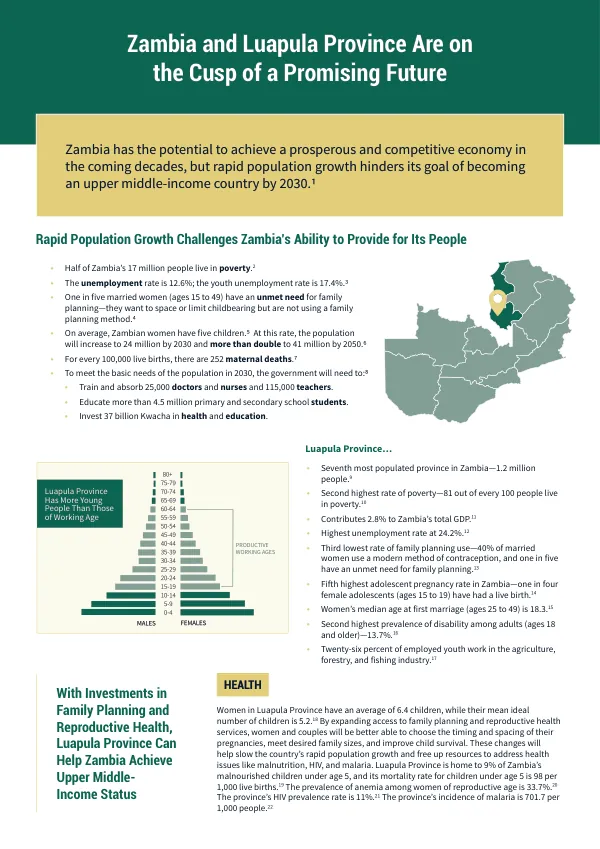
Zambia has the potential to achieve a prosperous and competitive economy in the coming decades, but rapid population growth hinders its goal of becoming an upper middle-income country by 2030.
2019 · 2 pages
Sign in to readA free account is required to download.
Abstract
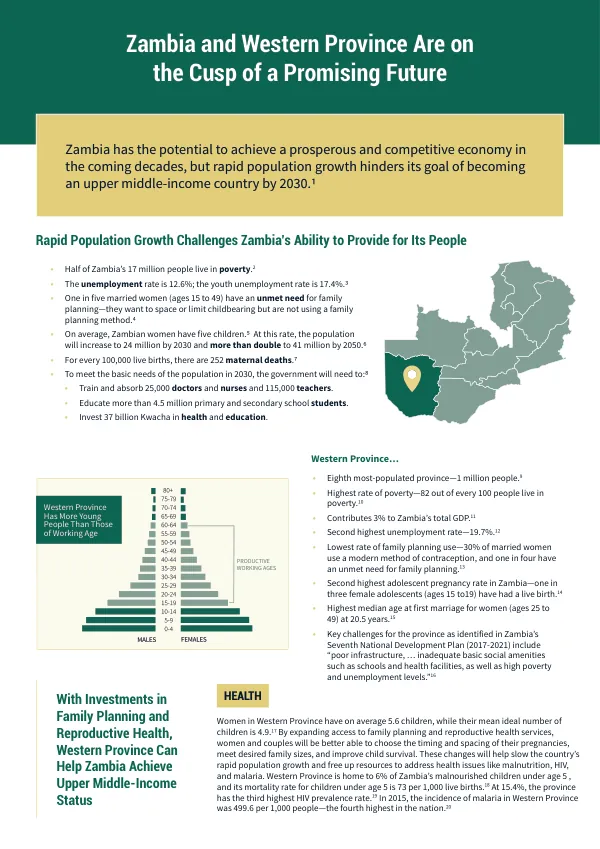
Half of Zambia's 17 million people live in poverty, with an unemployment rate of 12.6% and a youth unemployment rate of 17.4%. One in five married women have an unmet need for family planning, and on average, Zambian women have five children. At this rate, the population will increase to 24 million by 2030 and more than double to 41 million by 2050. Western Province, the eighth most-populated province in Zambia, faces significant challenges. It has the highest rate of poverty, with 82 out of every 100 people living in poverty. The province contributes 3% to Zambia's total GDP and has the second-highest unemployment rate, at 19.7%. Women in Western Province have an average of 5.6 children, while their mean ideal number of children is 4.9. Expanding access to family planning and reproductive health services can help slow the country's rapid population growth and free up resources to address health issues like malnutrition, HIV, and malaria. Western Province has a high rate of malnutrition, with 6% of Zambia's malnourished children under age 5 residing in the province. The mortality rate for children under age 5 is 73 per 1,000 live births, and the province has the third-highest HIV prevalence rate, at 15.4%. In 2015, the incidence of malaria in Western Province was 499.6 per 1,000 people, the fourth-highest in the nation. To address these challenges, the government must invest in health and education, training and absorbing 25,000 doctors and nurses and 115,000 teachers, educating more than 4.5 million primary and secondary school students, and investing 37 billion Kwacha in health and education. The working-age population in Western Province is lower than the dependent population, with 52% of the population under age 15 or above age 65. Expanding access to family planning and reproductive health services can help increase the working-age population, creating a more competitive workforce and decreasing youth unemployment and poverty. To achieve sustainable population growth and meet national development goals, Western Province must use demographic data to inform development policies and programs, increase prioritization of and funding for voluntary family planning and reproductive health services, improve educational outcomes by identifying and reducing barriers to secondary school completion by adolescent girls, and invest in economic growth by creating youth employment and skills-building opportunities.
Related documents