USAID DEC
Zimbabwe, anticipation of economic and humanitarian needs : health consequences of transition in Zimbabwe
Sign inAFRICAN-AMERICAN SCHOLARS COUNCIL
Zimbabwe, anticipation of economic and humanitarian needs : health consequences of transition in Zimbabwe
Discusses present health services in Zimbabwe and problems anticipated with the change from minority to majority government.
Watson, James C. · 1970
Sign in to readA free account is required to download.
Abstract
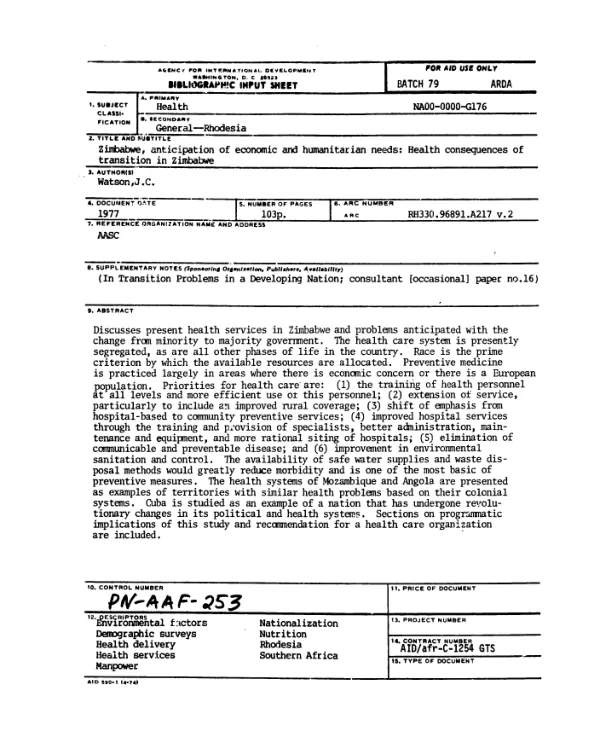
The health care system is presently segregated, as are all other phases of life in the country. Race is the prime criterion by which the available resources are allocated. Preventive medicine is practiced largely in areas where there is economic concern or there is a European population. Priorities for health care are: (1) the training of health personnel at all levels and more efficient use of this personnel; (2) extension of service, particularly to include an improved rural coverage; (3) shift of emphasis from hospital-based to community preventive services; (4) improved hospital services through the training and provision of specialists, better administration, maintenance and equipment, and more rational siting of hospitals; (5) elimination of communicable and preventable disease; and (6) improvement in environmental sanitation and control. The availability of safe water supplies and waste disposal methods would greatly reduce morbidity and is one of the most basic of preventive measures. The health systems of Mozambique and Angola are presented as examples of territories with similar health problems based on their colonial systems. Cuba is studied as an example of a nation that has undergone revolutionary changes in its political and health systems. Sections on programmatic implications of this study and recommendation for a health care organization are included.