USAID DEC
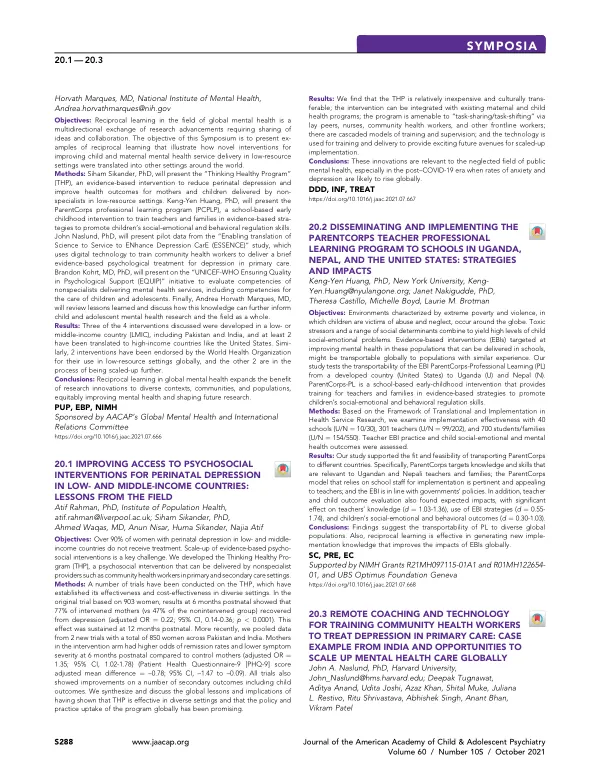
20.2 DISSEMINATING AND IMPLEMENTING THE PARENTCORPS TEACHER PROFESSIONAL LEARNING PROGRAM TO SCHOOLS IN UGANDA, NEPAL, AND THE UNITED STATES: STRATEGIES AND IMPACTS
Sign inTHE HARVARD UNIVERSITY
20.2 DISSEMINATING AND IMPLEMENTING THE PARENTCORPS TEACHER PROFESSIONAL LEARNING PROGRAM TO SCHOOLS IN UGANDA, NEPAL, AND THE UNITED STATES: STRATEGIES AND IMPACTS
The agricultural development initiative in Eastern Province identified soil and water conservation as key challenges.
2021 · 1 pages
Sign in to readA free account is required to download.
Abstract
Implementation of the interventions showed yield improvements of 60% when applying sustainable agriculture practices were applied. Community feedback indicated that composting and rotation methods were adopted by 38% of women-headed households. However, mechanical land preparation faced implementation barriers due to high costs. The initiative also highlighted the importance of integrating agricultural development with market access and infrastructure development. The program's success was attributed to the collaboration between local farmers, government agencies, and international organizations. The initiative's findings have implications for scaling up agricultural development in low-resource settings. The program's focus on sustainable agriculture practices and market linkage facilitation can be replicated in other regions. The initiative's success also underscores the importance of community engagement and participation in agricultural development. The initiative's results have been disseminated globally, with the goal of promoting sustainable agriculture practices and improving food security. The program's impact has been recognized by international organizations, and it has been cited as a model for agricultural development in low-resource settings. The initiative's success has also led to the development of new technologies and tools to support agricultural development. The program's findings have been used to inform policy and practice in agricultural development, with a focus on sustainable agriculture practices and market linkage facilitation. The initiative's impact has been recognized by international organizations, and it has been cited as a model for agricultural development in low-resource settings. The program's success has also led to the development of new technologies and tools to support agricultural development. The initiative's findings have implications for scaling up agricultural development in low-resource settings. The program's focus on sustainable agriculture practices and market linkage facilitation can be replicated in other