OVERSEAS PRIVATE INVESTMENT CORPORATION USA
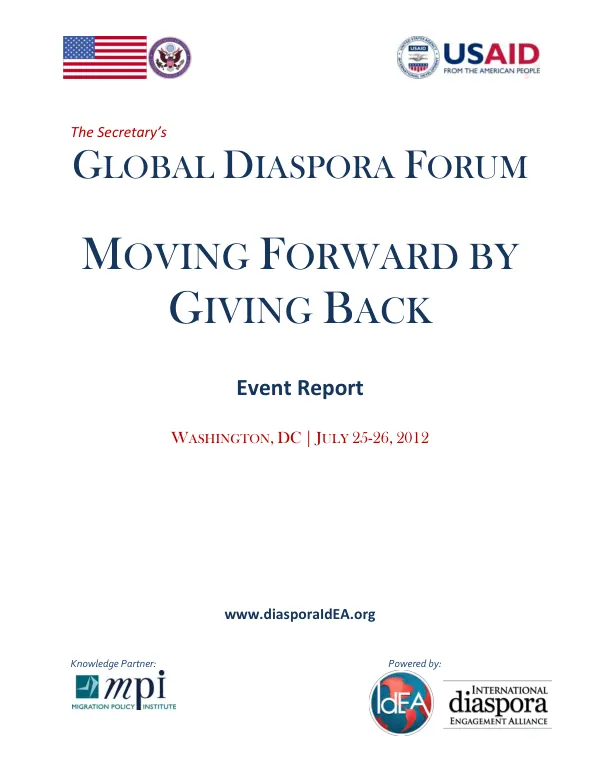
2012 Global Diaspora Forum: Moving Forward by Giving Back
The Global Diaspora Forum, convened by Secretary of State Hillary Rodham Clinton on July 25-26, 2012, at the U.S.
2012 · 7 pages
Sign in to readA free account is required to download.
Abstract
Department of State and the U.S. Agency for International Development in Washington, D.C., brought together diaspora leaders from around the globe to discuss opportunities for giving back to their countries of origin. The event underscored the importance of partnering with diaspora communities on development and diplomacy initiatives. Diaspora leaders representing a diverse group of stakeholders, including diaspora organizations, non-profits, private sector, and government, attended the gathering. The Forum kicked off with an overview of the International diaspora Engagement Alliance (IdEA), a partnership platform launched by the Secretary of State in 2011, which has over 1500 diaspora community partners and has launched three regional entrepreneurship competitions. The Secretary announced new commitments around this partnership, including the official opening of the La Idea business competition, which will support small and medium-sized entrepreneurs from Mexico and Central America. Other new partnerships for promoting diaspora engagement include a mentoring platform, a grassroots philanthropy program, a diaspora fellowship program, and a diaspora volunteer corps. A major feature of the 2012 Forum was the new Diasporas@ program, which invited diaspora community leaders to host local parties to watch livestreamed sessions from the main Forum at the State Department and host discussion groups around topics of interest. Diaspora groups in Minneapolis, Kansas City, and Lynn, Massachusetts coordinated viewing parties and participated in online discussions about diaspora engagement. The Forum highlighted the enormous potential that diaspora communities have to promote development in countries of heritage and encouraged participants to connect with one another, build global networks, and discuss opportunities for giving back. Key themes from the conference focused on the best ways to tap this diaspora potential and implement specific diaspora engagement strategies. Partnerships with diaspora communities were identified as critical to more effective foreign policy, as they can serve as a "diplomatic bridge" during times of transition, leveraging the diversity of the United States as an asset, and encouraging young diaspora members to engage with their heritage. Remittances were also recognized as an important but only part of the picture, with the potential to scale up remittances' impact from the household to the country level through public-private partnerships. Diaspora engagement was also highlighted as key for exploring new markets, due to their expertise of the local economy and culture, as well as their tolerance for risk-taking. Companies are turning to their diaspora member employees to identify new market opportunities and understand the cultural preferences of their countries of origin. The Forum concluded with a call to action, emphasizing the need for greater engagement between government and diaspora communities to promote development and diplomacy initiatives. The event marked a significant step forward in recognizing the potential of diaspora communities to drive positive change in emerging economies and regions.