USAID
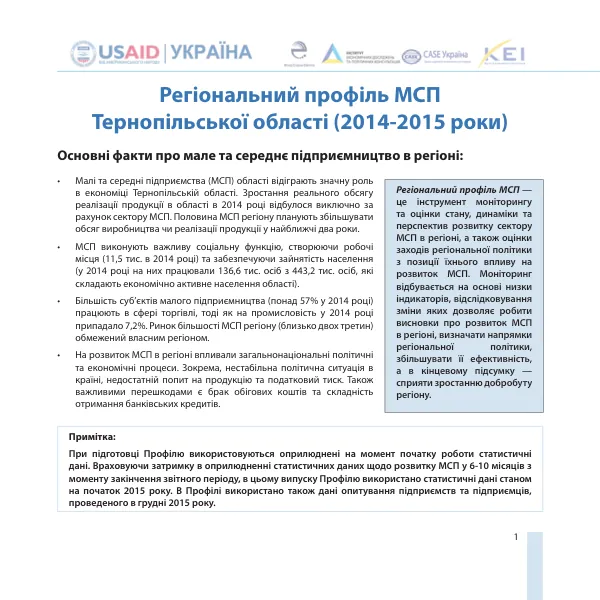
Регіональний профіль МСП Львівської області (2015 рік)
The economic development of the Lviv region is characterized by a significant role of small and medium-sized enterprises (SMEs) in ensuring the socio-economic development of the region.
2015 · 16 pages
Sign in to readA free account is required to download.
Abstract
In 2015, the number of SMEs in the region decreased by 16.6% in real terms, with a total of 120,442 SMEs. The sector's share in the total number of employed individuals in the region was 81%, with 387,100 people employed in SMEs. The majority of SMEs in the region are engaged in trade, with 49.4% of SMEs operating in this sector. The trade sector accounted for 41.9% of all employed individuals in SMEs, with 101,600 people employed in this sector. The trade sector also accounted for the largest share of realized production, with 33.5 billion hryvnias (47.4% of the total). The region's SMEs are characterized by a high level of fragmentation, with 10,500 SMEs operating in the region. The majority of SMEs are small, with 116,827 SMEs operating in the region. The SMEs in the region are characterized by a high level of informality, with 35.1% of SMEs operating without a formal registration. The SMEs in the region are facing significant challenges, including a lack of access to finance, a lack of skilled labor, and a lack of infrastructure. The region's SMEs are also facing significant competition from large enterprises, which are more likely to have access to resources and networks. The region's SMEs are also characterized by a high level of innovation, with 24.9% of SMEs engaged in research and development activities. The SMEs in the region are also characterized by a high level of internationalization, with 53% of SMEs exporting their products. The region's SMEs are also facing significant challenges in terms of their social and environmental impact. The SMEs in the region are responsible for a significant proportion of the region's greenhouse gas emissions, and are also contributing to the region's air and water pollution. The region's SMEs are also facing significant challenges in terms of their labor market impact. The SMEs in the region are responsible for a significant proportion of the region's employment, but are also characterized by a high level of informality and a lack of job security. The region's SMEs are also facing significant challenges in terms of their access to finance. The SMEs in the region are facing significant difficulties in accessing credit and other forms of financing, which is limiting their ability to invest in their businesses and create jobs. The region's SMEs are also facing significant challenges in terms of their access to markets. The SMEs in the region are facing significant difficulties in accessing new markets and customers, which is limiting their ability to grow and develop. The region's SMEs are also facing significant challenges in terms of their access to infrastructure. The SMEs in the region are facing significant difficulties in accessing roads, transportation, and other forms of infrastructure, which is limiting their ability to operate and grow. The region's SMEs are also facing significant challenges in terms of their access to skills and training. The SMEs in the region are facing significant difficulties in accessing the skills and training they need to operate and grow, which is limiting their ability to compete in the market. The region's SMEs are also facing significant challenges in terms of their access to information and communication technologies (ICTs). The SMEs in the region are facing significant difficulties in accessing the ICTs they need to operate and grow, which is limiting their ability to compete in the market. The region's SMEs are also facing significant challenges in terms of their access to innovation and research and development (R&D). The SMEs in the region are facing significant difficulties in accessing the innovation and R&D they need to operate and grow, which is limiting their ability to compete in the market. The region's SMEs are also facing significant challenges in terms of their access to international markets. The SMEs in the region are facing significant difficulties in accessing international markets and customers, which is limiting their ability to grow and develop. The region's SMEs are also facing significant challenges in terms of their access to finance for innovation. The SMEs in the region are facing significant difficulties in accessing the finance they need to invest in innovation and R&D, which is limiting their ability to compete in the market. The region's SMEs are also facing significant challenges in terms of their access to finance for internationalization. The SMEs in the region are facing significant difficulties in accessing the finance they need to invest in internationalization and export, which is limiting their ability to grow and develop. The region's SMEs are also facing