ICF
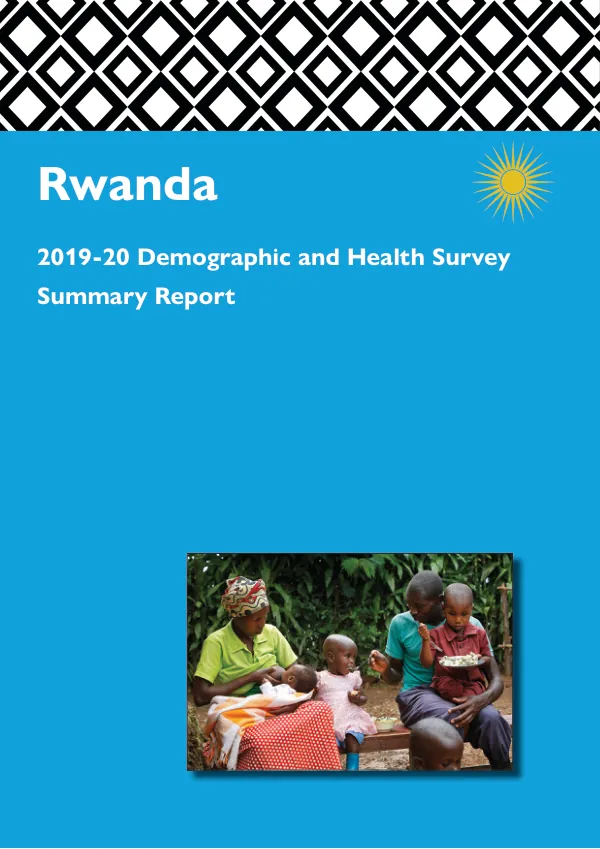
2019-20 Rwanda Demographic and Health Survey
The 2019-20 Rwanda Demographic and Health Survey is designed to provide data for monitoring the population and health situation in Rwanda.
2021 · 1 pages
Sign in to readA free account is required to download.
Abstract
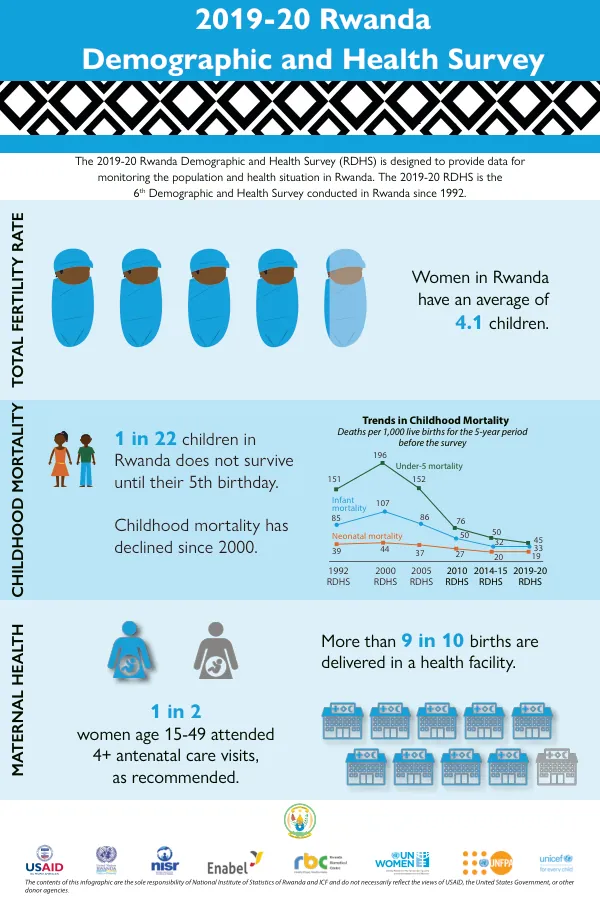
The survey is the 6th Demographic and Health Survey conducted in Rwanda since 1992. Key findings indicate that 1 in 2 women aged 15-49 attended 4 or more antenatal care visits, as recommended. Women in Rwanda have an average of 4.1 children. Maternal health outcomes in Rwanda show a total fertility rate of 4.1 children per woman. The survey also reports that 1 in 22 children in Rwanda does not survive until their 5th birthday. However, childhood mortality has declined since 2000. The trend in childhood mortality is evident in the data, which shows a significant decrease in deaths per 1,000 live births over the past two decades. The data on childhood mortality rates reveals a steady decline since 1992. In the 5-year period before the survey, deaths per 1,000 live births decreased from 107 in 2014-15 to 86 in 2019-20. Neonatal mortality rates have also decreased, from 44 deaths per 1,000 live births in 2014-15 to 27 deaths per 1,000 live births in 2019-20. Infant mortality rates have also shown a decline, from 39 deaths per 1,000 live births in 2014-15 to 37 deaths per 1,000 live births in 2019-20. The survey also highlights the importance of healthcare access in Rwanda. More than 9 in 10 births are delivered in a health facility. This indicates a significant improvement in maternal healthcare access and utilization in Rwanda. The data collected in the 2019-20 Rwanda Demographic and Health Survey provides valuable insights into the population and health situation in Rwanda, which can inform policy decisions and program implementation. The survey's findings have implications for healthcare policy and program implementation in Rwanda. The data on maternal and child health outcomes can inform strategies to improve healthcare access and utilization, particularly in rural areas. The survey's results also highlight the need for continued investment in healthcare infrastructure and human resources to address the remaining health challenges in Rwanda.
Related documents