USAID
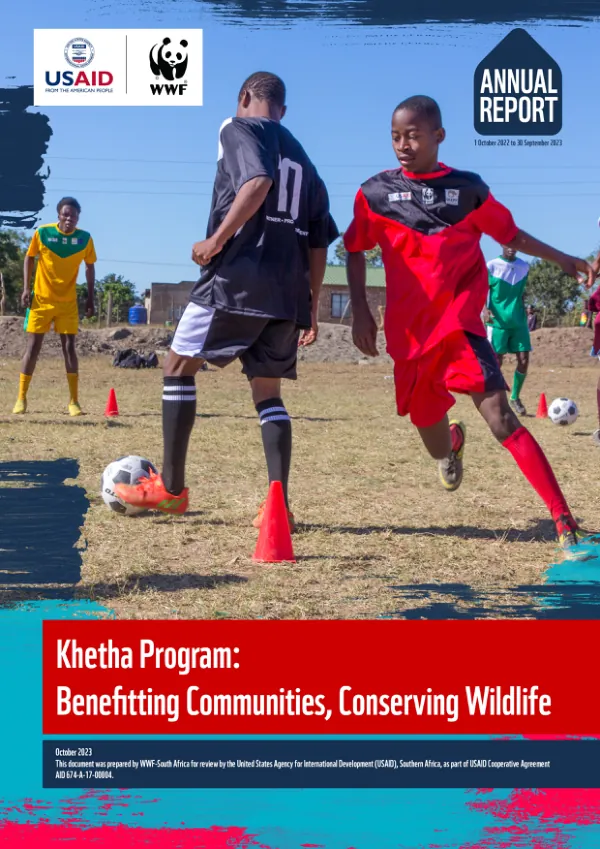
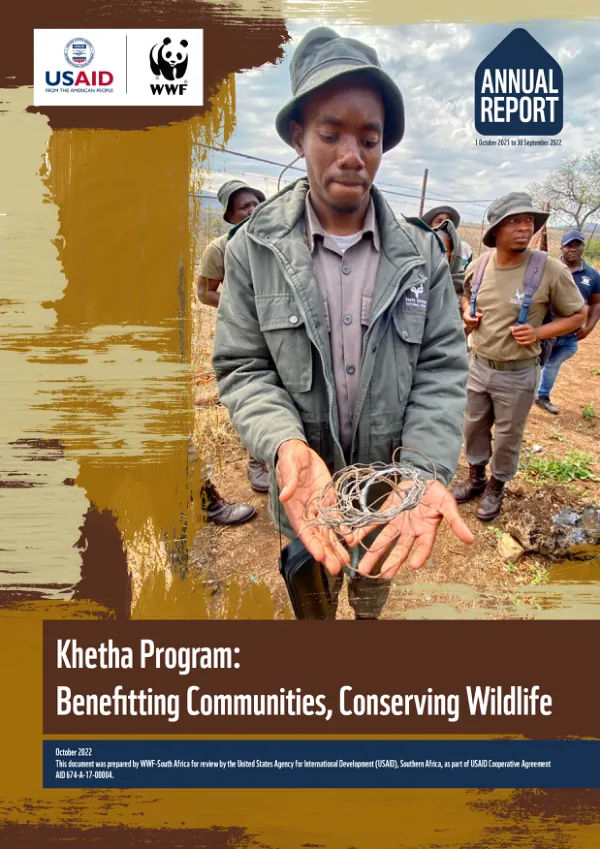
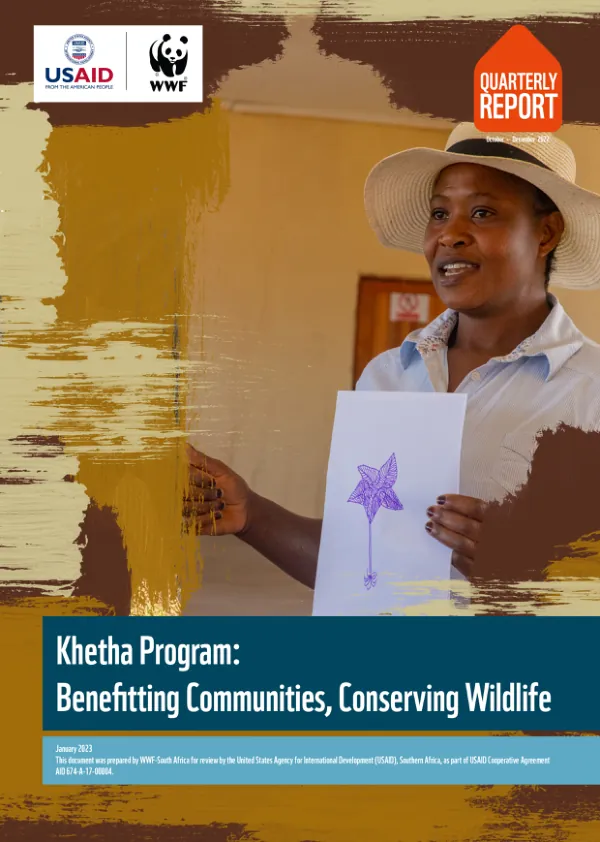
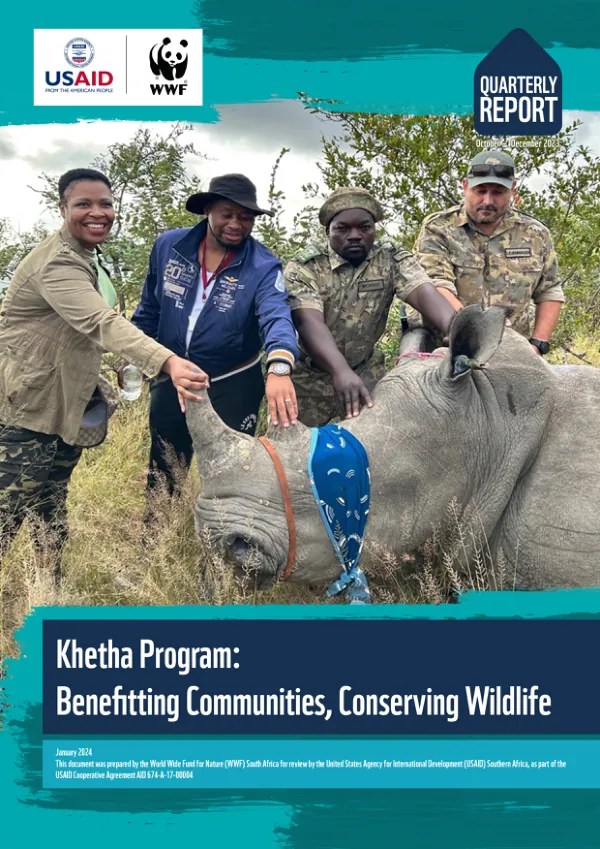
Annual Report: Khetha Program
The Khetha program is a five-year initiative implemented by the World Wide Fund for Nature South Africa (WWF SA) with funding from the United States Agency for International Development (USAID).
2019 · 81 pages
Sign in to readA free account is required to download.
Abstract
The program aims to halt the impacts of wildlife trafficking on key populations of flagship species in the Great Limpopo Transfrontier Conservation Area (GLTFCA) in South Africa and Mozambique. The goal of the program is to contribute to achieving positive growth rates in black and white rhino populations and maintain positive growth rates for elephants in the focal area by 2022. The program is implemented through three strategic approaches: supporting innovative partnerships and novel wildlife crime prevention approaches among civil society, communities, private sector, and government; supporting the South African and Mozambican governments in the implementation of their strategies to address wildlife trafficking; and learning, collaborating, and coordinating with influential institutions in the Khetha landscape to strengthen the collective response to wildlife trafficking. During the reporting period, the program made significant progress towards achieving its goal. A pilot study using the SenseMaker narrative-based research tool was conducted to learn about the perceptions and attitudes that influence the relationships between people and protected areas in the landscape. A Community Practitioners Workshop was hosted in South Africa to share and learn about effective community-based approaches to address illegal wildlife trade (IWT) in the South African landscape. The program also supported the formation of a District Natural Resource Management Committee in Moamba, Mozambique, to strengthen the relationships between people and protected areas. Two Community Liaison Officers (CLOs) and a Coordinator were recruited and seconded to the South African National Parks (SANParks) to support the delivery of their duties to prevent and detect wildlife trafficking. The program provided training and legal support to rangers engaged in anti-poaching operations and the management of wildlife crime scenes and suspects to ensure best practice law enforcement ethics and standards are applied. Guidelines on the establishment of effective anti-poaching capabilities were developed, and positions were seconded to the South African Department of Environmental Affairs, Forestry and Fisheries (DEAFF) to improve their wildlife trafficking investigations capabilities. The program also assessed the effectiveness of wildlife crime prevention approaches to design an appropriate community-based response to wildlife trafficking. A study of wildlife poisoning in the GLTFCA was conducted to design an appropriate and effective transboundary response. Technical support was provided to key institutions in the region working on IWT, such as SANParks in the development of a Greater Kruger Strategic Framework. The program gave scientific and technical input to DEAFF ahead of the Convention on the International Trade of Endangered Species of Wild Fauna and Flora (CITES) 18th Conference of Parties (CoP18). The program is also supporting the GLTFCA with the development of an elephant management framework for the region. The program assessed media reports on IWT to better understand how the media is reporting on the issue and the effect these reports could have on strengthening or shifting perceptions about IWT, communities, and wildlife. A training workshop for media practitioners from Mozambique and South Africa was hosted to deepen their understanding of the complexities of IWT and improve their reporting skills. The program is planned, designed, and implemented through partnerships and stakeholder engagement. A Khetha Steering Committee was established, consisting of representatives from the National Administration of Conservation Areas in Mozambique (ANAC), DEAFF, SANParks, and USAID Southern Africa and USAID Mozambique. The committee serves as a management and learning structure to ensure strong coordination, collaboration, and learning throughout the implementation of the program. The program has made significant progress towards achieving its goal, and its initiatives are planned, designed, and implemented through partnerships and stakeholder engagement. The program continues to support the South African and Mozambican governments in the implementation of their strategies to address wildlife trafficking and to strengthen the collective response to wildlife trafficking in the GLTFCA.
Related documents