UNITED NATIONS CHILDREN'S FUND
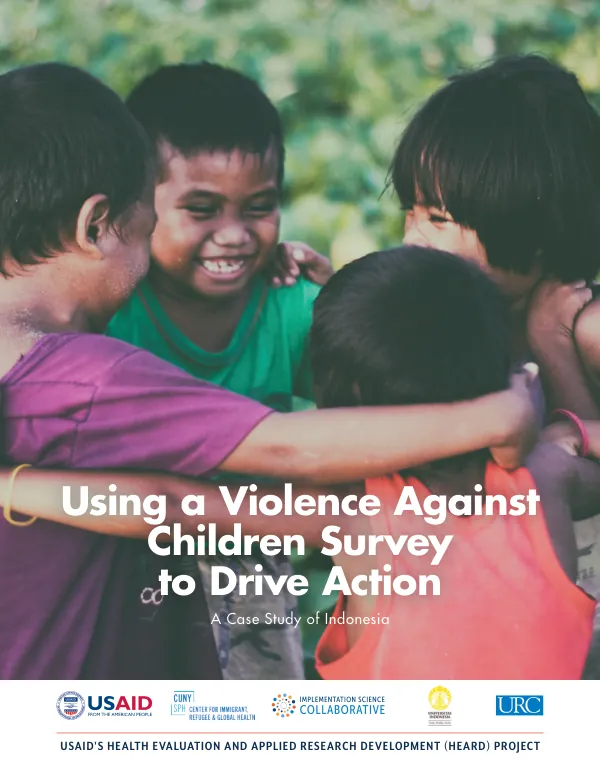
A Case Study of Indonesia Using a Violence Against Children Survey to Drive Action
The Indonesian government has been working towards the elimination of violence against children (VAC) for several decades.
2021 · 40 pages
Sign in to readA free account is required to download.
Abstract
In 1990, Indonesia ratified the Convention on the Rights of the Child, and in 2002, the government demonstrated its commitment to child protection through Law Number 23 Year 2002 concerning Child Protection. This law called for the formation of the Indonesian National Commission for Child Protection (KPAI) and the National Action Plan for the Elimination of the Worst Forms of Child Labour (2002-2022). Despite these efforts, Indonesia has struggled with a lack of data on VAC, making it difficult to design, implement, monitor, and evaluate child protection policies and programs effectively. Prior to the Violence Against Children Survey (VACS) in 2013, Indonesia relied on data from case reports made through the administrative system by case response service providers. However, this data was not comprehensive, and the information and reports from different sources were not integrated, likely resulting in under-reporting of cases in government data. To address these data gaps, Indonesia implemented the VACS in 2013, striving for more comprehensive, nationally representative data on violence against children. The survey was conducted in collaboration with international organizations such as the United Nations International Children's Fund (UNICEF) and the United States Agency for International Development (USAID). The survey aimed to provide estimates of the prevalence of violence against children, as well as to identify the types of violence and the perpetrators. The 2013 VACS revealed that approximately 1 in 2 boys and 1 in 3 girls, aged 18-24 years, experienced violence before they reached 18 years old. The survey also found that the Government of Indonesia had committed efforts to eliminate or reduce various forms of violence against children prior to the survey. The results of the 2013 VACS were used to strengthen prevention, protection, and response efforts, and some findings were integrated into relevant national policies. The success of the 2013 VACS led to the implementation of a second survey in 2018. The 2018 VACS process was improved, and the findings suggested that VACS issues detected in 2013 persisted. The improvements within the 2018 VACS process and the findings have catalyzed action and triggered task-sharing across multi-sectoral groups and stakeholders invested in a comprehensive response. The Indonesian government has also taken steps to address the issue of VAC through the National Movement for Anti-Sexual Crimes against Children, launched by President Joko Widodo in 2014. Additionally, the government has updated its 1974 Marriage Law to prohibit child marriage before the age of 18, and has reinvigorated efforts to eliminate child labor. The case study on Indonesia's experiences with the VACS highlights the importance of data in driving action to address VAC. The study also identifies challenges and opportunities for improving the implementation of VACS and translating the data into actions. The study concludes that a comprehensive response to VAC requires the involvement of multiple stakeholders, including government agencies, civil society organizations, and international partners. The Indonesian government has made significant progress in addressing VAC, but more work is needed to eliminate this issue. The VACS has played a crucial role in providing data to inform policy and programming, and the government has taken steps to address the issue through various initiatives. However, the persistence of VAC issues suggests that continued efforts are necessary to ensure that all children in Indonesia are protected from violence.
Related documents