USAID DEC
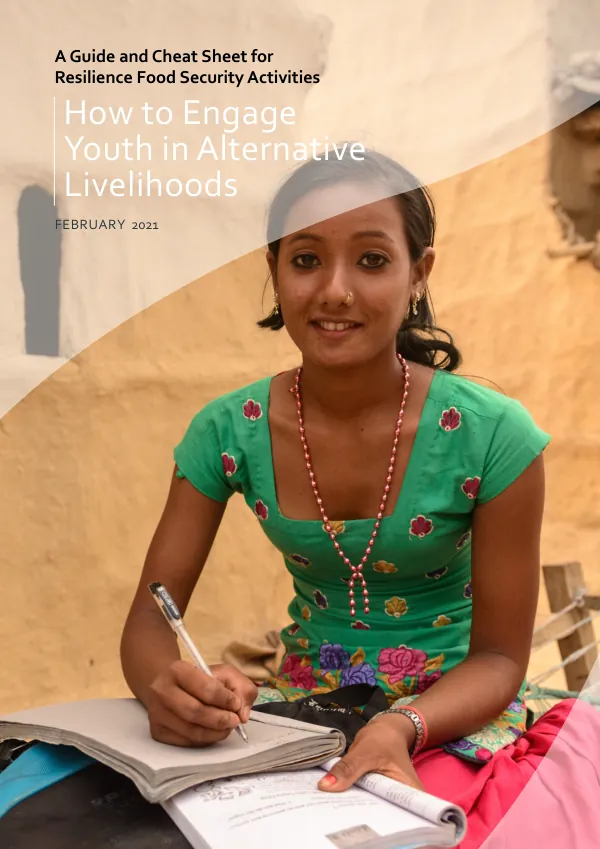
A Guide and Cheat Sheet for Resilience Food Security Activities: How to Engage Youth in Alternative Livelihoods
Sign inMERCY CORPS INTERNATIONAL
A Guide and Cheat Sheet for Resilience Food Security Activities: How to Engage Youth in Alternative Livelihoods
Youth in Alternative Livelihoods is a critical component of resilience food security activities.
2021 · 22 pages
Sign in to readA free account is required to download.
Abstract
The SCALE initiative, funded by USAID's Bureau for Humanitarian Assistance (BHA), aims to enhance the impact, sustainability, and scalability of BHA-funded agriculture, natural resource management, and alternative livelihood activities in emergency and non-emergency contexts. The importance of engaging youth in BHA-funded food security programs cannot be overstated. Young people present catalytic potential to shape the future of the world, and they are the economic, social, and political leaders of today and tomorrow. USAID/BHA considers young people as integral stakeholders in their programming, with critical roles to play as participants, partners, and program staff. USAID's Youth in Development Policy defines youth as individuals between the ages of 15-24, while recognizing that some programs may engage ages 10-29 as the broader youth cohort. Age segmentation is critical in ensuring individuals are participating in the most appropriate activities and interventions. Factors such as gender identity, race, ethnicity, disability, sexual identity, and socioeconomic standing may impact youth and must be considered through a gender equity and social inclusion lens. Designing and implementing effective youth programs requires elevating youth voices and aspirations. Young people should form an integral part of every aspect of a program and engage in activities not only as key participants but also as program partners and staff. Collaborating with youth as program partners and staff can lead to more effective alternative livelihoods programming, while also contributing to their leadership skills and knowledge in ways that can enhance their economic potential over the longer term. Youth can be engaged in programs in various ways, including as program partners and staff. Partnering with youth-led companies or organizations can bring unique insights, expertise, and energy to a program. Hiring an experienced young person or a community youth leader as a Youth Employment Advisor, Youth Development Specialist, or Livelihoods Advisor can also be beneficial. These individuals can help navigate the nuances of working with youth and bring about more impactful interventions. It is essential to remember that there is no one-size-fits-all guide to engaging young people. Every program, every context, and every youth cohort requires tailored and nuanced livelihoods activities. Livelihoods-related tools themselves also require tailoring and contextual adjustments to fit program needs. Adequate time, funds, and technical expertise must be set aside to adapt resources as needed. Youth are a vibrant, diverse cohort, and it is crucial to address both the diversity and intersectionality of young people as individuals when engaging them as program participants, staff, and/or partners. Young people will experience many life transitions during the course of a program, and it is essential to keep these social, economic, and cultural changes in mind when designing and implementing youth programs. The SCALE initiative has developed a guide and cheat sheet for resilience food security activities to support youth engagement in alternative livelihoods. The guide is designed to point implementers to the most relevant materials for supporting youth alternative livelihoods within BHA-funded food security programs. It is intended to be a working document, and new resources can be included as they become available. The guide is separated into two sections. The first section introduces the importance of engaging youth in BHA-funded food security programs and provides an overview of key knowledge platforms, approaches, and considerations for supporting youth engagement. The second section outlines a pathway to meaningful employment and self-employment, providing a summary of practical activities and key resources for including youth each step of the way. The guide emphasizes the need to address the diversity and intersectionality of young people as individuals when engaging them as program participants, staff, and/or partners. It also highlights the importance of tailoring livelihoods activities to meet the unique needs and aspirations of each youth cohort. Overall, the SCALE initiative's guide and cheat sheet for resilience food security activities provide a valuable resource for implementers seeking to engage youth in alternative livelihoods. By following the guidance outlined in the guide, implementers can design and implement effective youth programs that contribute to the economic potential of young people and enhance the impact, sustainability, and scalability of BHA-funded food security activities.
Related documents