MERCY CORPS INTERNATIONAL
Resilience Design for Agroecological Production: Minimum Standards
Community-led design and establishment of Resilience Design (RD) sites are essential for ensuring local relevance and ownership.
2021 · 5 pages
Sign in to readA free account is required to download.
Abstract
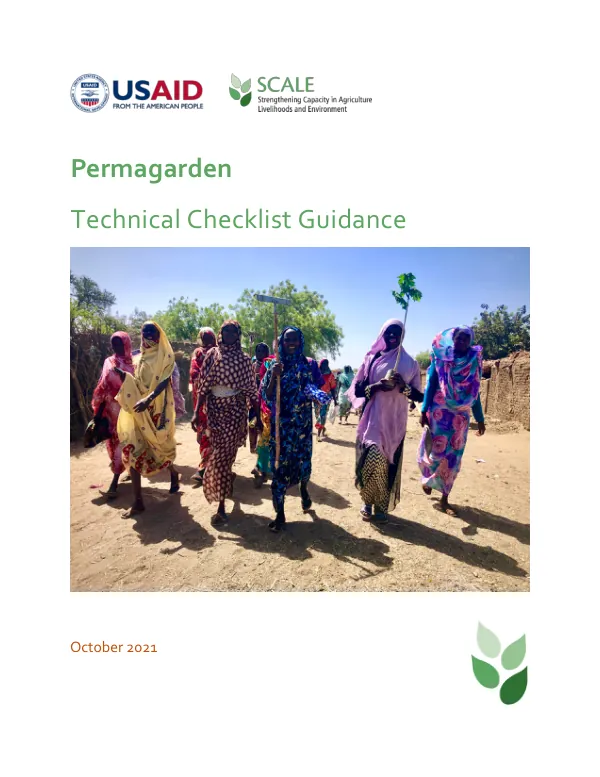
Farmer-led and informed by community members, RD sites are developed through participatory activities, including walking the site, collecting relevant information through discussions and observation, and mapping available resources and external influences. This approach ensures that the design and implementation of the RD site incorporate diverse voices and are driven by community members' knowledge, preferences, and goals. RD sites maximize the use of locally available natural and man-made materials and waste streams to increase and diversify production and reduce dependence on external inputs. Farmers and relevant community members identify and analyze local resources to determine which are the most useful for their specific context and goals. Consideration is given to all the functions provided by each resource, how it can link to and support other resources, and the energy, labor, and inputs required to maintain it. The design of an RD site is context-specific and optimizes resources and external influences for improved efficiency, production, resilience, and regeneration. An integrated analysis and design process is used to tailor the site to its specific context. The site is situated and designed to maximize energy efficiency and resource use, and to optimize natural and man-made external influences. The analysis of resources considers ways to maximize beneficial influences and minimize negative ones, as well as opportunities to integrate waste streams for productive use. RD sites have multiple strategies to slow, spread, sink, and manage rainwater and other water resources. Interventions that prevent runoff and erosion from heavy rain, and those that capture, store, and manage rainwater, wastewater, and water from boreholes, streams, or ponds for improved crop production are essential. A well-designed and managed water harvesting strategy ensures that plants and animals have multiple ways to access water throughout the year. Healthy soil is crucial for sustained production and regenerative growth. RD sites incorporate multiple strategies to improve soil health, including deep soil preparation, the use of natural fertilizers, and protection from negative external influences such as intense sun, wind, and rain. Healthy soils increase production and support the growth of higher nutrient crops that are more resilient to pests, diseases, and climatic stresses. RD sites have a diversity of plants, trees, and animals that work together in ways that support the overall health and production of the growing environment. The site should mimic healthy and resilient living systems nearby to support regenerative growth and provide multiple nutrition and income-generation opportunities year-round. At a minimum, the RD site should integrate perennial plants, such as trees, shrubs, herbs, ground covers, and vines, including support species that enhance nutrient availability, protect soil resources, encourage pollination, and deter pests. Protection strategies are essential for RD sites to protect soils and plants from the harmful effects of people, animals, and external influences. The site should incorporate protection strategies such as mulching, fencing, well-maintained pathways, protective berms, water diversion drains, and trees or trellises that provide shade and wind protection. Farmers continually observe and record feedback from the RD site and surrounding environment and adapt their practices to improve production and resilience to shocks and stresses. This ongoing process ensures that the RD site remains effective and responsive to changing conditions, and that farmers are able to adapt and improve their practices over time.