ACADEMY FOR EDUCATIONAL DEVELOPMENT
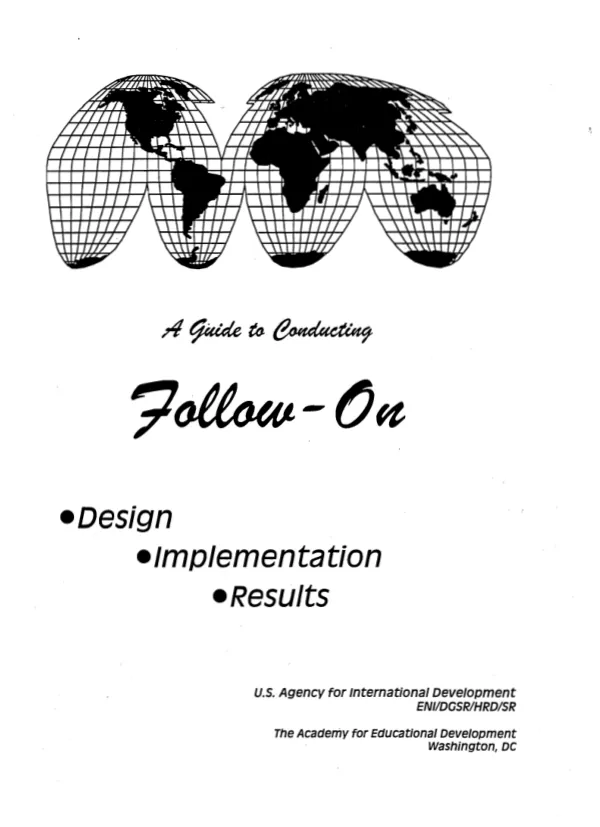
A Guide to Conducting Follow-On
The U.S.
2009 · 18 pages
Sign in to readA free account is required to download.
Abstract
Agency for International Development (USAID) has developed a comprehensive guide for conducting follow-on training activities. The guide emphasizes the importance of collaboration between USAID technical officers, technical assistance contractors, training contractors, host country government officials, and participants in designing and implementing follow-on activities. The guide outlines a step-by-step approach to conducting follow-on training, starting with the design phase. It emphasizes the need to incorporate follow-on into the development of the training program, build on what was learned in U.S. training, and consider U.S. training feedback in follow-on program design. The guide also highlights the importance of selecting the most appropriate provider(s) for follow-on activities, taking into account the type of activity, the provider's strengths, and the participant's needs. It suggests using different types of providers, including U.S.-based training providers, USAID technical assistance contractors, local resources, and partnerships between U.S. and in-country resources. To facilitate increased participation, the guide recommends understanding the reasons for lower attendance, addressing participant motivation, and involving USAID technical assistance contractors, participants' supervisors, and colleagues. It also emphasizes the importance of pre-activity preparation, including furnishing training providers with necessary background data, giving providers a lead-time prior to activity start date, and assigning responsibility for pre-activity tasks. The guide also stresses the need to balance practice and theory throughout program implementation, conducting needs assessments, and relating activities to actual in-country environments. It suggests using interactive exercises, hands-on activities, local experts, site visits, and comparative practices discussions to ensure that what is learned is continuously linked to how it can be applied. Finally, the guide emphasizes the importance of evaluating and monitoring overall follow-on effectiveness, including evaluating and reporting on each individual program or activity, project-level follow-on effectiveness, and periodic sub-sample analysis. It suggests reviewing data and providing project-wide follow-on reports, conducting periodic summaries of lessons learned, and reporting the above for use in designing future follow-on activities. The guide provides a comprehensive framework for conducting follow-on training activities that are tailored to the needs and expectations of participants, while addressing institutional goals and USAID strategic objectives. By following this guide, USAID can ensure that its follow-on training activities are effective, efficient, and sustainable.