USAID DEC
A Mixed Method Study on Gender Differentiated Drivers of Violent Extremism in Central Sahel
Sign inFHI 360
A Mixed Method Study on Gender Differentiated Drivers of Violent Extremism in Central Sahel
The study on gender differentiated drivers of violent extremism in Central Sahel aims to understand the complex relationships between gender, social norms, and violent extremism.
2020 · 47 pages
Sign in to readA free account is required to download.
Abstract
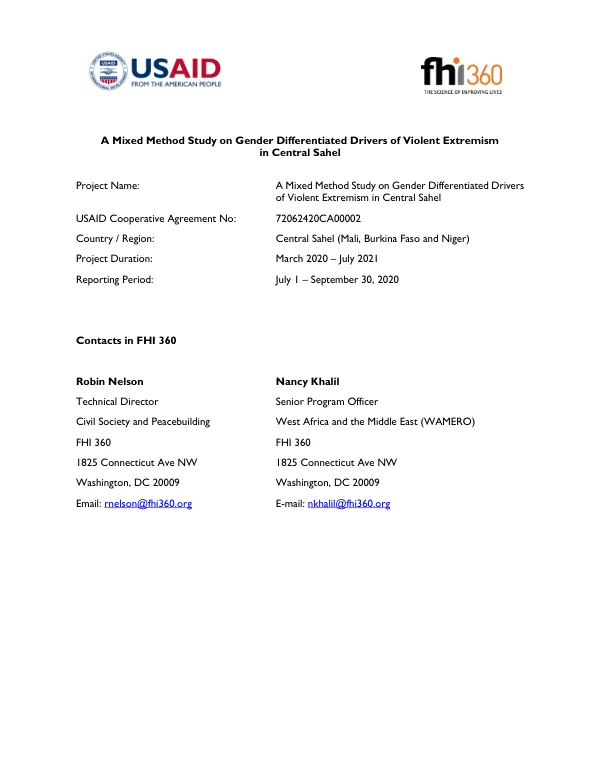
The research focuses on Mali, Burkina Faso, and Niger, with a primary objective of identifying key drivers of violent extremism that are specific to women and men. The study's methodology involves a mixed-methods approach, combining both quantitative and qualitative studies. The quantitative study aims to analyze the relationship between gender and violent extremism, using data from the Armed Conflict Location & Event Data (ACLED) project. The study will examine the frequency and severity of violent events in the region, as well as the demographic characteristics of perpetrators and victims. The analysis will also investigate the impact of social and economic factors on the likelihood of violent extremism. The qualitative study involves in-depth interviews with women and men in the target communities, as well as key informant interviews with national and local stakeholders. The study aims to gather detailed information on the social norms, values, and behaviors that contribute to the adoption of violent extremist ideologies. The research will also explore the ways in which women and men interact with and influence each other in the context of violent extremism. The study's findings indicate that women are more likely to be victims of violent extremism than perpetrators, but they also play a significant role in the spread of extremist ideologies. The research highlights the importance of addressing the social and economic drivers of violent extremism, including poverty, unemployment, and lack of access to education and healthcare. The study also emphasizes the need for a more nuanced understanding of the complex relationships between gender, social norms, and violent extremism. The research has several key implications for policymakers and practitioners working to prevent and counter violent extremism in the region. The study's findings suggest that a more effective approach to CVE (Countering Violent Extremism) would involve addressing the social and economic drivers of violent extremism, as well as promoting gender equality and empowering women and girls. The research also highlights the importance of engaging with local communities and building trust and credibility with local stakeholders. The study's methodology and findings have several limitations, including the reliance on secondary data from the ACLED project and the limited sample size of the qualitative study. However, the research provides a valuable contribution to the existing literature on CVE and highlights the need for further research on the complex relationships between gender, social norms, and violent extremism. The study's recommendations for future research include the need for more in-depth analysis of the social and economic drivers of violent extremism, as well as the development of more effective CVE strategies that address the specific needs and concerns of women and girls. The research also emphasizes the importance of engaging with local communities and building trust and credibility with local stakeholders. The study's findings and recommendations have several implications for policymakers and practitioners working to prevent and counter violent extremism in the region. The research highlights the need for a more nuanced understanding of the complex relationships between gender, social norms, and violent extremism, as well as the importance of addressing the social and economic drivers of violent extremism. The study's recommendations for future research and CVE strategies emphasize the need for a more effective and sustainable approach to CVE that addresses the specific needs and concerns of women and girls.
Related documents