USAID DEC
A New Communications Strategy to Expand Bilingual Education in Mozambique
The Government of Mozambique has recognized the importance of bilingual education in achieving inclusive, equitable, and high-quality education for all Mozambicans.
2021 · 2 pages
Sign in to readA free account is required to download.
Abstract
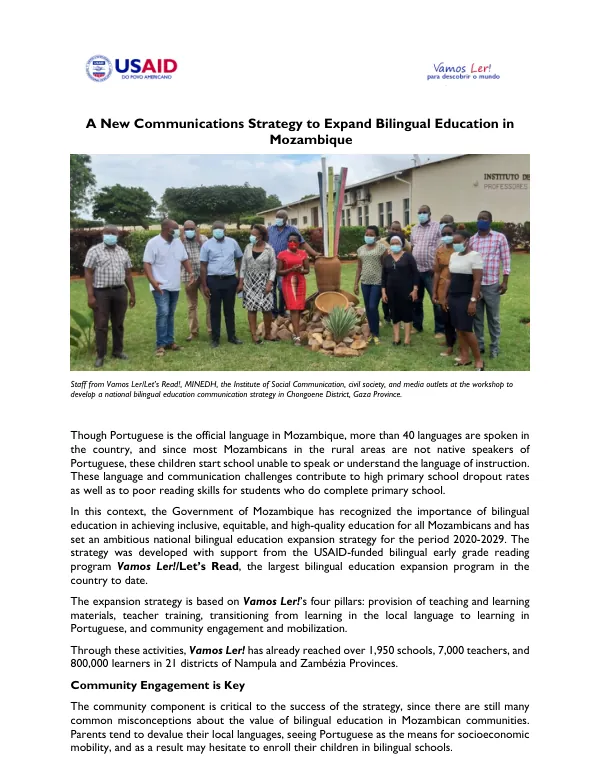
This recognition is reflected in the national bilingual education expansion strategy for the period 2020-2029. The strategy was developed with support from the USAID-funded bilingual early grade reading program Vamos Ler!/Let's Read, the largest bilingual education expansion program in the country to date. The expansion strategy is based on Vamos Ler!'s four pillars: provision of teaching and learning materials, teacher training, transitioning from learning in the local language to learning in Portuguese, and community engagement and mobilization. These activities aim to address the challenges faced by Mozambican children who start school unable to speak or understand the language of instruction, leading to high primary school dropout rates and poor reading skills. Community engagement is a critical component of the strategy, as there are still many common misconceptions about the value of bilingual education in Mozambican communities. Parents tend to devalue their local languages, seeing Portuguese as the means for socioeconomic mobility, and may hesitate to enroll their children in bilingual schools. However, studies show that children who learn to read first in a language they already know and understand do better when they transition to reading in a second language. A communication strategy was developed to serve as the foundation for the community mobilization component of Mozambique's bilingual education expansion plan. The strategy was drafted by a group of education and communications experts, representatives of civil society, and senior officials from MINEDH and Vamos Ler!. The outcome was an innovative plan that showcases the clear advantages of bilingual education in improving learning outcomes and outlines interventions to be carried out in close partnership with local civil society organizations. The roll-out of this strategy is an important step toward recognition of the vital role of bilingual education in the country. The strategy includes actions targeting policy makers and education specialists, as well as the community level, and clear roles, responsibilities, and deliverables for all stakeholders involved. The implementation of this strategy has the potential to address the pervasive problem of low literacy and poor learning outcomes in Mozambique, ultimately contributing to the achievement of inclusive, equitable, and high-quality education for all Mozambicans.