USAID DEC
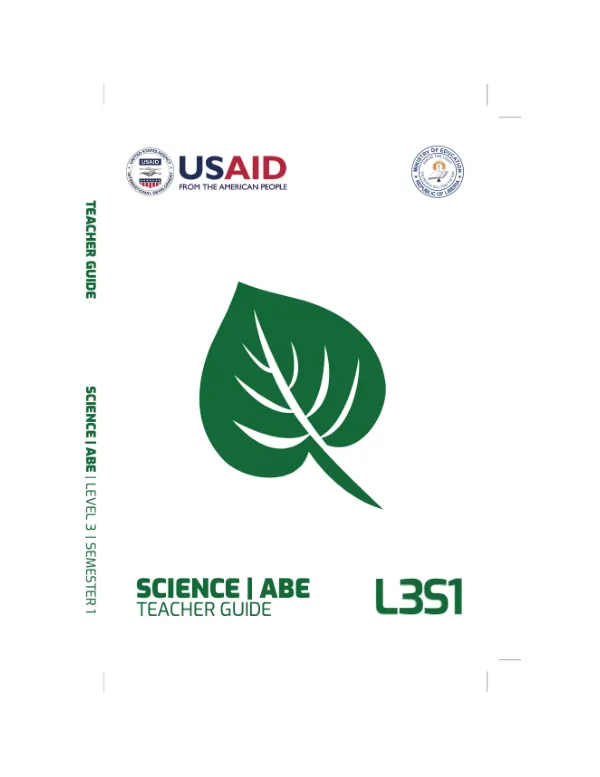
Accelerated Quality Education Teacher Guides and Learner Workbooks Series, Science, Level 3, Semester 1
Sign inCENTER FOR EDUCATIONAL DEVELOPMENT
Accelerated Quality Education Teacher Guides and Learner Workbooks Series, Science, Level 3, Semester 1
The Accelerated Quality Education Teacher Guides and Learner Workbooks Series, Science, Level 3, Semester 1, is a comprehensive educational resource developed for students in Liberia.
2019 · 300 pages
Sign in to readA free account is required to download.
Abstract
The series is designed to provide a structured learning experience, focusing on key concepts in science, technology, engineering, and mathematics (STEM) fields. The curriculum is tailored to meet the needs of Liberian students, with a focus on agriculture, transportation, and natural resources. The teacher's guide for Science Level 3, Semester 1, is divided into three units: Introduction to Agriculture in Liberia, Transportation, and Natural Resources. Each unit consists of multiple lessons, with detailed lesson plans, activities, and assessments to ensure student understanding and engagement. The Introduction to Agriculture in Liberia unit covers essential topics such as soil types, properties, and nutrients, as well as the effects of fertilizers and erosion on crop yields. The unit also explores the impact of climate change and global warming on agriculture in Liberia. The lessons are designed to be interactive, with hands-on activities and real-world examples to help students understand complex concepts. The Transportation unit introduces students to basic concepts in physics, including force, friction, and energy. The lessons cover topics such as the role of transportation in communication, the importance of simple machines, and the impact of water, wind, and boats on transportation. The unit also includes lessons on communication and sound, as well as a design and test a car project. The Natural Resources unit focuses on the importance of water, forests, and other natural resources in Liberia. The lessons cover topics such as renewable and non-renewable resources, the water cycle, and the effects of deforestation on the environment. The unit also includes lessons on the importance of water to the digestive system, the human skin, and the environmental impact of overfishing. Throughout the series, the lessons are designed to be flexible and adaptable to different learning styles and abilities. The teacher's guide provides detailed instructions, activities, and assessments to ensure student understanding and engagement. The series is an essential resource for teachers and students in Liberia, providing a comprehensive and structured learning experience in science, technology, engineering, and mathematics (STEM) fields.