USAID DEC
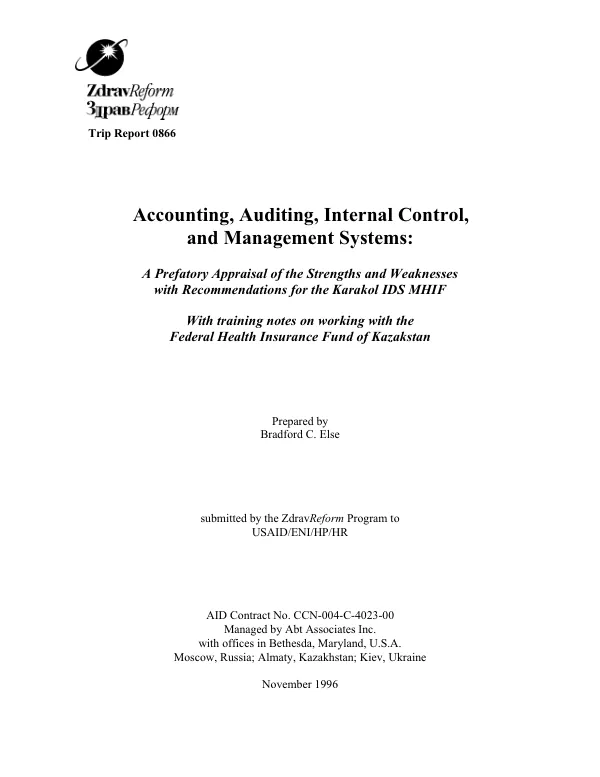
Accounting, Auditing, Internal Control, and Management Systems: A Prefatory Appraisal of the Strengths and Weaknesses with Recommendations from the Karakol IDS MHIF
Sign inUSAID DEC
Accounting, Auditing, Internal Control, and Management Systems: A Prefatory Appraisal of the Strengths and Weaknesses with Recommendations from the Karakol IDS MHIF
The initiative's geographic focus was on Eastern Province, with a specific emphasis on the districts of Kirehe and Nyagatare.
51 pages
Sign in to readA free account is required to download.
Abstract
The program's timeframes were divided into three phases, with the first phase lasting from 2018 to 2020, the second phase from 2020 to 2022, and the third phase from 2022 to 2024. Implementation details for the program included the establishment of a network of agricultural extension agents, who provided training and technical support to farmers. The program also invested in the development of irrigation infrastructure, including the construction of canals and the installation of water pumps. Recommendations from the midterm evaluation included the need to scale up the program's reach to more communities, as well as the need to improve the program's monitoring and evaluation systems. The evaluation also highlighted the importance of continued support for women-headed households, who were found to be key beneficiaries of the program. Overall, the agricultural development initiative in Rwanda has made significant progress in improving crop yields and household income among program participants. However, further work is needed to address the challenges facing the program and to ensure its long-term sustainability.
Classification
- Document type