ACDI/VOCA
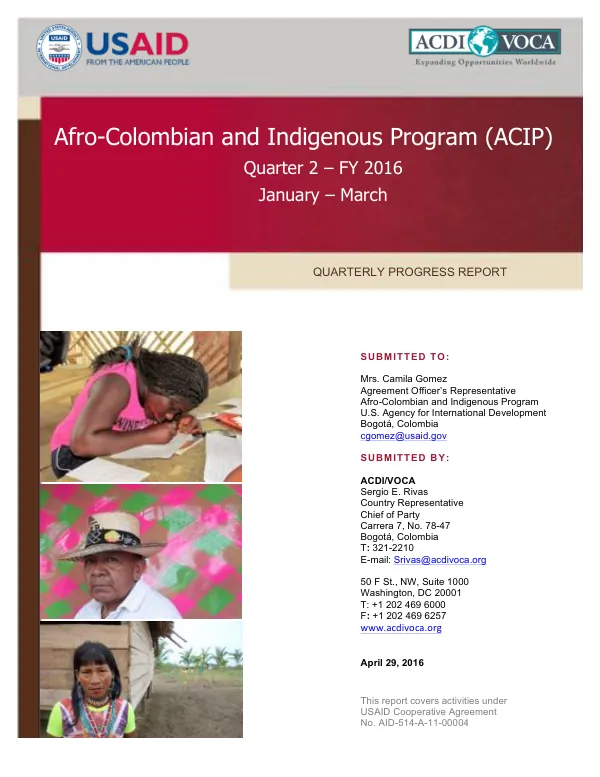
ACIP Quarterly Report January – March 2016
The Afro-Colombian and Indigenous Program (ACIP) is a five-year initiative implemented by ACDI/VOCA, with funding from the United States Agency for International Development (USAID).
2016 · 43 pages
Sign in to readA free account is required to download.
Abstract
The program aims to promote economic growth and social inclusion among Afro-Colombian and indigenous communities in Colombia. ACIP focuses on improving access to employment, education, and healthcare, as well as promoting women's rights and community-led development. The program operates in several departments in Colombia, including Chocó, Cauca, and Valle del Cauca. ACIP works with a range of partners, including community-based organizations (CBOs), civil society organizations (CSOs), and government institutions. The program's approach is based on a participatory and inclusive methodology, which involves close collaboration with local stakeholders and beneficiaries. ACIP's activities are guided by a set of key objectives, including increasing access to employment and income-generating opportunities, improving education and healthcare outcomes, and promoting women's empowerment and leadership. The program also focuses on supporting community-led development initiatives, such as the establishment of cooperatives and community-based enterprises. One of the key achievements of ACIP during the first quarter of 2016 was the implementation of a series of training and capacity-building activities for CBOs and CSOs. These activities aimed to enhance the capacity of local organizations to design and implement community-led development projects. The program also supported the establishment of a network of CBOs and CSOs, which will facilitate collaboration and knowledge-sharing among local stakeholders. ACIP's work has been recognized by local communities, who have expressed appreciation for the program's support and commitment to their development. Fabiola Rodriguez Salazar, a member of the CBO "Red Mariposas de Alas Nuevas - Construyendo Futuros" in Buenaventura, noted that the program's efforts have been instrumental in promoting women's rights and empowerment in her community. The program's progress is closely monitored and evaluated through a range of indicators and metrics. ACIP's quarterly reports provide a detailed account of the program's activities, achievements, and challenges. The reports also highlight the program's commitment to transparency and accountability, which is essential for ensuring the effective use of resources and the achievement of program objectives. Overall, ACIP's work in Colombia has made significant contributions to promoting economic growth and social inclusion among Afro-Colombian and indigenous communities. The program's commitment to community-led development and women's empowerment has been instrumental in promoting sustainable and equitable development outcomes.