ACTED
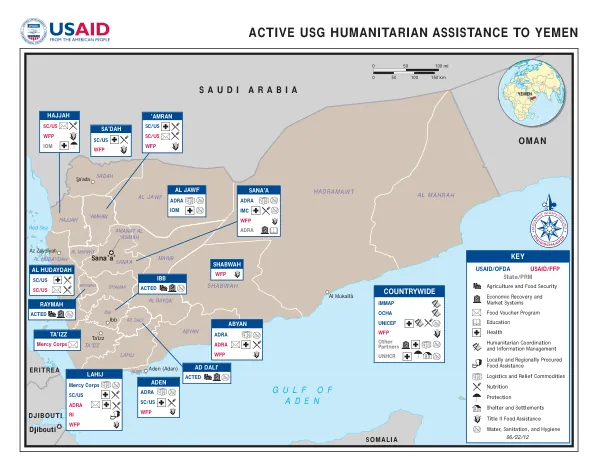
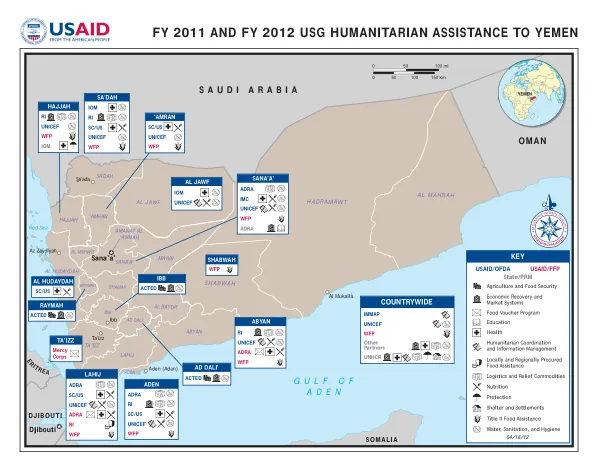
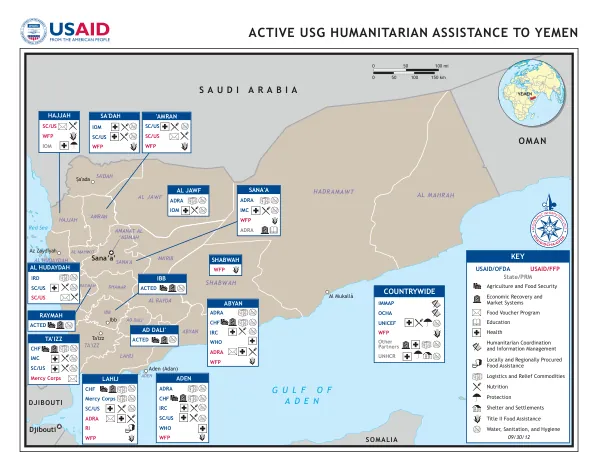
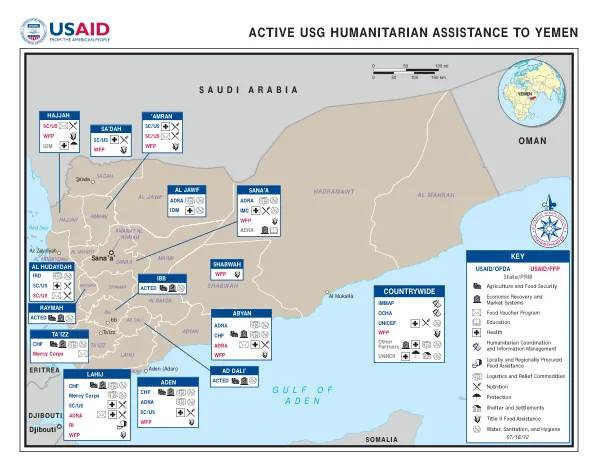
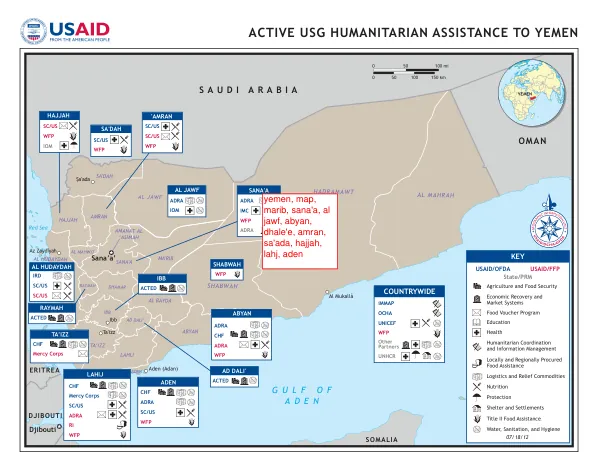
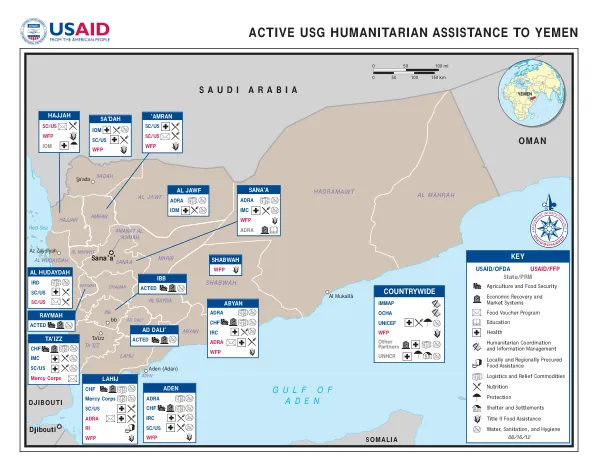
ACTIVE US HUMANITARIAN ASSISTANCE TO YEMEN
Yemen is a country in the Middle East, bordered by Saudi Arabia to the north and east, Oman to the northeast, and the Gulf of Aden to the southeast.
2023 · 1 pages
Sign in to readA free account is required to download.
Abstract
The country's terrain is diverse, with mountains, valleys, and coastal plains. The capital city is Sana'a, located in the Sana'a Governorate. The country has a long history, with evidence of human habitation dating back to the Paleolithic era. Yemen was an independent kingdom from the 2nd century BC to the 7th century AD, and later became a province of the Ottoman Empire. In 1918, Yemen gained independence from the Ottoman Empire, and in 1990, the country unified with North Yemen and North Yemen. The country's economy is primarily based on agriculture, with agriculture and food security being major sectors. The country has a long coastline along the Red Sea and the Gulf of Aden, with major ports including Aden and Al Hudaydah. The country's economy is also supported by the oil and gas sectors, with major oil and gas fields located in the Marib Governorate. The country has a diverse population, with various ethnic and linguistic groups. The majority of the population is Arab, with smaller groups including Somalis, Ethiopians, and others. The official language is Arabic, with Arabic being the most widely spoken language. The country has a complex history, with various periods of conflict and instability. In 2015, a civil war broke out in Yemen, with the Houthi movement taking control of the capital city, Sana'a. The conflict has resulted in significant humanitarian needs, including food insecurity, malnutrition, and displacement. The United States Agency for International Development (USAID) has provided humanitarian assistance to Yemen, including food assistance, shelter, and shelter materials, and other forms of support. The USAID/OFDA (Office of U.S. Foreign Disaster Assistance) has provided funding for various projects, including the Food Voucher Program, which aims to provide food assistance to vulnerable populations. The Food Voucher Program has been implemented in various governorates, including Sana'a, Al Jowf, and Aden. The program has provided food assistance to over 1 million people, with a total value of over $100 million. The program has also supported the local economy, with over 50% of the food assistance being procured locally. The program has also supported the education sector, with over 200 schools benefiting from the program. The program has also supported the health sector, with over 100 health facilities benefiting from the program. The program has also supported the protection sector, with over 10,000 individuals benefiting from the program. The program has also supported the shelter sector, with over 10,000 individuals benefiting from the program. The program has also supported the water, sanitation, and hygiene (WASH) sector, with over 50% of the population benefiting from the program. The program has also supported the nutrition sector, with over 50% of the population benefiting from the program. The program has also supported the livelihoods of over 10,000 individuals, with a total value of over $10 million. The program has also supported the economic recovery and market systems sector, with over 50% of the population benefiting from the program. The program has also supported the humanitarian coordination and information management sector, with over 50% of the population benefiting from the program. The program has also supported the locally procured food assistance sector, with over 50% of the food assistance being procured locally. The program has also supported the logistics and commodities sector, with over 50% of the commodities being procured locally. The program has also supported the nutrition sector, with over 50% of the population benefiting from the program. The program has also supported the protection sector, with over 10,000 individuals benefiting from the program. The program has also supported the livelihoods of over 10,000 individuals, with a total value of over $10 million. The program has also supported the economic recovery and market systems sector, with over 50% of the population benefiting from the program. The program has also supported the humanitarian coordination and information management sector, with over 50% of the population benefiting from the program. The program has also supported the locally procured food assistance sector, with over 50% of the food assistance being procured locally. The program has also supported the logistics and commodities sector, with over 50% of the commodities being procured locally. The program has also supported the nutrition sector, with over 50% of the population benefiting from the program.