DAI
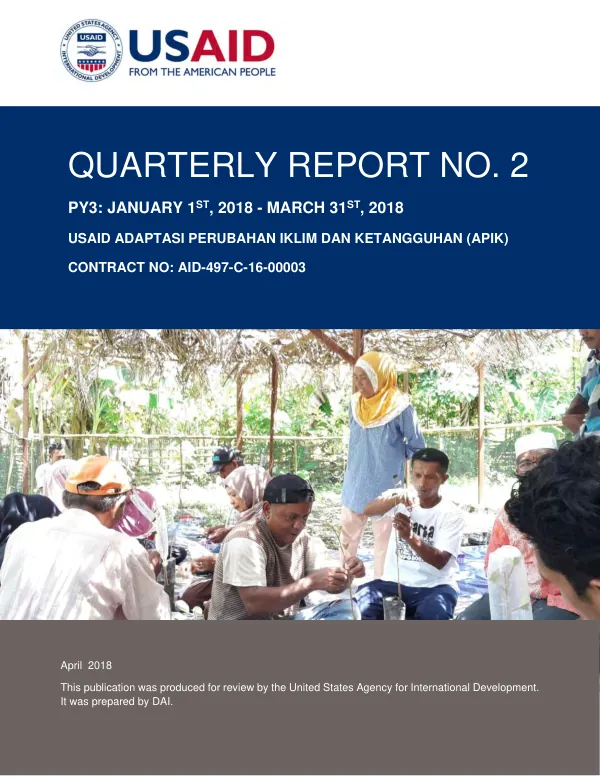
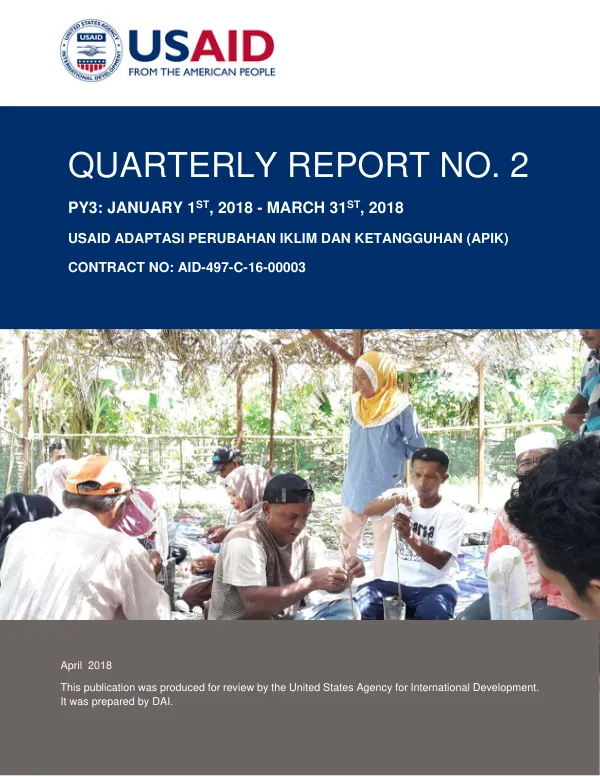
ADAPTASI PERUBAHAN IKLIM DAN KETANGGUHAN (APIK) – QUARTERLY REPORT 1 YEAR 3
The USAID Adaptasi Perubahan Iklim dan Ketangguhan (APIK) program aims to improve the resilience of corn farmers in South Konawe District, Southeast Sulawesi, to climate and disaster risks.
2018 · 60 pages
Sign in to readA free account is required to download.
Abstract
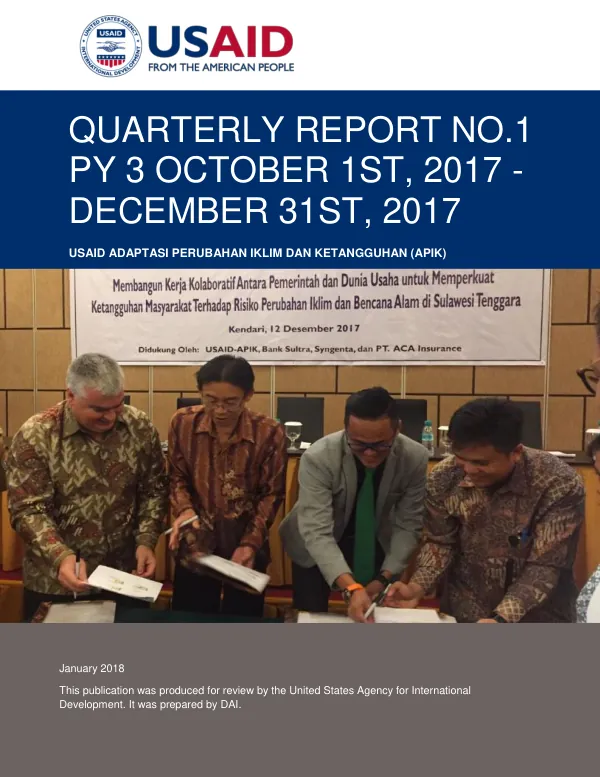
The program focuses on providing climate-smart agriculture practices, improving access to good varieties of corn, and enhancing the capacity of farmers to manage climate and disaster risks. The program has established a partnership with Bank Sultra, PT ACA Insurance, and Syngenta Indonesia to provide financial protection, weather-based crop insurance, and access to good varieties of corn. The partnership aims to improve the resilience of farmers to climate and disaster risks and increase their productivity. The partnership has committed to providing a demonstration plot of climate-smart corn agriculture for the first planting season in April and May 2018. The demonstration plot will serve as a model for financial stability, productivity, and building resilience to climate and disaster risks. The APIK program has made significant progress in its first year, with a focus on building partnerships with private sector companies and improving the resilience of farmers to climate and disaster risks. The program has also established a strong presence in the region, with a team of experts working to implement the program's objectives. The program's progress and results are presented in the following sections: National Level Progress and Results: The APIK program has made significant progress at the national level, with a focus on building partnerships with private sector companies and improving the resilience of farmers to climate and disaster risks. Sub-National Level Progress and Results: The APIK program has made significant progress at the sub-national level, with a focus on building partnerships with private sector companies and improving the resilience of farmers to climate and disaster risks. Resilience to Climate and Disaster Risks: The APIK program has made significant progress in improving the resilience of farmers to climate and disaster risks, with a focus on providing climate-smart agriculture practices and improving access to good varieties of corn. Private Sector Engagement: The APIK program has made significant progress in engaging with private sector companies, with a focus on building partnerships and improving the resilience of farmers to climate and disaster risks. Communication, Outreach, and Knowledge Management: The APIK program has made significant progress in communication, outreach, and knowledge management, with a focus on improving the resilience of farmers to climate and disaster risks. Challenges Encountered During This Reporting Period: The APIK program has encountered several challenges during this reporting period, including limited access to finance and limited capacity of farmers to manage climate and disaster risks. Performance Monitoring: The APIK program has established a performance monitoring system to monitor its progress and results. The system includes indicators such as the number of farmers trained, the number of farmers who have adopted climate-smart agriculture practices, and the number of farmers who have improved their resilience to climate and disaster risks.