USAID
Addressing Gender-Based Violence
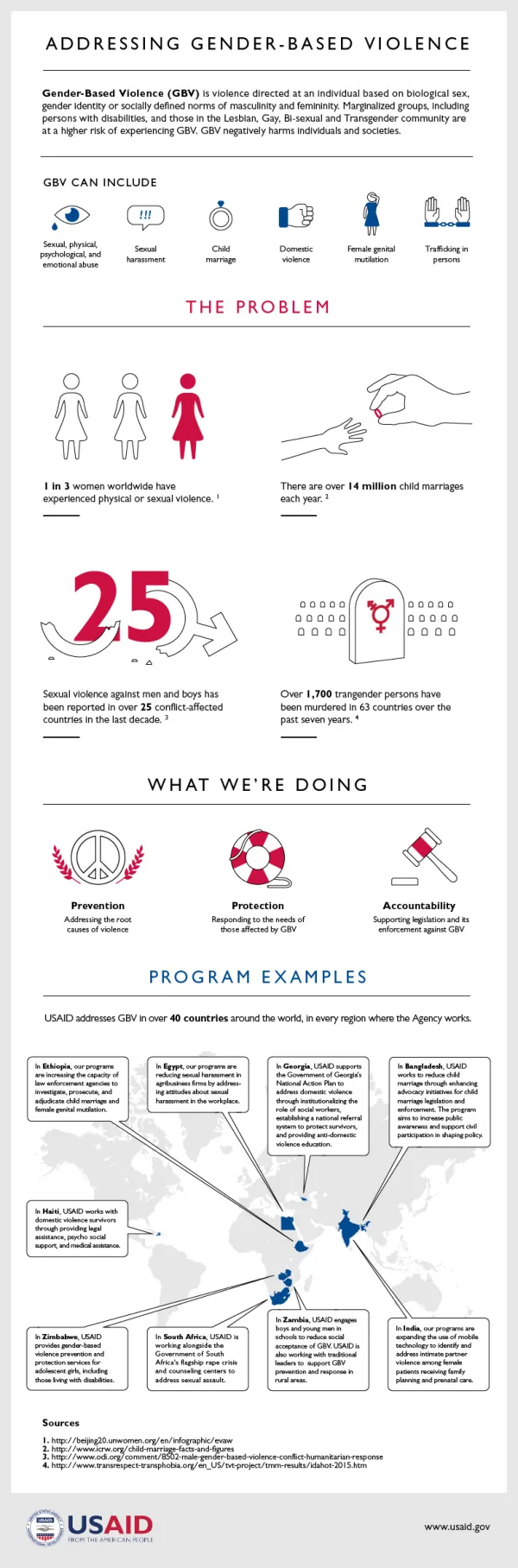
Gender-Based Violence (GBV) is a pervasive issue worldwide, affecting individuals based on their biological sex, gender identity, or socially defined norms of masculinity and femininity.
2015 · 1 pages
Sign in to readA free account is required to download.
Abstract
Marginalized groups, including persons with disabilities and those in the Lesbian, Gay, Bisexual, and Transgender community, are at a higher risk of experiencing GBV. GBV negatively impacts individuals and societies, resulting in severe physical, emotional, and psychological harm. GBV encompasses a range of forms, including sexual, physical, psychological, and emotional abuse, as well as sexual harassment, child marriage, domestic violence, female genital mutilation, and trafficking in persons. The prevalence of GBV is staggering, with one in three women worldwide experiencing physical or sexual violence. Child marriage affects over 14 million individuals annually, while sexual violence against men and boys has been reported in over 25 conflict-affected countries in the last decade. The tragic loss of over 1,700 transgender persons in 63 countries over the past seven years underscores the severity of the issue. Addressing the root causes of violence is crucial in preventing GBV. This involves addressing social norms, promoting gender equality, and empowering individuals, particularly women and girls, to make informed decisions about their lives. USAID is actively working to address GBV in over 40 countries worldwide, focusing on protection, response, and prevention. In Ethiopia, USAID programs are increasing the capacity of law enforcement agencies to investigate, prosecute, and adjudicate child marriage and female genital mutilation cases. In Haiti, USAID works with domestic violence survivors through legal assistance, psycho-social support, and medical assistance. In Zimbabwe, USAID provides gender-based violence prevention and protection services for adolescent girls, including those living with disabilities. In Egypt, USAID programs are reducing sexual harassment in agribusiness firms by addressing attitudes about sexual harassment in the workplace. In South Africa, USAID is working alongside the Government of South Africa's flagship rape crisis and counseling centers to address sexual assault. In Georgia, USAID supports the Government of Georgia's National Action Plan to address domestic violence through institutionalizing the role of social workers, establishing a national referral system to protect survivors, and providing anti-domestic violence education. In Zambia, USAID engages boys and young men in schools to reduce social acceptance of GBV, while also working with traditional leaders to support GBV prevention and response in rural areas. In Bangladesh, USAID works to reduce child marriage through enhancing advocacy initiatives for child marriage legislation and enforcement. In India, USAID programs are expanding the use of mobile technology to identify and address intimate partner violence among female patients receiving family planning and prenatal care.
Related documents