USAID DEC
Adolescents Living with HIV in Zambia: An Examination of HIV Care and Treatment and Family Planning
Sign inFHI 360
Adolescents Living with HIV in Zambia: An Examination of HIV Care and Treatment and Family Planning
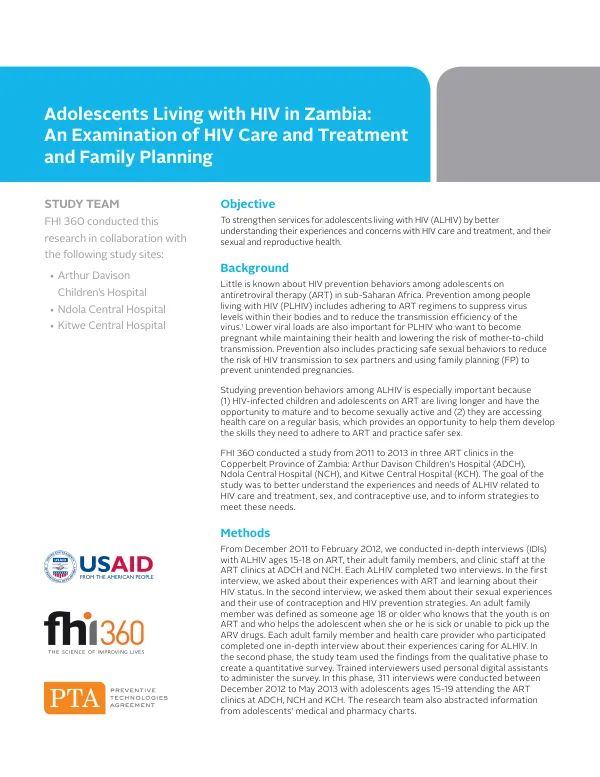
Adolescents Living with HIV in Zambia: An Examination of HIV Care and Treatment and Family Planning is a study conducted by FHI 360 in collaboration with three ART clinics in the Copperbelt Province of Zambia.
2013 · 5 pages
Sign in to readA free account is required to download.
Abstract
The study aimed to better understand the experiences and needs of adolescents living with HIV (ALHIV) related to HIV care and treatment, sex, and contraceptive use. The study was conducted from 2011 to 2013 and involved in-depth interviews with 32 ALHIV, 23 adult family members, and 10 clinic staff members. The qualitative phase of the study revealed that ALHIV face various challenges in adhering to their antiretroviral therapy (ART) regimens, including feeling sick or uncomfortable after taking their medication, not wanting to take their medication in front of people who do not know their status, and being late in picking up their medication. The study also found that family members play a crucial role in supporting ALHIV with ART adherence and HIV management. Many ALHIV reported that only family members knew their HIV status, and half of the ALHIV surveyed and almost all of the adult family members who participated in the IDIs reported that family members reminded them to take their ARV drugs. The quantitative phase of the study involved interviewing 311 ALHIV who were receiving care from the three clinics. The study found that 22% of ALHIV missed two or more days of their ART in the previous three months, and primary reasons for missing ART doses included feeling sick or uncomfortable after taking their medication, not wanting to take their medication in front of people who do not know their status, and being late in picking up their medication. The study also examined the sexual and reproductive health needs of ALHIV. The study found that one-fifth of ALHIV were sexually active, and about a third of the ALHIV surveyed reported having a boyfriend or girlfriend. Many ALHIV had unprotected sex, and those who used contraception relied on male condoms only. The study also found that forced sex is common among ALHIV, with 57% of youth surveyed who reported ever having had sex experiencing forced sex. The study's findings suggest that ALHIV require more information and counseling on family planning and HIV prevention. The study recommends that clinic staff provide more support and information to families of ALHIV, and that ALHIV receive more education on HIV prevention and family planning. The study's results have implications for the development of interventions to improve the health and well-being of ALHIV in Zambia. The study highlights the need for more effective strategies to support ALHIV in adhering to their ART regimens and for more comprehensive education on HIV prevention and family planning. The study also emphasizes the importance of involving family members in the care and support of ALHIV. The study's findings can inform the development of policies and programs aimed at improving the health and well-being of ALHIV in Zambia. The study's results can also contribute to the global understanding of the experiences and needs of ALHIV and inform the development of effective interventions to support this vulnerable population. The study's methodology involved a mixed-methods approach, combining in-depth interviews with a quantitative survey. The study's sample consisted of 311 ALHIV who were receiving care from the three clinics, and the study's data were collected over a period of two years.