FHI 360
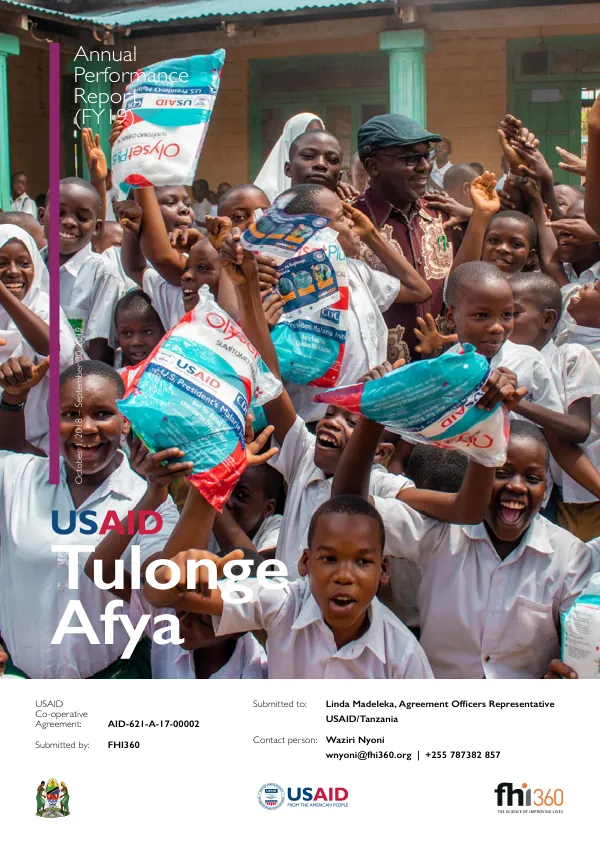
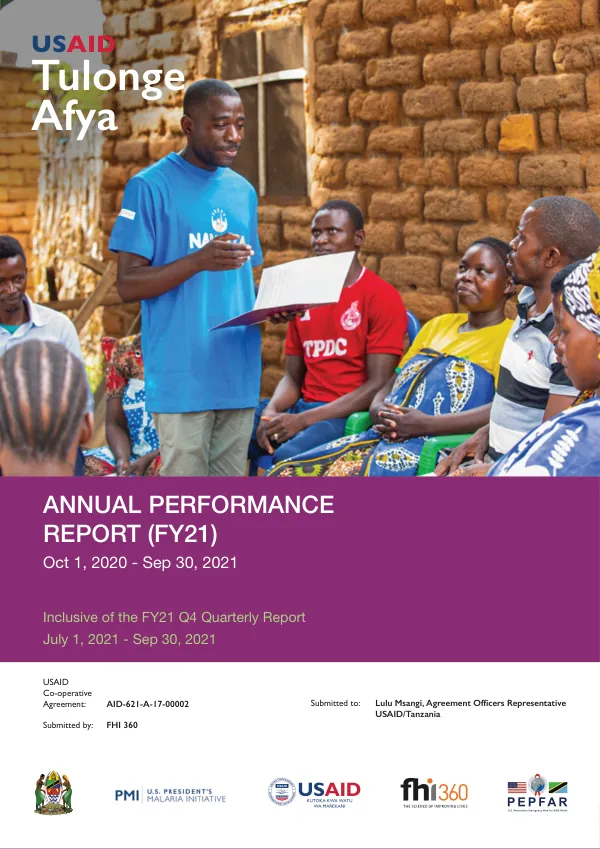
USAID Tulonge Afya Annual Report Oct 2020 - Sept 2021
The USAID Tulonge Afya project in Tanzania aimed to improve the health and well-being of Tanzanians, particularly in the areas of HIV/AIDS, malaria, and family planning.
2021 · 124 pages
Sign in to readA free account is required to download.
Abstract
The project was implemented from October 2020 to September 2021 and was funded by the United States Agency for International Development (USAID) under Cooperative Agreement No. AID-621-A-17-00002. The project focused on three main results: improving the ability of individuals to practice healthy behaviors, strengthening community support for healthy behaviors, and improving systems for coordination and implementation of social and behavior change communication (SBCC) interventions. To achieve these results, the project implemented various activities, including the NAWEZA adult platform, SITETEREKI youth platform, and FURAHA YANGU SBC activities. The NAWEZA platform aimed to promote healthy behaviors among adults, particularly in the areas of HIV testing, antenatal care, and malaria in pregnancy. The platform reached over 1.3 million individuals through IPC sessions, with a significant proportion of participants recalling key messages and practices. The SITETEREKI platform, on the other hand, targeted youth aged 15-24 and focused on promoting healthy behaviors, including HIV testing, family planning, and malaria prevention. The FURAHA YANGU SBC activities aimed to promote HIV testing and care among at-risk audiences, including men and women. The project also implemented various community-level activities, including behavioral surveillance, community-level grant programs, and capacity building for community leaders. The project also strengthened systems for coordination and implementation of SBCC interventions. This included strengthening institutional capacity, collaboration with local partners, and technical capacity building for sustainability of SBCC gains. The project also supported the development of SBCC tools and messages, including posters, brochures, and mobile apps. In terms of achievements, the project reported significant increases in household income among program participants, with a 27% increase compared to the control group. The project also implemented various activities to support the health system, including the provision of VMMC services, FP service uptake, and malaria communication and advocacy. The project also supported the development of digital service invitation coupons and the use of mobile apps for SBCC interventions. Overall, the USAID Tulonge Afya project made significant contributions to improving the health and well-being of Tanzanians, particularly in the areas of HIV/AIDS, malaria, and family planning. The project's achievements demonstrate the importance of community-level interventions and the need for sustained support for health systems in Tanzania.
Related documents