AFGHANISTAN MINISTRY OF AGRICULTURE, IRRIGATION AND LIVESTOCK
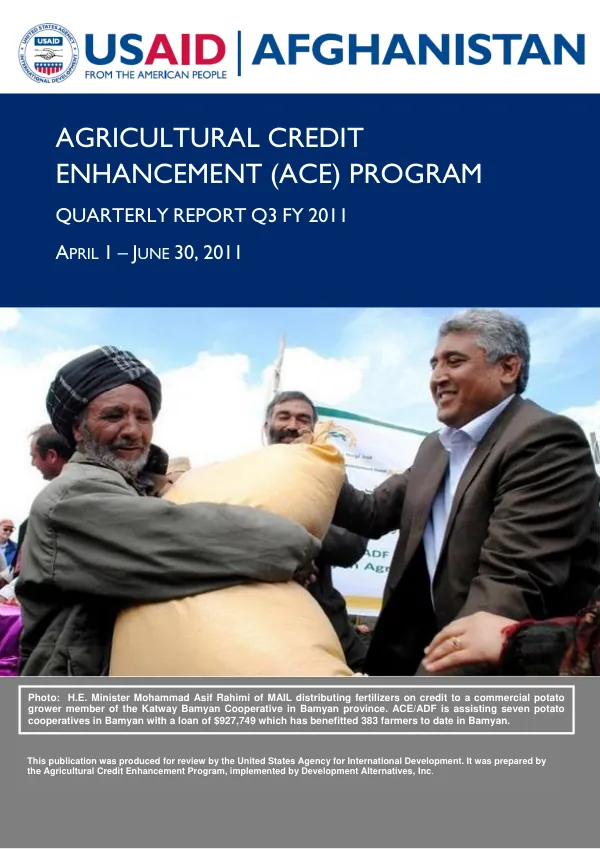
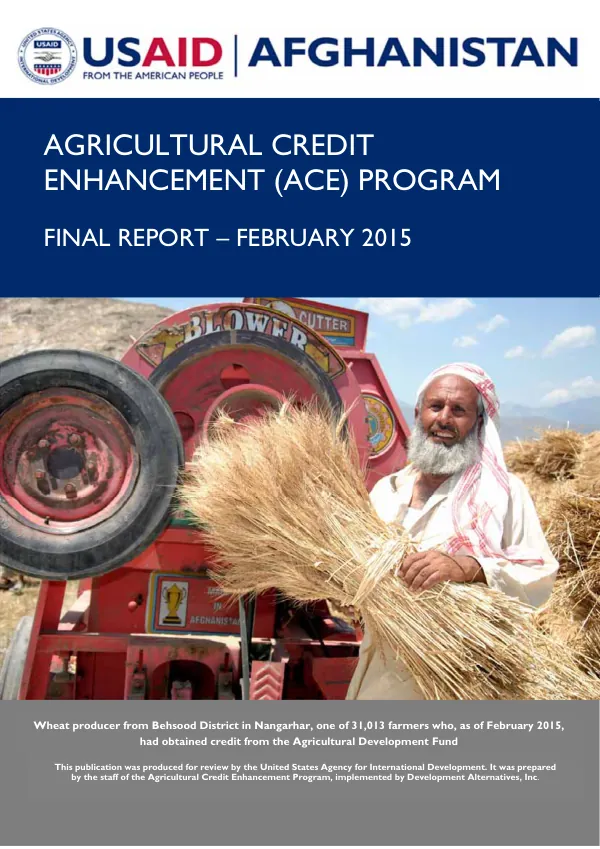
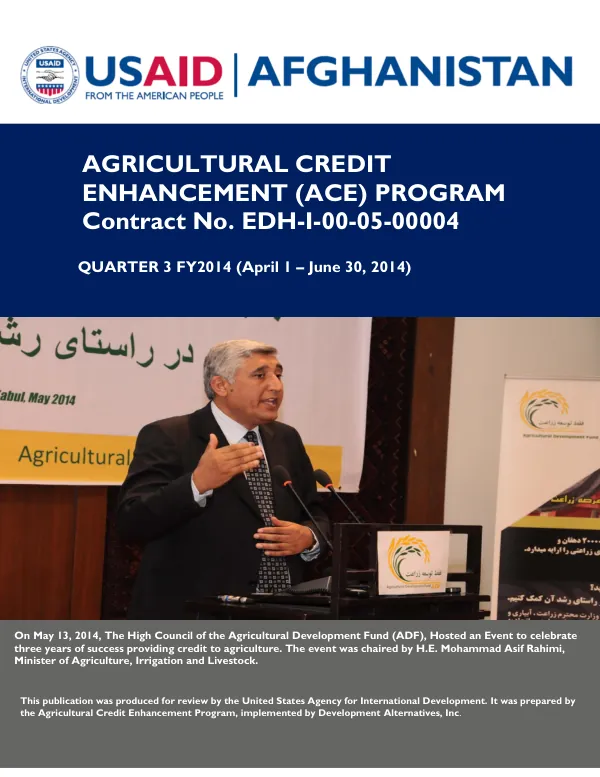
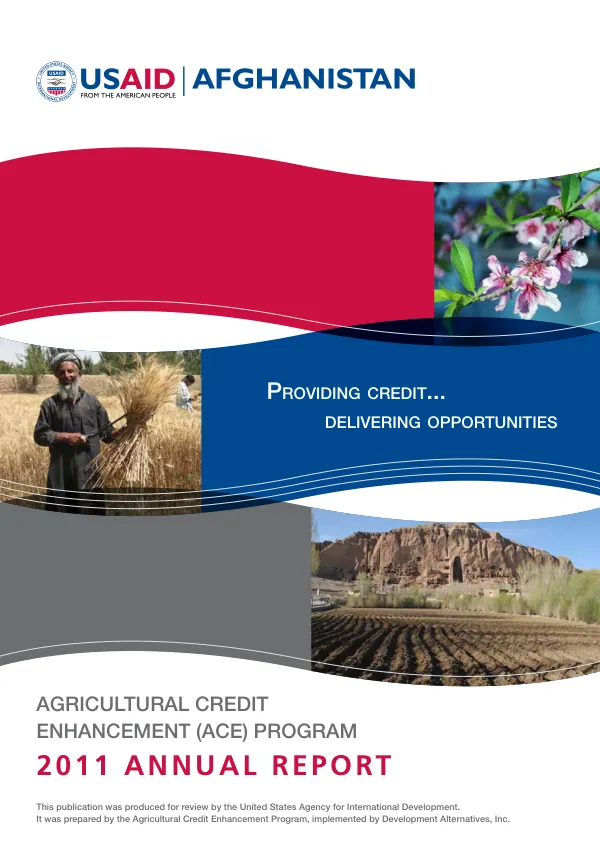
Agricultural Credit Enhancement (ACE) Program 2011 Annual Report
The Agricultural Credit Enhancement (ACE) Program was established in 2011 to enhance agricultural credit in Afghanistan.
2011 · 60 pages
Sign in to readA free account is required to download.
Abstract
The program's primary objective was to establish a robust agricultural credit system, which required the establishment of the Agricultural Development Fund (ADF) and the rapid rollout of lending activities in collaboration with the Ministry of Agriculture, Irrigation and Livestock (MAIL). The ADF was fully operational by the end of the first year, with 70 employees, a central office in Kabul, and regional offices in Jalalabad, Mazar-e-Sharif, and Herat. Through this infrastructure, the ADF lent approximately 790 million Afghanis, directly benefiting 8,700 rural households in 24 provinces of Afghanistan. The ACE program became a center of innovation in agricultural finance, introducing a series of innovations to manage risk and develop culturally acceptable financial products. The ADF's loans had a significant impact on the agriculture sector, enabling farmers to increase productivity and produce quality by procuring and applying agrochemicals of the right quality, on the right doses, and at the right time. Rural households, borrowers, and non-borrowers gained access to agricultural machinery, production inputs, and new markets as a result of loans provided to agribusinesses, which generated farm and non-farm employment. Agricultural credit also improved the efficiency of crop production, agro-processing, and marketing enterprises, contributing to the competitiveness of the agricultural value chains. The ACE program's Value Chain Strengthening Unit played a crucial role in the technical assessment of credit applications and the provision of technical support to ADF borrowers. The unit contributed to the review of over 100 credit applications, participated in field verifications in 24 provinces, and provided ADF clients with technical advice in crop production, agro-processing, and market development. The unit's efforts helped borrowers succeed in their business endeavors, increasing their ability to repay loans. The ACE project developed a Knowledge Management Facility, branded "Paywand," in collaboration with MAIL. Paywand integrated several databases with production data, domestic and international commodity prices, agro-meteorological data, detailed trade information, and studies about Afghan agriculture. Paywand produced periodic market briefs and trade reports, as well as analysis reports in response to special requests. Through these products and an interactive website, Paywand informed the decisions of farmers, agribusinesses, entrepreneurs, and policymakers.
Related documents