MICHIGAN STATE UNIVERSITY. DEPT. OF AGRICULTURAL ECONOMICS
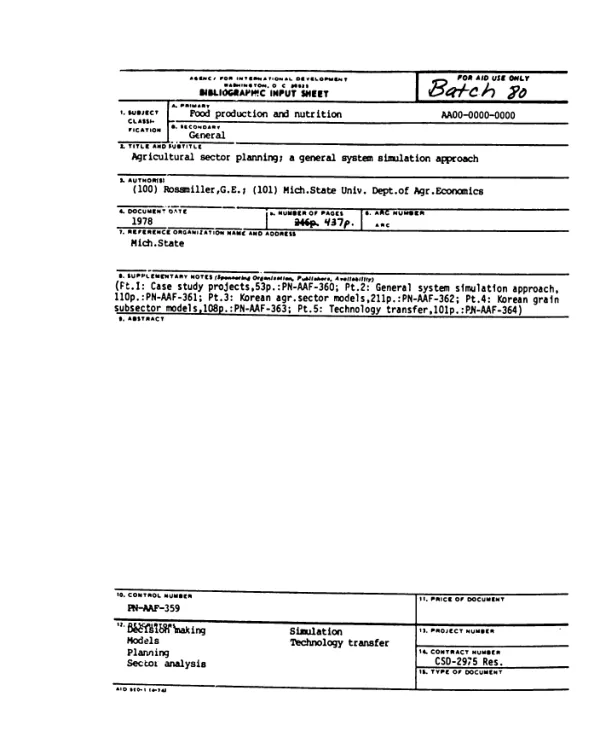
AGRICULTURAL SECTOR PLANNING; PART I : THE CASE STUDY PROJECTS
The arguments against computer-based modeling follow the line that the techniques and methodologies employed are not understood by decision makers, often do not include all the information necessary to a comprehensive analysis of the problem under consideration, and sometimes lead to unworkable prescriptions for action.
ROSSMILLER, GEORGE E.; JONES, FRANCIS C. +1 more · 1970
Sign in to readA free account is required to download.
Abstract
This report argues that it is possible to develop decision-making systems that include an investigative capacity to carry out analytical and monitoring functions with computer-based models as an integral part of the system. It explains the general system simulation approach as a viable basis for providing input to planning and policy decision making in agricultural sector development. This is done through discussion of the philosophic orientation of the approach, its eclecticism with respect to modeling techniques and types and sources of data, its relationship to the decision-making process, and the establishment of its credibility with decision makers. Also discussed are the prerequisites for institutionalization and use of the general system simulation approach for agricultural sector development planning and policy analysis within the agricultural decision structure of a national government. The development and institutionalization of the approach in Korea is detailed and conclusions are drawn about its transferability and preconditions for its use in other developing countries. The report is in five parts: The Case Study Projects; The General System Simulation Approach; The Korean Agricultural Sector Models; The Korean Grain Subsector Models; and Technology Transfer. The report should be useful to scholars, students, administrators, policy analysts, planners, and decision makers interested in better approaches to more effective public sector decision making.
Related documents