SADCC/ICRISAT SORGHUM AND MILLET IMPROVEMENT PROGRAM
Agriculture Research and Development in Yemen
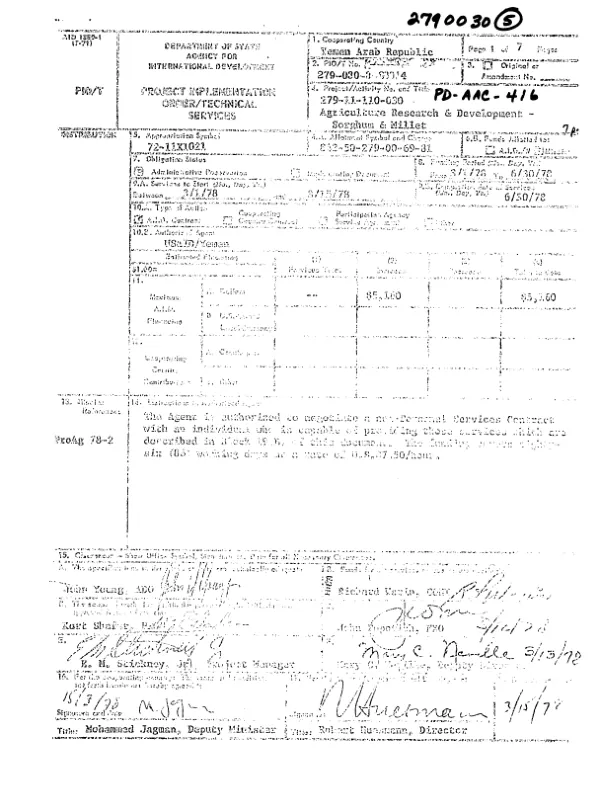
The agricultural development initiative in Yemen Arab Republic began in 1979 with funding from the United States Agency for International Development (USAID).
2010 · 26 pages
Sign in to readA free account is required to download.
Abstract
The primary focus was on improving crop yields and improving the livelihoods of farmers. The initiative involved several key interventions, including the introduction of new crop varieties, irrigation systems, and irrigation systems. One of the main challenges faced by farmers was the lack of access to markets, which limited their ability to sell their produce. To address this issue, the initiative established market linkage facilitation programs to connect farmers with buyers. The programs provided training to farmers on how to negotiate prices and manage their finances. The initiative also focused on improving the quality of seeds and fertilizers used by farmers. The introduction of new crop varieties, such as the high-yielding varieties of wheat and barley, helped to increase crop yields. The use of fertilizers and pesticides also improved crop quality and reduced the risk of crop failure. The initiative also included a component on rural development, which aimed to improve the living standards of rural communities. This involved the construction of roads, schools, and healthcare facilities. The initiative also provided training to farmers on how to manage their finances and manage their finances. The initiative was implemented in several regions of Yemen Arab Republic, including the Sana'a and Taiz governorates. The initiative was successful in improving crop yields and improving the livelihoods of farmers. The initiative also helped to improve the quality of seeds and fertilizers used by farmers. The initiative was implemented in several regions of Yemen Arab Republic, including the Sana'a and Taiz governorates. The initiative was successful in improving crop