USAID DEC
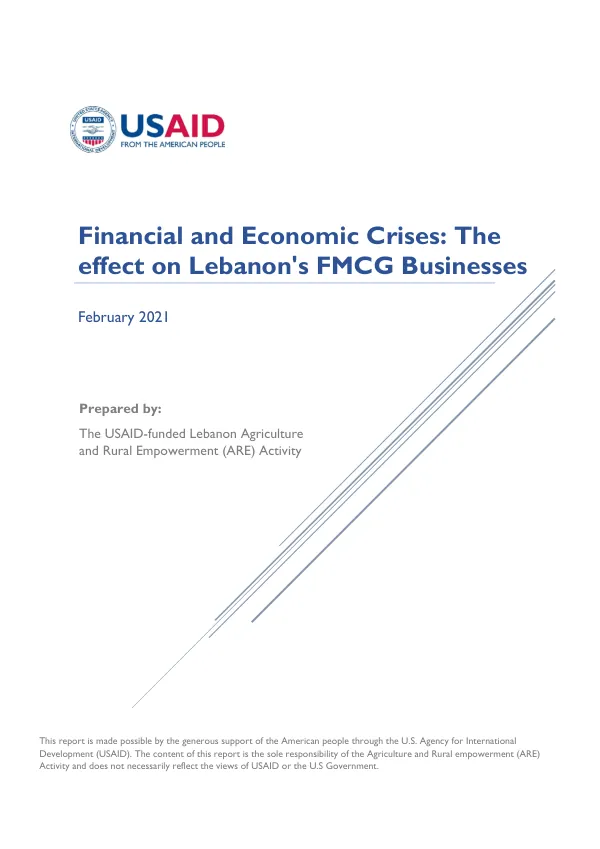
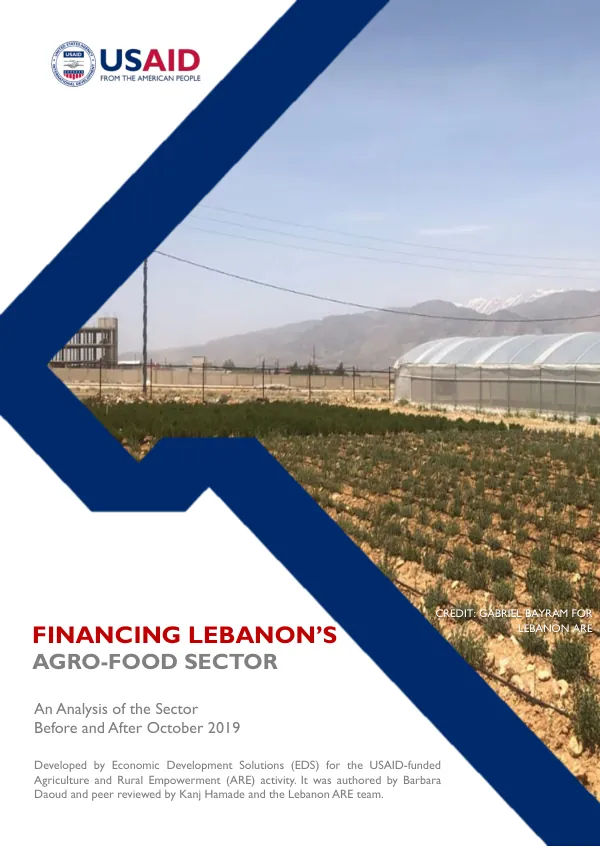
FINANCING LEBANON'S AGRO-FOOD SECTOR: An Analysis of the Sector Before and After October 2019
Sign inCHEMONICS
FINANCING LEBANON'S AGRO-FOOD SECTOR: An Analysis of the Sector Before and After October 2019
The Lebanese agro-food sector has faced significant challenges in accessing finance since October 2019.
2021 · 48 pages
Sign in to readA free account is required to download.
Abstract
The sector's reliance on foreign currency transfers from Lebanese expatriates and other foreign depositors was a key component of the country's low-productivity "annuitant economy." This model allowed the Lebanese state to produce and export very little while still ensuring that many of its people lived comfortably on affordable imports for two decades. However, this also translated into a private sector that lacked investment and an unsustainable public debt. The banking sector had billions in foreign currency available for trade, making imports affordable. However, this carefully constructed financial model crumbled in the aftermath of October 2019. Banks began restricting depositors' access to their foreign currency accounts, but they still faced a liquidity crunch that crippled both domestic and international transactions. With funds to purchase imported goods dwindling, it became more important to substitute expensive imports with locally produced items and increase the exportable goods that can be produced in country and then sold to a buyer paying in a foreign currency. The events of 2019 and the accelerated decline of the Lebanese economy had a particularly profound effect on the agro-food sector. The sector's access to finance was severely impacted, with many stakeholders facing significant challenges in accessing the necessary funds to operate. The Lebanon Agriculture and Rural Empowerment (ARE) activity, funded by the United States Agency for International Development (USAID), conducted a study in January 2021 to understand the impact of the events of 2019 on the sector's access to finance. The study engaged 55 stakeholders, including financial institutions, microfinance institutions, public sector institutions, multilateral agencies, insurance agencies, NGOs, and donor-funded projects working in the sector, as well as agricultural input suppliers. The researchers relied on intensive interaction and interviews with stakeholders, and the figures and numbers presented in the report are primary data collected by the researchers through interviewees. The Lebanese agro-food sector faces a number of structural challenges that affect its access to financing. These challenges include an outdated legal framework, the lack of a system of crop insurance, and the underutilization of agricultural cooperatives. The market dynamics around farmers also hinder their access to funding, making it difficult for them to access the necessary capital to operate. The banking sector's role in financing the agro-food sector has also been impacted by the events of 2019. Prior to October 2019, banks played a significant role in financing the sector, but by January 2021, their capacity to do so had been severely impacted. The report presents a chapter on traditional banking products and services, microfinance institutions, and agricultural input services, describing their role prior to October 2019 compared with their capacities by January 2021. The report concludes with a chapter that summarizes initiatives and recommendations for financing the sector amid the economic crisis in the coming years. The researchers identified several key areas for improvement, including the need for a more robust and supportive regulatory framework, the development of new financing mechanisms, and the provision of technical assistance to existing actors in the sector. The agro-food sector is a critical component of the Lebanese economy, and its access to finance is essential for its development. The report provides a comprehensive overview of the sector's access to finance since October 2019 and identifies key areas for improvement. The recommendations outlined in the report aim to support the development of the sector and improve its access to finance, ultimately contributing to the country's economic recovery.