USAID DEC
AIDSTAR-One Spotlight on Prevention. Reinvigorating Condoms as an HIV Prevention Tool
Sign inUSAID
AIDSTAR-One Spotlight on Prevention. Reinvigorating Condoms as an HIV Prevention Tool
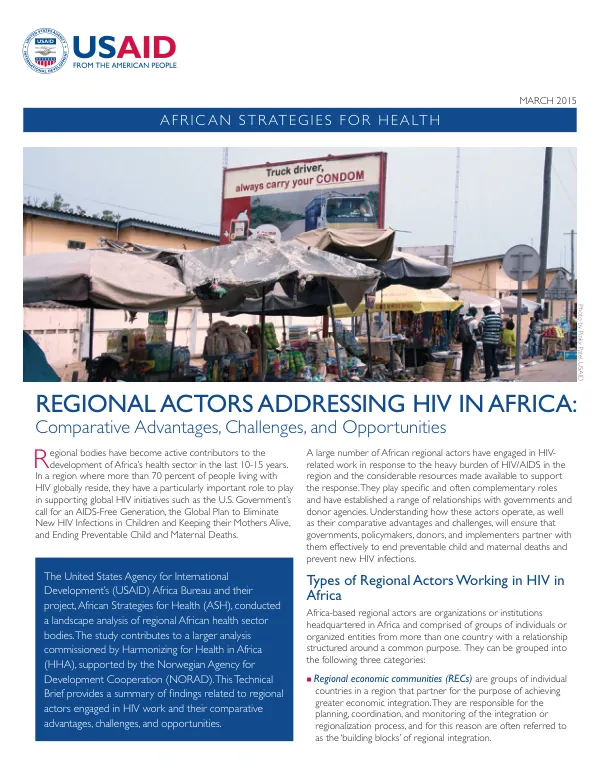
The reinvigoration of condoms as an HIV prevention tool is crucial in achieving the vision of an AIDS-free generation.
2012 · 8 pages
Sign in to readA free account is required to download.
Abstract
Condoms are an effective barrier method for preventing HIV, other sexually transmitted infections (STIs), and unintended pregnancy. They play a vital role in sustaining the benefits of other high-impact HIV prevention interventions such as male circumcision and prevention of mother-to-child transmission. Condom promotion is generally considered a cost-effective HIV prevention intervention, with a cost per disability-adjusted life year (DALY) averted ratio of under U.S.$50. The cost per DALY averted for male condoms ranges from U.S.$19 to $205, indicating that condom programs vary in design and implementation. Despite proven effectiveness, there are still several challenges to condom use, including risky behavior, structural barriers, and dual protection and dual use. Risky behavior is a significant challenge to condom use, particularly among couples in established sexual relationships with multiple partners. Condom promotion without efforts to reduce the number of partners is only half a solution. Two behavioral models of risk-taking provide insights into why people use condoms less often or stop using them altogether, even when they are aware that continued use protects against HIV and other STIs. Structural barriers, including stigma, criminalization, and other legislative and social barriers, can impede condom use in important ways. For example, criminalization of same-sex behaviors and homophobia can limit condom promotion among men who have sex with men (MSM) and transgendered people. When condoms, lubricants, and educational materials promoting condom use are used as evidence of crime, it becomes difficult to reach MSM and other at-risk populations with these much-needed interventions. Dual protection and dual use of condoms are also important considerations. There is no globally accepted indicator for measuring use of dual protection, and Demographic and Health Surveys only report on the primary family planning method used. These are missed opportunities to understand the impact of family planning and HIV integration programs, with potential negative impacts on reduction of both heterosexual and vertical transmission. To address these challenges, programs must incorporate potential solutions as part of any prevention strategy. Understanding the underlying reasons for risk-taking better and designing interventions based on that understanding becomes even more important with the U.S. Food and Drug Administration's recent approval of pre-exposure prophylaxis. Messages may need to address several types of barriers, such as a risk-based calculation that condom use is not as necessary or arousal-based barriers to condom use. In conclusion, the reinvigoration of condoms as an HIV prevention tool is crucial in achieving the vision of an AIDS-free generation. Condoms are an effective barrier method for preventing HIV, other STIs, and unintended pregnancy, and their promotion is generally considered a cost-effective HIV prevention intervention. However, there are still several challenges to condom use, including risky behavior, structural barriers, and dual protection and dual use. Programs must incorporate potential solutions as part of any prevention strategy to address these challenges and promote equitable access to condoms.
Related documents