USAID DEC
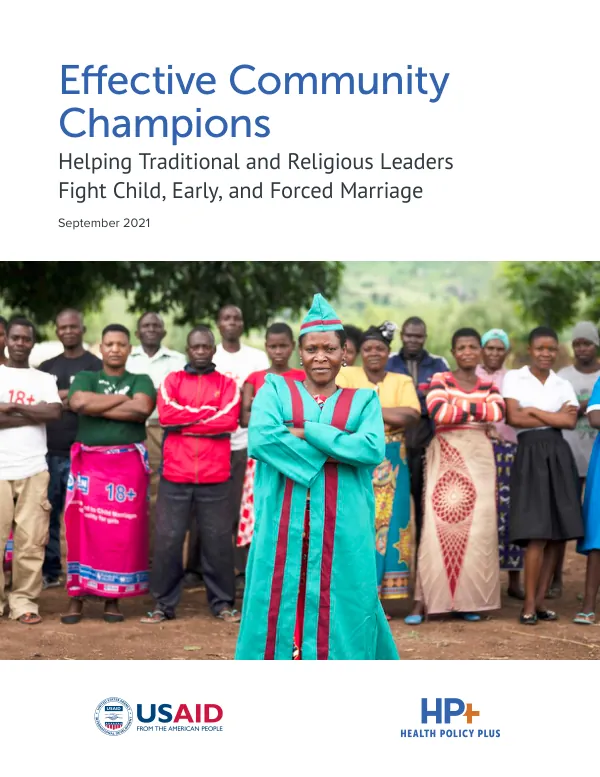
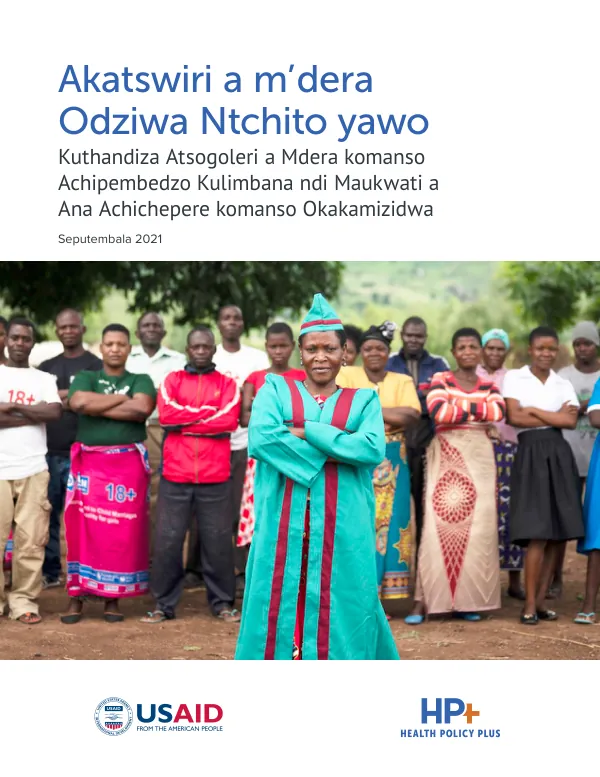
Akatswiri a m'dera Odziwa Ntchito yawo: Kuthandiza Atsogoleri a Mdera komanso Achipembedzo Kulimbana ndi Maukwati a Ana Achichepere komanso Okakamizidwa
Sign inAVENIR HEALTH
Akatswiri a m'dera Odziwa Ntchito yawo: Kuthandiza Atsogoleri a Mdera komanso Achipembedzo Kulimbana ndi Maukwati a Ana Achichepere komanso Okakamizidwa
The agricultural development initiative in Malawi, supported by the Health Policy Plus (HP+) program, aimed to address child, early, and forced marriage (CEFM) and other harmful practices.
2021 · 102 pages
Sign in to readA free account is required to download.
Abstract
The initiative focused on Chikwawa and Machinga districts, where HP+ worked with local leaders and community-based organizations to promote positive change. The HP+ program identified five key areas for intervention: (1) awareness-raising, (2) leadership, (3) advocacy, (4) community engagement, and (5) policy change. The program's goal was to empower local leaders and community members to take action against CEFM and other harmful practices. In the awareness-raising component, HP+ trained community members to educate their peers about the risks and consequences of CEFM and other harmful practices. The program also provided information on the laws and policies related to CEFM in Malawi. The leadership component focused on empowering local leaders to take a stand against CEFM and other harmful practices. HP+ worked with local leaders to develop strategies for promoting positive change and addressing the root causes of CEFM. The advocacy component involved working with local leaders and community members to advocate for policy changes that would address CEFM and other harmful practices. HP+ supported local leaders in developing advocacy plans and engaging with policymakers to push for change. Community engagement was a critical component of the HP+ program. The program worked with local community-based organizations to engage with community members and promote positive change. HP+ also supported the development of community-led initiatives to address CEFM and other harmful practices. The policy change component focused on working with local leaders and policymakers to develop and implement policies that would address CEFM and other harmful practices. HP+ supported the development of policy briefs and advocacy materials to help local leaders and policymakers push for change. The HP+ program in Malawi made significant progress in addressing CEFM and other harmful practices. The program's efforts led to increased awareness and understanding of the risks and consequences of CEFM, as well as the development of community-led initiatives to address the issue. The program also supported the development of policies and laws that would address CEFM and other harmful practices. The HP+ program's success in Malawi was due in part to its focus on community-led initiatives and its commitment to empowering local leaders and community members to take action against CEFM and other harmful practices. The program's efforts demonstrated the importance of community engagement and leadership in addressing complex social issues like CEFM. The HP+ program's work in Malawi also highlighted the need for a comprehensive approach to addressing CEFM and other harmful practices. The program's efforts demonstrated that addressing these issues requires a multifaceted approach that involves awareness-raising, leadership development, advocacy, community engagement, and policy change. Overall, the HP+ program in Malawi made significant contributions to the effort to address CEFM and other harmful practices. The program's success demonstrated the importance of community-led initiatives and the need for a comprehensive approach to addressing complex social issues.
Related documents