USAID DEC
All Pregnant Women Should Have Access to Skilled Care
Pregnant women should have access to skilled care to support them and their families during birth and potential complications.
2013 · 1 pages
Sign in to readA free account is required to download.
Abstract
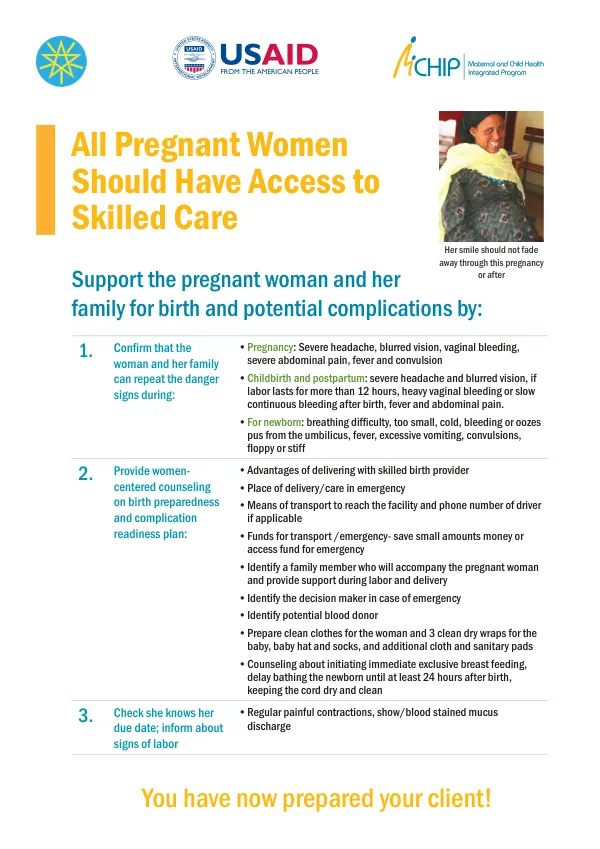
Confirming that the woman and her family can recognize danger signs during pregnancy, childbirth, and postpartum is crucial. These signs include severe headache, blurred vision, vaginal bleeding, severe abdominal pain, fever, and convulsion during pregnancy. In childbirth and postpartum, severe headache and blurred vision, labor lasting more than 12 hours, heavy vaginal bleeding or slow continuous bleeding after birth, fever, and abdominal pain are considered danger signs. For newborns, breathing difficulty, being too small, cold, bleeding or oozing pus from the umbilicus, fever, excessive vomiting, convulsions, floppy or stiff are also danger signs. Women-centered counseling on birth preparedness and complication readiness is essential. This includes discussing the advantages of delivering with a skilled birth provider, identifying the place of delivery or care in an emergency, and arranging for means of transport to reach the facility. Women should also be informed about the phone number of the driver, if applicable, and have funds set aside for emergency situations. A family member should be identified to accompany the pregnant woman and provide support during labor and delivery. The decision maker in case of an emergency should also be identified, as well as a potential blood donor. Additionally, women should be prepared with clean clothes for themselves and their baby, including a hat and socks, and additional cloth and sanitary pads. It is also essential to check that the woman knows her due date and inform her about the signs of labor, which include regular painful contractions and show or blood-stained mucus discharge. Women should be encouraged to initiate immediate exclusive breastfeeding, delay bathing the newborn until at least 24 hours after birth, and keep the cord dry and clean. Preparation is key to ensuring a smooth and safe delivery. Women should be empowered with knowledge and support to make informed decisions about their care. By confirming danger signs, providing women-centered counseling, and checking due dates, healthcare providers can help pregnant women and their families prepare for a successful delivery. This preparation can help prevent complications and ensure a healthy outcome for both the mother and the baby.
Related documents