USAID DEC
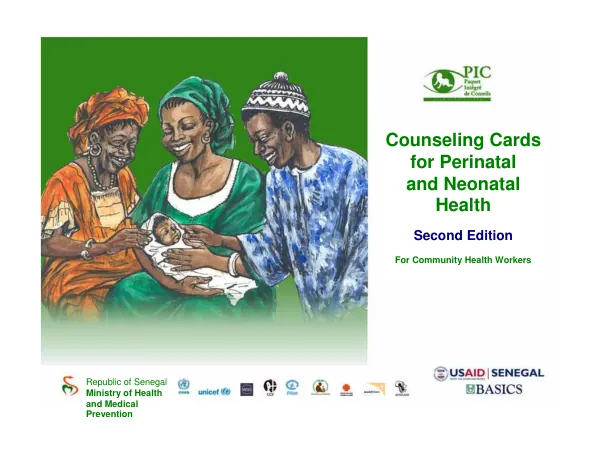
Counseling Cards for Perinatal and Neonatal Health
Pregnant women in Senegal can reduce many of the risks related to pregnancy and delivery by regularly attending the antenatal clinic and receiving proper care.
22 pages
Sign in to readA free account is required to download.
Abstract
The Ministry of Health and Medical Prevention recommends that pregnant women initiate visits to the antenatal clinic as soon as they learn they are pregnant, with a series of four visits for proper monitoring of their pregnancy during the first three months. To reduce the risks of pregnancy and delivery, pregnant women are advised to follow six preventive guidelines. These include getting vaccinated against tetanus, protecting themselves and the baby from malaria by sleeping under insecticide-treated bednets and taking the recommended doses of antimalarials, taking the recommended doses of iron and folate to avoid anemia, adding foods of high nutritional value to their diet, consuming iodized salt to prevent miscarriages or the early death of the newborn, and getting tested for HIV/AIDS to receive care and protect their infant. Pregnant women are also advised to take iron tablets with meals to reduce side effects, consume foods rich in vitamin C to enhance iron absorption, and avoid doing heavy work and getting plenty of rest. Additionally, mosquito nets must be retreated with repellent after a period as advised by the manufacturer. Preparing for delivery is crucial to reduce the risks associated with pregnancy and delivery. Pregnant women should identify the place of their delivery with their health worker, prepare the necessary materials, and save enough money for medical expenses. To have a clean delivery and avoid infections in their baby, pregnant women should keep aside clean cloths, a bar of soap, a new razor blade, and clean thick cotton thread from the fifth month of pregnancy. Leakage of fluid or blood during pregnancy is a danger sign that requires immediate attention from a qualified health professional. Leakage of fluid can result in infection in the mother or the baby, while loss of blood is a sign of a complication of pregnancy. Pregnant women should go to the nearest health facility immediately if they experience leakage of fluid or blood. Swollen face and hands, convulsions, fever, bleeding, loss of fluid, and severe anemia are also danger signs in pregnancy that require an immediate visit to the nearest health facility. Swollen face and hands are signs of a dangerous condition in the mother that can also harm her baby, while convulsions can cause the death of the mother and her baby. Pregnant women should go to the nearest health facility immediately if they experience swollen face and hands or convulsions. The Ministry of Health and Medical Prevention emphasizes the importance of recognizing danger signs in pregnancy to ensure that pregnant women receive proper care when necessary. By following these guidelines and being aware of the danger signs, pregnant women can reduce the risks associated with pregnancy and delivery and ensure a healthy outcome for themselves and their babies.