JOHN SNOW INTERNATIONAL
Referral Steps for Safe Motherhood Services
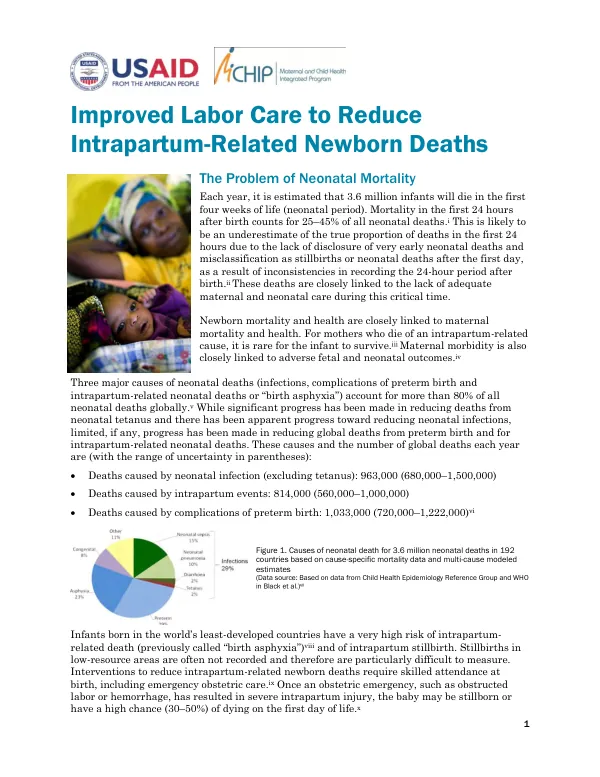
The Community Based Maternal and Newborn Care (CBMNC) Guideline serves as a reference guide for community midwives and health providers to recall necessary information for an appropriate and organized referral process for pregnant women, mothers, and newborns.
2021 · 6 pages
Sign in to readA free account is required to download.
Abstract
The guideline is designed to assist in identifying emergency, urgent, and routine cases, and to provide pre-referral treatments and referrals to higher-level facilities. Emergency cases include severe vaginal bleeding, severe abdominal pain, severe gestational hypertension, severe shortness of breath, and absence, irregularity, or abnormal fetal heart rate. Pre-referral treatments for these cases include administering IV fluids, oxygen, and medications such as magnesium sulfate and hydralazine. Referrals are made to a Comprehensive Emergency Obstetric and Newborn Care (CEmONC) facility. Urgent cases include severe vomiting, vaginal bleeding, diseases associated with pregnancy, abnormal size of the uterus, pregnancy less than 42 weeks, and premature rupture of membrane. Pre-referral treatments for these cases include complete bed rest, elevating the legs, and administering medications such as ampicillin and dexamethasone. Referrals are made to a Basic Emergency Obstetric and Newborn Care (BEmONC) facility. Routine cases include pregnancy complications such as complete bed rest, elevating the legs, and administering medications such as ampicillin and dexamethasone. These cases are managed at the community level, and referrals are not necessary. Postpartum complications include puerperal fever, delayed puerperal hemorrhage, and secondary hemorrhage after childbirth. Pre-referral treatments for these cases include elevating the legs, uterine massage, and administering medications such as oxytocin and ergometrine. Referrals are made to a CEmONC facility. Neonatal complications include danger signs such as convulsion, possible serious bacterial infection, and fever. Pre-referral treatments for these cases include administering medications such as diazepam and antibiotics, and providing supportive care such as skin-to-skin contact and breastfeeding. Referrals are made to a CEmONC facility. The guideline also includes a step-by-step process for referral, which includes applying pre-referral treatments, filling in the referral form, calling the focal point, and following up on the case and closing the referral. The CBMNC Guideline is designed to improve maternal and newborn health outcomes by providing a standardized approach to referral and care. It is intended for use by community midwives and health providers in low-resource settings.
Related documents