USAID
Alliances In Action: Cisco Networking Academy Alliance
The Cisco Networking Academy Alliance was established in 2005 as a global e-learning initiative to cultivate a robust IT workforce in developing countries.
2009 · 1 pages
Sign in to readA free account is required to download.
Abstract
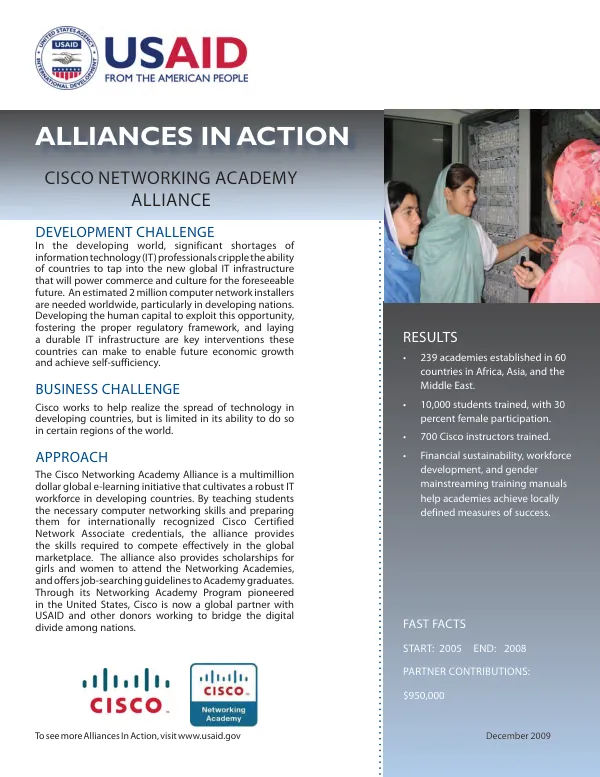
The alliance aimed to address significant shortages of IT professionals in these regions, which hindered their ability to tap into the global IT infrastructure. An estimated 2 million computer network installers were needed worldwide, particularly in developing nations, to enable future economic growth and achieve self-sufficiency. The alliance provided students with the necessary computer networking skills and prepared them for internationally recognized Cisco Certified Network Associate credentials. This enabled them to compete effectively in the global marketplace. Additionally, the alliance offered scholarships for girls and women to attend the Networking Academies and provided job-searching guidelines to Academy graduates. By doing so, the alliance helped bridge the digital divide among nations. The alliance's approach focused on establishing a robust IT workforce in developing countries. To achieve this, the alliance established 239 academies in 60 countries across Africa, Asia, and the Middle East. These academies provided training to 10,000 students, with 30 percent female participation. Furthermore, 700 Cisco instructors were trained to support the academies. The alliance also developed financial sustainability, workforce development, and gender mainstreaming training manuals to help academies achieve locally defined measures of success. The alliance's impact was significant, with academies achieving locally defined measures of success. The alliance's efforts also contributed to the development of a skilled IT workforce in developing countries. This, in turn, enabled these countries to tap into the global IT infrastructure and participate in the global economy. The alliance's work was a key intervention in enabling future economic growth and achieving self-sufficiency in developing nations. The alliance's partnership with USAID and other donors was instrumental in its success. The partnership provided funding and support for the alliance's initiatives, enabling it to establish a robust IT workforce in developing countries. The alliance's work also highlighted the importance of investing in human capital and developing a skilled IT workforce in developing countries. This investment was critical in enabling these countries to participate in the global economy and achieve self-sufficiency.