AVENIR HEALTH
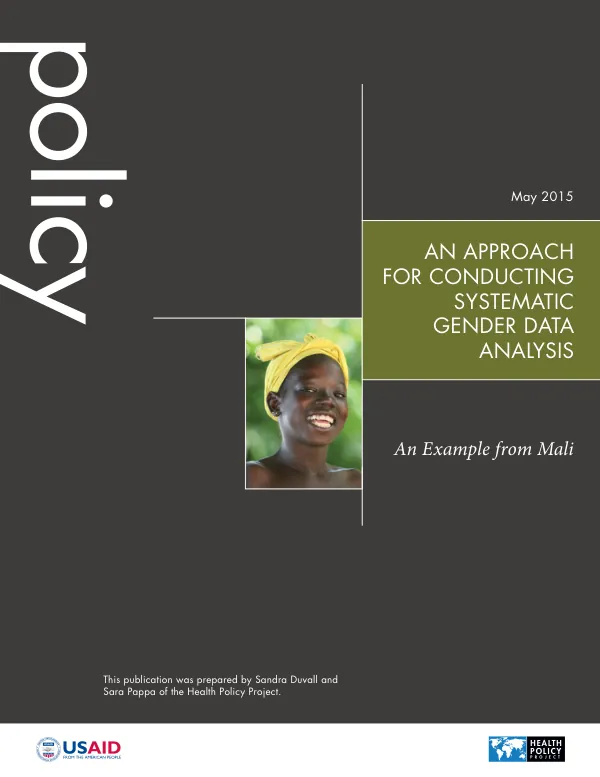
An Approach for Conducting Systematic Gender Data Analysis: An Example from Mali
The Health Policy Project developed a systematic gender data analysis process to inform the Mali National Health and Social Development Program (PRODESS).
2015 · 34 pages
Sign in to readA free account is required to download.
Abstract
This process involves identifying health areas of interest, including sexual and reproductive health, family planning, HIV, nutrition, and maternal and child health. The analysis also considers nonhealth sectors and policy areas that impact access to health services, such as education, employment, and income. The six-step process for conducting systematic gender data analysis includes identifying health areas, related gender issues, disparities, and constraints. This involves using existing data sources, such as the Demographic and Health Survey (DHS) and the National Multiple Indicator Cluster Survey (MICS), to elucidate gender-specific cultural attitudes and practices and gender-related barriers with the potential to impact health outcomes for women and girls in Mali. Step 1 of the process involves identifying health areas of interest, which can be based on health ministry departments, policy development working groups, national health policy and/or program components, or specific health areas of interest identified by the community. Common health areas impacted by gender include sexual and reproductive health, family planning, HIV, nutrition, malaria, maternal and child health, substance abuse, mental health, disability, gender-based violence, and chronic disease. Step 2 of the process involves identifying related gender issues, disparities, and constraints. This step requires analyzing existing data to understand the relationships between gender and health outcomes. The analysis should consider the impact of gender norms on the health-seeking behaviors and health outcomes of women, men, girls, and boys. Step 3 of the process involves identifying available data sources to complete country-specific gender data. This step requires searching for and collecting reliable data from various sources, including DHS, MICS, donor reports, and journal articles. The data should be analyzed to identify key gender-related issues and prioritize areas of focus. Step 4 of the process involves identifying potential negative health consequences. This step requires analyzing the data to understand the potential health consequences of gender disparities and barriers. The analysis should consider the impact of gender norms on the health-seeking behaviors and health outcomes of women, men, girls, and boys. Step 5 of the process involves identifying related health system subsectors. This step requires analyzing the data to understand the relationships between gender and health system subsectors, such as healthcare facilities, health workforce, and health financing. Step 6 of the process involves presenting findings and examining the implications. This step requires presenting the results of the analysis and examining the implications of the findings for policy and program development. The analysis should consider the impact of gender disparities and barriers on health outcomes and identify areas for intervention. The Health Policy Project's systematic gender data analysis process provides a practical, easy-to-follow method for conducting a low-cost, data-informed gender analysis. This process can be used to provide concrete, quantifiable examples of the impact of gender on health and other development outcomes. The process can be applied in various contexts to identify specific gender issues, related data, and health consequences that may be considered in conducting a gender analysis.
Related documents