USAID DEC
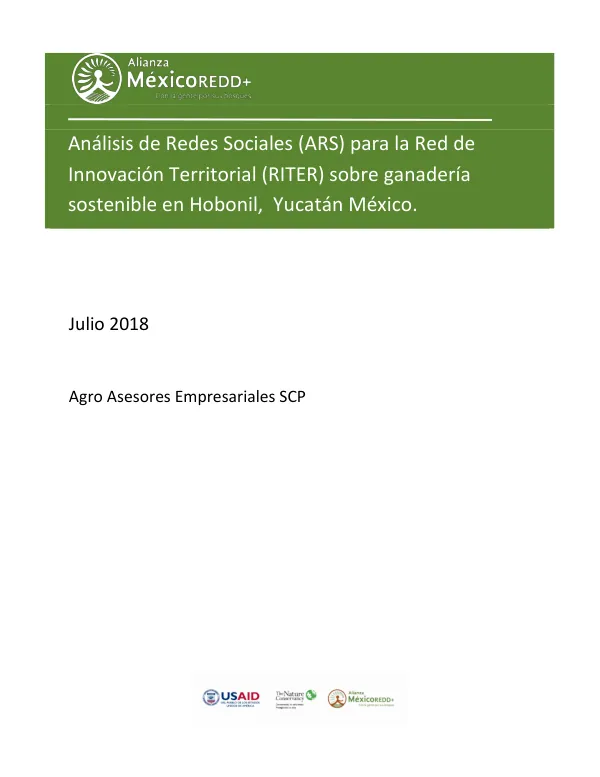
Análisis de Redes Sociales (ARS) para la Red de Innovación Territorial (RITER) sobre ganadería sostenible en Hobonil, Yucatán México
Sign inAGENCIA DE LOS ESTADOS UNIDOS PARA EL DESARROLLO INTERNACIONAL
Análisis de Redes Sociales (ARS) para la Red de Innovación Territorial (RITER) sobre ganadería sostenible en Hobonil, Yucatán México
The Red de Innovación Territorial (RITER) initiative in Hobonil, Yucatán, Mexico, aims to promote sustainable livestock production through the establishment of a network of innovation platforms.
2018 · 78 pages
Sign in to readA free account is required to download.
Abstract
The initiative is part of a broader effort by The Nature Conservancy (TNC) to contribute to the development of capacities among rural producers in the Península de Yucatán. The RITER initiative is based on a model of innovation that recognizes the importance of collaboration and knowledge sharing among diverse actors and institutions. This approach is in contrast to traditional models of innovation that rely on technology push or demand pull, which often neglect the role of tacit knowledge and social capital in the innovation process. The RITER initiative has several key elements, including a strategic location, adequate facilities for training and experimentation, a diagnosis of the needs of local producers, and a plan for financing and sustainability. The initiative also involves the development of curricula and strategies for communication and knowledge sharing among stakeholders. The RITER initiative in Hobonil, Yucatán, is one of five such initiatives established in the Península de Yucatán. The initiative aims to promote the transfer and extension of knowledge and best practices among local producers, with a focus on sustainable livestock production. The initiative also seeks to strengthen the capacity of local producers to adopt and adapt new technologies and practices. The RITER initiative in Hobonil, Yucatán, has several key objectives, including the promotion of sustainable livestock production, the improvement of the quality of life of rural populations, and the conservation and sustainable use of natural resources. The initiative also aims to contribute to the development of capacities among local producers and to promote the transfer and extension of knowledge and best practices. The RITER initiative in Hobonil, Yucatán, has several key components, including a diagnosis of the needs of local producers, the development of curricula and training programs, and the implementation of strategies for communication and knowledge sharing among stakeholders. The initiative also involves the establishment of a network of innovation platforms that bring together local producers, researchers, and other stakeholders to share knowledge and best practices. The RITER initiative in Hobonil, Yucatán, has several key lessons and recommendations for future initiatives. These include the importance of establishing a strong network of innovation platforms that bring together local producers, researchers, and other stakeholders, the need to develop curricula and training programs that are tailored to the needs of local producers, and the importance of promoting the transfer and extension of knowledge and best practices among stakeholders.
Related documents