CATHOLIC RELIEF SERVICES ORGANIZATION
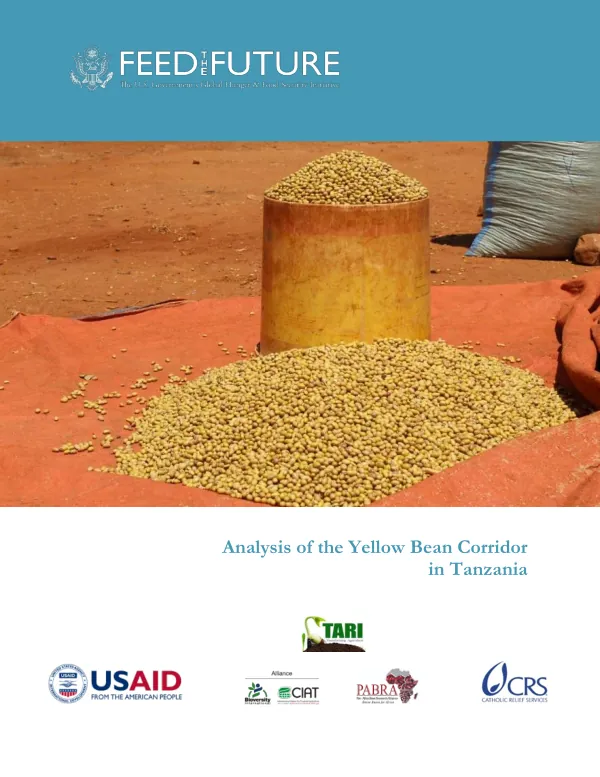
Analysis of the Yellow Bean Corridor in Tanzania
The Yellow Bean Corridor in Tanzania is a critical component of the country's agricultural sector, with common beans being a staple crop for many households.
2021 · 51 pages
Sign in to readA free account is required to download.
Abstract
The corridor is a network of trade routes that connects major production areas to markets, facilitating the movement of yellow beans from rural areas to urban centers. The corridor is of significant importance to the Tanzanian economy, with the country being one of the largest producers of yellow beans in Africa. The Yellow Bean Corridor Study was designed to assess the functioning of the corridor, with a focus on understanding the trade dynamics, market trends, and challenges faced by traders. The study was conducted by a team of researchers from the Tanzania Agricultural Research Institute (TARI), the Alliance of Bioversity International and CIAT (Alliance) – Pan Africa Bean Research Alliance (PABRA), and Catholic Relief Services (CRS). The study was supported by the Government of Tanzania, USAID, and other donors, including the Swiss Agency for Development and Cooperation (SDC), Global Affairs Canada (GAC), and the Bill and Melinda Gates Foundation. The study found that the yellow bean trade volume in Tanzania is significant, with major buyers being located in urban centers such as Dar es Salaam and Arusha. The study also identified regional export markets for yellow beans, with peak sale months being during the harvest season. However, the study highlighted several challenges faced by traders, including grain quality issues and consumer preferences for specific traits. The study also conducted a DNA analysis of traders' yellow bean samples, which revealed significant genetic diversity among the samples. The study concluded that the yellow bean trade in Tanzania has significant potential for growth and development, with opportunities for improving grain quality, increasing yields, and enhancing market access. The study made several recommendations to improve the functioning of the Yellow Bean Corridor, including the development of improved yellow bean varieties, the establishment of a robust seed system, and the enhancement of market access for smallholder farmers. The study also recommended the establishment of a yellow bean quality control system to ensure that traders meet minimum quality standards. The Yellow Bean Corridor Study has significant implications for the Tanzanian agricultural sector, with the potential to improve the livelihoods of smallholder farmers and enhance the country's food security. The study highlights the importance of investing in agricultural research and development, as well as improving market access and trade facilitation to support the growth of the agricultural sector. The study's findings and recommendations have the potential to inform policy and programming decisions at the national and international levels, with implications for the development of the agricultural sector in Tanzania and beyond. The study's emphasis on improving grain quality, increasing yields, and enhancing market access highlights the need for a comprehensive approach to agricultural development that addresses the needs of smallholder farmers and traders. The study's use of DNA analysis to assess genetic diversity among yellow bean samples highlights the potential of biotechnology to improve crop yields and quality. The study's recommendations for the development of improved yellow bean varieties and the establishment of a robust seed system highlight the need for investment in agricultural research and development to support the growth of the agricultural sector. Overall, the Yellow Bean Corridor Study provides valuable insights into the functioning of the yellow bean trade in Tanzania, highlighting the challenges and opportunities faced by traders and smallholder farmers. The study's findings and recommendations have significant implications for the development of the agricultural sector in Tanzania and beyond, with the potential to improve the livelihoods of smallholder farmers and enhance the country's food security.
Related documents